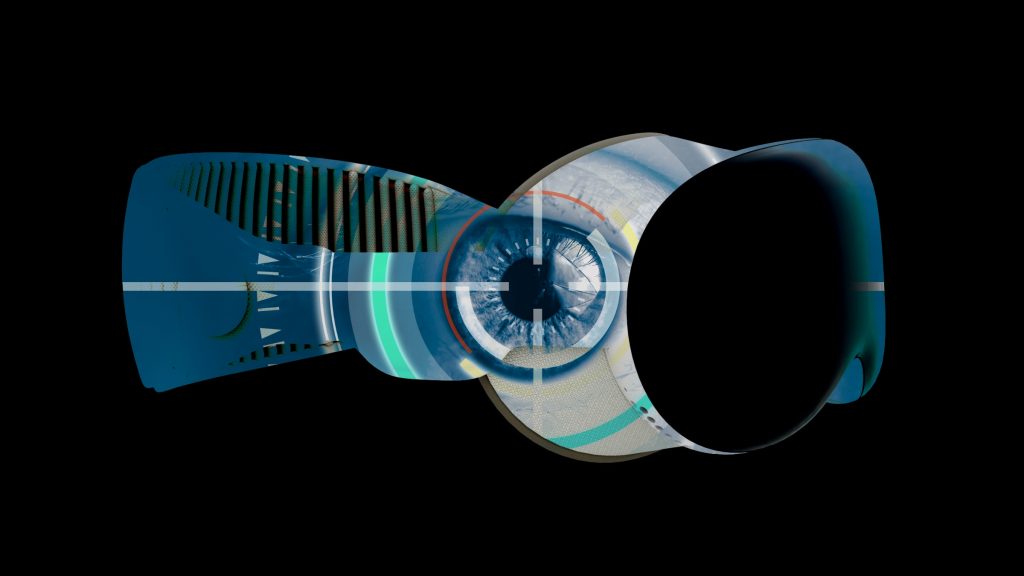
Surgeons at UC San Diego completed tear-duct procedures 19% faster while using Apple Vision Pro surgery technology as their main display, offering evidence that Apple’s spatial headset may hold practical value in operating rooms beyond entertainment, productivity, and computing applications.
The findings strengthen interest in Vision Pro medical use, showing how a head-mounted display places information in a surgeon’s line of sight. Researchers said it reduced operating time while maintaining outcomes across all procedures.
The study compared 16 endoscopic dacryocystorhinostomy procedures using Apple Vision Pro with 16 completed using an operating-room monitor. Headset-assisted cases averaged 34.4 minutes, compared with 42.7 minutes for the monitor group, and every procedure was completed successfully without complications.
A Display Closer to the Surgeon
During operations, clinicians watched footage from an endoscopic camera. Standard setups place that video on a monitor away from the patient, requiring surgeons to turn repeatedly. The Apple Vision Pro surgery setup instead positioned the feed directly in front of the surgeon.
That arrangement supports the potential of spatial computing healthcare, particularly in procedures requiring visual information. Researchers examined operating time, clinical success, complications, perceived workload, ergonomics, equipment cost, and the physical space required by each setup.
Two fellows carried out the procedures with support from three surgeons, and all five clinicians preferred the headset-based approach. NASA’s Task Load Index also showed lower workload scores among Vision Pro users, with the strongest improvement in physical demand.
The results add weight to mixed reality surgery as a clinical concept. By reducing repeated head movement, the headset may help clinicians maintain a natural posture while keeping attention on the patient and surgical field.
The study authors said headset use was “associated with shorter operative times and lower surgeon-reported workload,” while requiring space. However, the research was prospective and non-randomised, meaning case complexity, experience, and device familiarity may have affected the results.
Researchers estimated that the Apple Vision Pro surgery configuration represented about 0.5% to 0.7% of the capital cost of a standard endoscopic operating-room system. With theatre time estimated at $51 per minute, the 8.3-minute difference could equal roughly $420 in savings per procedure.
Study co-author Horace Dediu argued hospitals should judge the headset as clinical equipment, not a consumer purchase. “For a hospital the cost of the Vision Pro is not insignificant,” he wrote, noting its capabilities could justify the investment against specialist displays.
Apple Expands Its Spatial Software
Apple’s software roadmap provides additional context. At WWDC 2026, visionOS 27 introduced a three-dimensional Siri interface, stronger visual intelligence, curved application windows, spatial panoramas, eye-aware notification controls, and a redesigned Control Center.
The update supports Apple spatial computing by making content more responsive to surroundings. Visual intelligence can help users ask Siri questions about on-screen content or objects in view, while interface changes aim to make information easier to access without separate displays.
Although visionOS 27 was not developed for surgery, its direction overlaps with the UC San Diego research.
Both place information directly into a user’s field of view, a principle that also underpins augmented reality surgery and other clinical display systems.
For hospitals, the question is whether mixed reality surgery can deliver similar results across larger patient groups, complex procedures, and different teams. Broader trials will need to examine safeguards, cleaning protocols, patient privacy, device reliability, and long-term ergonomics.
The research covered 32 procedures at one academic centre and examined a single surgical workflow. Its authors said larger controlled studies are required before healthcare providers can treat the 19% reduction as a dependable benchmark for a Vision Pro operating room.
Even so, the findings give Apple Vision Pro surgery a measurable result in a field where efficiency, visibility, and clinician comfort can influence hospital operations.
They also place mixed reality surgery within a wider conversation about spatial computing healthcare and headsets in clinical environments.
The case gives Apple Vision Pro surgery a stronger position in discussions around digital tools that support clinicians without adding another physical screen to crowded operating rooms.
For Apple, the medical research provides a use case beyond personal computing. Wider hospital adoption will depend on repeatable clinical evidence, safety standards, and clear economic value across real-world care settings.
Inside Telecom provides you with an extensive list of content covering all aspects of the tech industry. Keep an eye on our Intelligent Tech sections to stay informed and up-to-date with our daily articles.