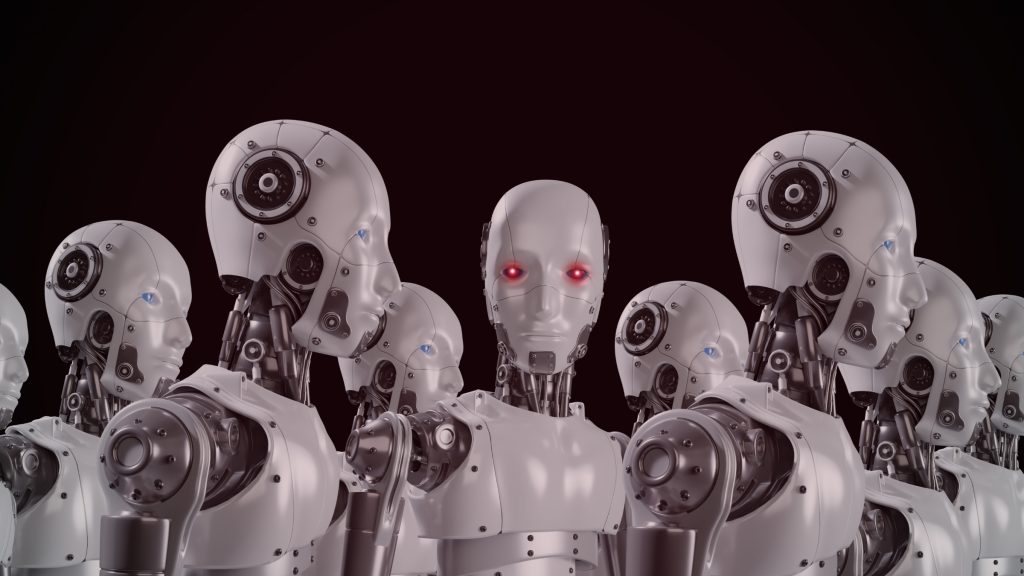
On June 5, San-Francisco startup, Foundation, released footage of its Phantom MK1 humanoid military robotics, handling and loading heavy mortar shells with mechanical precision that needed no human hands in the process.
On April 23, a $24 million Department of Defense (DoD) was publicly confirmed by the startup, with active field testing of its lethal autonomous weapon systems in Ukraine.
Foundation managed to convert what the industry had long framed as a speculative ethical question into a documented operational fact. The line that Silicon Valley spent years insisting it would not cross has finally been crossed, and the Pentagon’s contract paved the way for the passage with hefty capital.
Washington moved closer to using military robotics in future warfare as the Pentagon reviewed rules that allows AI-powered machines to identify and attack targets within human-set limits across American military operations.
In parallel, the White House’s legal policy architecture is tacking the same trajectory, with Trump administration directives instructing the Pentagon to update its rules on lethal autonomous systems, turning an ethical debate into policy.
On June 5, President Trump signed National Security Presidential Memorandum-11 (NSPM-11), directing Secretary of Defense, Pete Hegseth to update the primary policy governing autonomy in weapon systems, within 90 days.
Issued in 2012, and last updated in January 2023, the DoD Directive 3000.09 explicitly instructs the Pentagon to “eliminate unnecessary barriers to rapid deployment” of lethal autonomous weapon systems.
Faster AI and stronger machines are forcing officials to decide how much authority can safely move from people to software, with machines being closer than ever to real battlefield deployment.
Humanoid Machines Move Toward Combat
Foundation was launched in 2024 by Sankaet Pathak, who believes machines may improve accuracy and protect troops and civilians. Back in June, it showed its Phantom MK1 humanoid loading a mortar shell, showing how armed military robots could perform dangerous tasks.
Investors and security experts increasingly see military robotics as an important defense field, despite earlier promises not to weaponize robots. Supporters say these types of military robots could carry supplies, clear explosives, scout hostile areas or operate weapons, entering places too dangerous for soldiers.
Pathak told The Washington Post that the US cannot assume China or Russia will accept similar limits, driving interest in autonomous military robots, especially systems that can operate when communications fail.
The Pentagon already uses machines for surveillance, logistics, and bomb disposal. These robots that are used in the military stay under human control, but newer AI tools can map terrain and process threats faster.
Human Control Drives Dispute
The Trump administration is taking the public, and lawmakers’ sentiment on military robotics and lethal autonomous weapon systems in a direction, fearing that the regulatory path for ground-based armed robots will outrun the DoD institutional capacity and speed to integrate autonomous weapons into the military.
The new sentiment will effectively reframe a tech industry that organized employee pretests around Pentagon contracts, only less than a decade ago.
Now, newly founded tech nationalism, battlefield decision speed imperatives, and a $24 million contract have all accomplished what years of internal advocacy could not. Silicon Valley’s most powerful ethical reservation has been turned into a procurement category.
The controversial step involves lethal autonomous weapon systems that can search for, select and attack targets within preset rules. A person may activate a mission, while the machine makes decisions alone.
President Trump has directed the Defense Department to update its policy on lethal AI weapons. The Senate is considering legislation urging the Pentagon to maximize AI and autonomous technology while keeping commanders responsible.
Supporters of military robotics say responsibility can remain human even when software handles targeting. Michael Horowitz, a former defense official, said Pentagon rules still place accountability with people.
Critics disagree.
Human rights groups, diplomats, religious leaders and engineers warn that armed military robots may misunderstand their surroundings, fail unexpectedly or make deadly mistakes before people can intervene.
The debate has reached the United Nations. Secretary-General António Guterres wants a binding treaty banning lethal autonomous weapon systems that make life-and-death choices without meaningful human control.
“Some decisions must remain forever human,” Guterres said in Geneva.
Technology companies are divided. Anthropic CEO Dario Amodei sought assurances that Claude would not power autonomous weapons. OpenAI says its systems should not apply force without proper human authorization.
The military operates defenses such as CIWS, which can intercept missiles. However, robots in military offensive roles remain controversial because they may act in crowded environments where lawful targets are difficult to identify.
Ryan Gariepy, co-founder of Canada’s Clearpath Robotics, has warned that machines fail unexpectedly. His concern covers types of military robots but becomes serious when a system carries a weapon.
Washington, updating its policy, will move military robotics from tests into defense planning. The main question is whether governments can stop machines from making decisions that should remain human.
Inside Telecom provides you with an extensive list of content covering all aspects of the tech industry. Keep an eye on our Tech sections to stay informed and up-to-date with our daily articles.