On July 13, Copenhagen-based defense startup, Triton Depth, announced a $1.14 million (€1 million) in pre-seed funding to develop underwater defense CCTV-like surveillance network using passive acoustic sensors and edge AI across Denmark’s vulnerable Baltic Sea infrastructure.
Founded in 2025 by three Technical University of Denmark (DTU) students, Carl Borg, Frederik Himmer, and Markus Rytter, the Danish defense startup secured backing by Denmark’s state-owned Export and Investment Fund (EIFO) and London-based, The Creator Fund.
The capital injection by EIFO and The Creator into Triton Depth will go into the manufacturing low maintenance acoustic hydrophone sensors, Triton Nodes, to be deployed around vital subsea telecom assets, such as the data fiber cables, energy interconnectors, and offshore wind turbines.
The funding round will fund trials, data collection and important software upgrades, giving European authorities a regional early warning network below the sea surface, by using localized AI to analyze acoustic signatures underwater.
Small Sensors Create a Wider Security Image
For years, the cables that carry Europe’s internet traffic and power across the Baltic Sea’s floor were always invisible. Monitored – if at all – only after something goes wrong.
With the birth of a new potential subsea crisis for the Europe, the Danish startup seeks to eliminate Europe’s seabed blind spot and create a live digital tripwire against gray zone sabotage, uncrewed submersibles, and unauthorized diving operations in the Baltic Sea.
Triton Depth is building underwater defense systems around Triton Nodes that can sit on the seabed or within the water column, listening continuously without active sonar signals that could reveal their location.
Each node records sound and uses an onboard AI model to live analyzing acoustic patterns. The software itself classifies vessels and objects, then alerts operators when it detects an underwater drone or another suspicious source.
Triton Depth describes the network as underwater CCTV – or similar to – that doesn’t use cameras but gives operators a picture of movement in areas that are normally difficult to observe.
Because analysis happens near the sensor, the system does not need to send every recording to a data center. This edge-AI structure could cut delays and strengthen underwater defense near ports, power links and offshore wind sites.
Several nodes can work together across an area. By comparing sound signals, they can estimate where an object is moving, creating another layer of underwater CCTV that remains active if one sensor fails.
“This investment allows us to accelerate development of our sensor network, expand deployments and build the large-scale dataset needed to improve detection and classification,” said Carl Borg, CEO and co-founder.
The dataset could help the software recognize an underwater drone even when weather, water depth, speed and background noise change the acoustic signature. Borg said the longer-term aim is to build the intelligence layer for the ocean, helping civilian operators and defense agencies create a stronger underwater defense network.
Improved classification could help authorities separate commercial shipping from underwater warfare activity before an unknown object reaches sensitive infrastructure.
Protecting the Baltic’s Digital Lifelines
The Baltic Sea has become a test for European underwater defense after concern over cable damage, untracked vessels and possible sabotage around energy and communication routes.
“At a time when Europe needs to build stronger capabilities in critical defence technologies, underwater awareness is becoming a strategic necessity,” said Sara Sande, Managing Director, Partner and Head of Thematic Venture investments at EIFO.
Triton Depth could support wider underwater defense systems by offering operators a lower-cost monitoring option than patrols by warships, aircraft or crewed submarines.
The danger is growing as cheaper autonomous platforms make underwater drone warfare easier. Small uncrewed vehicles can travel near the seabed, collect intelligence, or carry tools without attracting immediate attention.
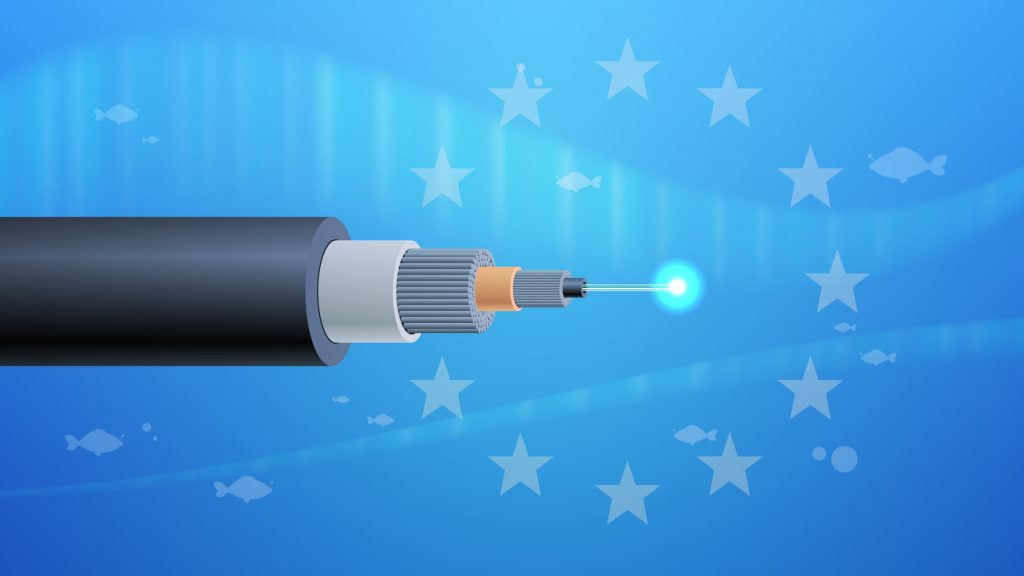
The network may also protect underwater telecom cables, which carry much internet traffic but remain difficult to guard across long routes and deep waters.
Distributed acoustic sensing can turn fibre-optic lines into listening tools by measuring changes caused by vibration or temperature. AP Sensing tests showed that a diver touching a cable could be detected, creating another form of underwater CCTV.
“He stops and just touches the cable lightly, you clearly see the signal,” said Daniel Gerwig of AP Sensing, adding, “The acoustic energy which travels through the fibre is basically disturbing our signal. We can measure this disturbance.”
The technologies still have limits as fibre sensing works only within a certain range, while seabed nodes need secure communications, maintenance and strong training data. Combined, they could form a more resilient underwater defense layer.
Founded in 2025 by Carl Borg, Markus Rytter and Frederik Himmer, Triton Depth is still at an early stage. However, its technology reflects a wider shift in European security: protecting digital networks now also means watching the seabed.
If the system performs at scale, Denmark could become an important source of maritime intelligence for the Baltic region. That need is not limited to Europe.
Cable cuts in the Red Sea last year slowed internet connections across parts of Asia and the Middle East. The cause was not confirmed, and Yemen’s Houthis denied targeting the lines, but the disruption showed how damage in one narrow sea route can affect millions of users far away.
Therefore, Triton Depth’s network could help turn such hidden risks into visible warnings before they become major digital crises.
Inside Telecom provides you with an extensive list of content covering all aspects of the tech industry. Keep an eye on our Telecom sections to stay informed and up-to-date with our daily articles.