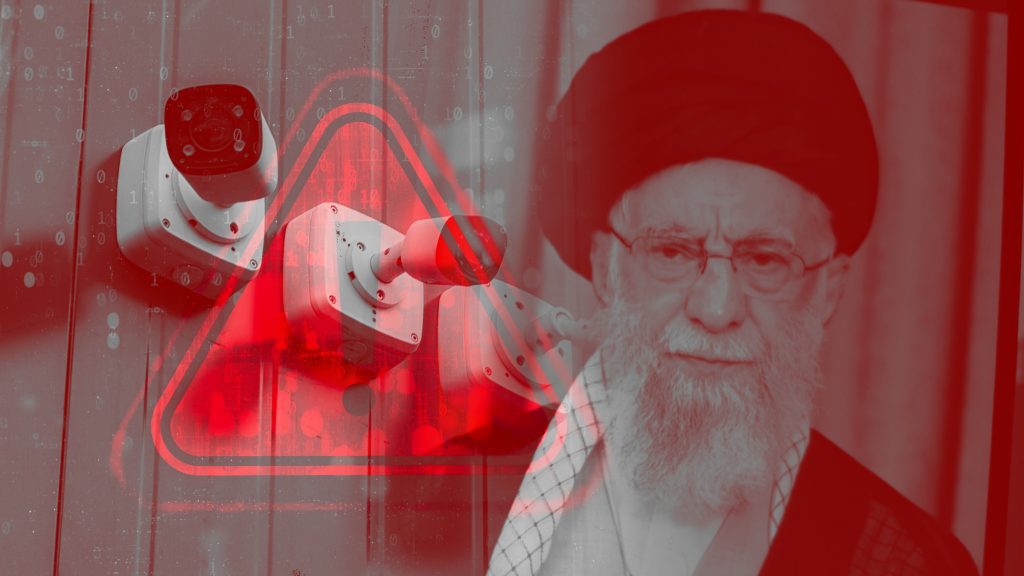
Israel’s target, Iran’s Supreme Leader Ayatollah Ali Khamenei in Tehran, was led by years of open cyber infiltration and AI analysis, transforming civilian surveillance cameras into a live targeting system for precision warfare, eventually resulting to the Khamenei death, February 28.
The Iran Khamenei death operation sheds light on a critical turning point in how modern wars are leading, where data, algorithms, and civilian infrastructure converge into operational weapons.
By breaching Tehran’s vast network of street and traffic cameras originally installed to monitor protests Israeli intelligence reportedly accessed continuous encrypted video streams for years, which had to do with Imam sayyid Ali Khamenei death.
These feeds for Iran’s supreme leader Ayatollah Ali Khamene were analyzed to construct detailed behavioral profiles, mapping not only his movements but also the routines of his security personnel, including “addresses, work schedules, and guard assignments.”
When the Ayatollah Ali Khamenei killed strike was executed, communications in the area were simultaneously disrupted, ensuring that intelligence was translated into action with minimal delay.
Civilian Surveillance to AI Targeting
The news about Khamenei assassination showed a transformation of Iran’s surveillance network into a military asset underscores the vulnerabilities embedded in modern smart-city infrastructure. Built to monitor dissent following mass protests, particularly among women defying state rules, the system became a liability due to weak cybersecurity.
Reports indicate that many cameras were “poorly secured, outdated, or reliant on pirated software,” leaving them exposed to long-term infiltration.
Israeli analysts leveraged AI to process vast volumes of visual and behavioral data extracted from these systems. Machine learning tools identified recurring movement patterns, tracked vehicles, and flagged anomalies by the US and Israel targeted Ali Khamenei house compound protection detail. This automation compressed intelligence timelines dramatically, shifting analysis from weeks or months to near real-time decision-making.
The Iran’s supreme leader Ayatollah Ali Khamenei mission capability was not developed overnight.
Intelligence gathering and algorithmic modeling reportedly spanned years, culminating in the February operation that formed part of a broader military campaign. In the final phase, AI systems effectively determined the optimal timing and location for the Iranian supreme leader Ali Khamenei strike, illustrating how decision making in warfare is increasingly augmented by machine-driven analysis.
AI Systems and Digital Warfare Expansion
When the US declared that Khamenei is dead, it reflected a wider integration of AI across military operations. The scale and speed of joint US and Israeli strikes on Iran were driven in part by advanced AI systems capable of processing intelligence at unprecedented rates. Military leadership had already moved toward an “AI-first” doctrine, accelerating the adoption of automated tools across command structures.
AI platforms were used to filter raw intelligence, identify targets which in this case led to the Khamenei death, and coordinate operations across multiple domains.
Systems designed to cross-reference satellite imagery, intercepted communications, and human intelligence allowed forces to map infrastructure and personnel networks with high accuracy. In parallel, predictive analytics enabled planners to anticipate movements such as that of Imam sayyid Ali Khamenei and optimize strike windows, turning data into actionable outcomes.
This tech integration extended to weapons systems operating in contested environments. With GPS signals frequently jammed, advanced missiles relied on alternative guidance methods, including “scene-matching algorithms” and onboard image recognition. These systems allow for precision strikes like the ones taking place in Lebanon, even in navigation-denied conditions, reflecting a broader shift toward autonomy and resilience in military hardware.
At the same time, AI has played a defensive role, particularly in managing incoming threats. Air defense systems now rely on rapid “sensor fusion,” combining data from multiple radar and detection platforms to determine interception priorities within milliseconds. This allows militaries to respond to large-scale attacks with greater efficiency, though it also raises the stakes in terms of system reliability and escalation risks.
Drone warfare has emerged as a defining feature of the conflict. Iran’s deployment of thousands of low-cost, one-way attack drones demonstrated a strategy built on scale rather than singular precision.
These systems, that led to Ali Khamenei killed, often described as slow-moving but effective, are designed to overwhelm defenses through volume. Their relatively low production cost contrasts sharply with the expensive systems required to intercept them, creating a strategic imbalance.
The US has responded by developing similar low-cost drone platforms, signaling a broader shift in procurement priorities. Instead of relying solely on expensive, high-end systems, militaries are increasingly investing in large quantities of expendable assets. This approach reflects a new operational logic which began with the Imam sayyid Ali Khamenei death, achieving precision through mass deployment rather than individual technological superiority.
While offensive capabilities have become cheaper and more scalable, defensive systems remain costly and resource intensive. Intercepting low-cost drones often requires high value missiles or advanced air defense platforms, creating a financial and logistical burden for defending forces. This dynamic has already been observed in other wars and is now shaping strategic calculations in the Middle East.
The use of civilian infrastructure as a vector for intelligence gathering raises concerns about security, privacy, and escalation. As surveillance networks, communication systems, and connected devices become increasingly integrated into daily life, such as the CCTV cameras which were used for the Khamenei death., they also become potential entry points for cyber exploitation in times of war.
Battles are no longer defined solely by physical assets but by the ability to collect, process, and act on data at speed and scale, which is what was should with the Khamenei death.
Inside Telecom provides you with an extensive list of content covering all aspects of the tech industry. Keep an eye on our Tech sections to stay informed and up-to-date with our daily articles.