On March 27, defense tech company Aerovironment’s acquisition of aerospace engineering company, ESAero, was finalized at $200 million, allowing future integration of ESAero’s electric propulsion expertise into future AeroVironment products.
The integration of ESAero’s system engineering into AeroVironment’s (AVAV) existing portfolio is the logical extension of a company that has spent years placing itself at the intersection of aerospace miniaturization and autonomous systems.
But the actual context is much harder to sanitize.
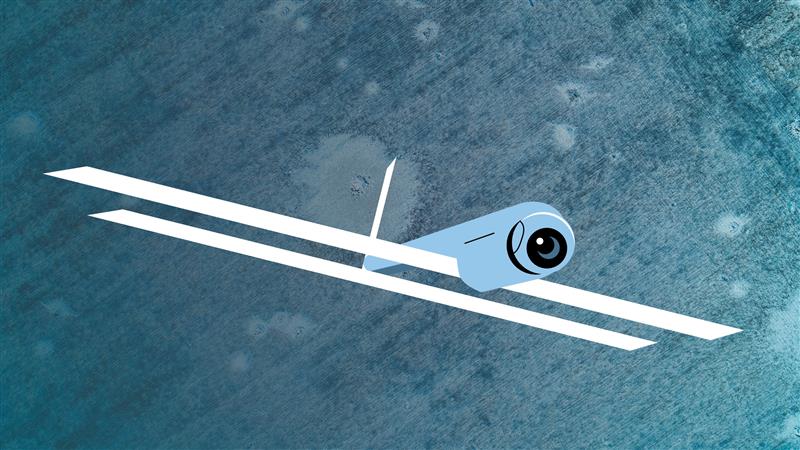
AeroVironment’s Switchblade loitering munitions, the Kamikaze drones, have become something of a brand ambassador for the company in the defense sector.
AVAV’s Switchblades are currently being validated – in the literal sense of that word – over Iranian territory. The data coming back is, from a pure commercial standpoint, excellent.
Technology of a one way attack drone has altered the equation of warfare in the Middle East, especially in Iran, serving as a live laboratory for a new form of cost-efficient warfare.
The need for technology that attacks without leaving a footprint has never been higher. This moves from heavy machinery to disposable technology that’s intelligent has set the standard of how countries fight, making the battlefield a space for the latest in AeroVironment acquisition strategies.
AeroVironment acquisition is a “structural inflection point” for the company, which is one way of saying that the market for autonomous lethal weapons systems (LAWS) has moved – with some velocity – from theoretical to proven.
Waging Wars with AeroVironment Products
At the heart of this technological shift is the AeroVironment switchblade loitering munition. This defense mix of defense drone and missile represents a leap in disposable AI execution. Unlike the old bulky, traceable missiles, these small, backpack sized units are designed to be damaged upon impact.
In a surprising comparison to the improvised tactics used by groups like ISIS during the Iraq War, these attacking drones provide a similar level of unpredictability but with advanced, state-sponsored sophistication.
Perhaps controversial, but the advantage of this technology lies in its anonymity. Because these US attack drones are often destroyed upon impact and the operational data is held exclusively by the Pentagon and the manufacturer, it is nearly impossible to trace back to a specific origin in real-time.
Critics argue this lack of transparency may be breaching international laws regarding combat accountability and war ethics. Furthermore, the ability to launch a drone swarm attack complicates defense systems, as the origin of the group remains shielded by proprietary data.
With AeroVironment Israel relations strengthening through shared tactical data, the blade AeroVironment creates a trail that often ends in a cloud of smoke, leaving rivals like China with little to no data on their true capabilities.
AeroVironment Products and War Business Model
AeroVironment is not just selling hardware but pioneering a business model based on scalable war through various products. The $200 million deal allows the company to integrate advanced electric flight systems into their products.
In a strategic thinking, Iran has non-directly promoted these US-manufactured drones. The expansion of AeroVironment products would not have reached this scale without the recent war in Iran, which provided a guaranteed burn rate, a metric used to measure how quickly these products are used and replaced.
“By combining ESAero’s engineering and manufacturing capabilities with AV’s unmatched expertise in autonomous systems,” said ESAero CEO Andrew Gibson, “we are positioned to advance disruptive aerospace technologies and deliver real, timely value for our customers.”
The financial logic is simple: technology either increases or decreases the cost of war.
By replacing a $2 million missile launcher with an AeroVironment switchblade, the company has made warfare more affordable for the taxpayer while increasing the volume of sales for their products.
This efficiency is also being explored in the commercial sector with the AeroVironment p550 drone delivery system, adapting military precision for logistics. With a funded backlog hitting $1.1 billion and AeroVironment Israel contracts expanding, the US company is proving that in the modern age, the most valuable defense drone is the one built to be lost.
This specialized switchblade AeroVironment drone focus ensures that the defense company remains the primary architect of modern, cost-efficient conflict.
Moreover, switchblade AeroVironment systems signal a broader switch: the US is moving away from traditional hardware toward software-led warfare. By partnering with Big Tech -US used Palantir to gather data-, and now AeroVironment products the Pentagon is embracing algorithmic warfare, where data and autonomous processing define the frontline.
This strategy turns every defense drone into a node in a massive, intelligent network. As attacking drones become more autonomous and harder to trace, the nature of combat evolves into a digital chess match.
Inside Telecom provides you with an extensive list of content covering all aspects of the tech industry. Keep an eye on our Tech sections to stay informed and up-to-date with our daily articles.