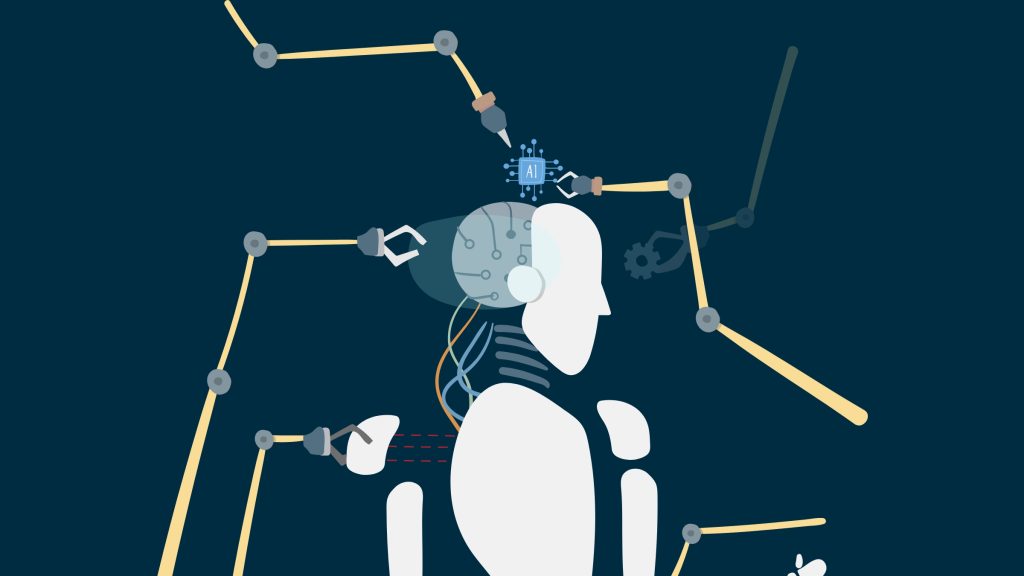
The version around enterprise AI deployment in investor presentations and tech conferences is describing an acceleration of AI agents workflow automation adoption, compounding efficiency gains, and organizations moving confidently from pilot to production, according to IBM.
AI agents workflow automation is attracting investment while manufacturers lack time and trust to deploy digital workers safely, raising concerns about oversight and human judgment in factories.
The research reported by Smart Industry found that 66% of enterprises are likely to invest in digital workers within 12 months, although only 10% run mostly autonomous AI operations today. Companies see a way to ease repetitive work, but many lack the capacity to introduce agents across their businesses.
Digital Workers Enter Manufacturing
AI agents workflow automation are software systems that can carry out parts of a task, use information from business systems and take steps toward a goal. “Digital workers” is the term industrial software provider (IFS) uses for agents assigned to operational jobs.
Unlike a chatbot that mainly answers questions, on how an agent may help manage an order or flag when inventory needs replenishing.
The August 2026 research, conducted by Futurum for IFS, found that industrial workers lose 41% of their time to repetitive tasks. That gives companies a reason to pursue AI agents for workflow automation, even when they are unsure how much independence they have to give the software.
Manufacturers identified materials planning, customer orders, and inventory as their leading uses. An agent could help coordinate supplies with production schedules or monitor stock before a shortage interrupts work. The value of AI agents business workflow automation depends on whether those actions fit the systems and checks a company already uses.
Some AI agents workflow automation results are measurable. CDF Corp. has a live inventory replenishment agent that freed 20% of staff purchasing time for other tasks. AirBoss uses a customer order agent and projects that 40% of orders could be handled without human interaction once the system reaches full production. The AirBoss figure is a projection, not a result already achieved.
Those examples show where enterprise agentic AI tools can help, but they do not show that every manufacturer is ready to scale them. More than 75% of leaders in Futurum research had delayed a strategic initiative because their teams lacked capacity. Fewer than 6% trusted AI to act autonomously.
“The capacity gap is a high-stakes problem in industrial operations,” according to Chief Executive of IFS Loops, Somya Kapoor, in the Smart Industry report.
That gap complicates AI agents workflow automation, the same staff who need relief from routine work may have to test agents, connect them to business records and review their decisions. Companies also need to decide what workers will do with the hours they recover.
The deployment of AI agents in different industry sectors will address different bottlenecks. The IFS research points to documentation and knowledge management in energy and utilities, alongside planning for assets and work orders. In manufacturing, orders and inventory offer clearer starting points because companies can track staff time and completed work.
Control Gap Reaching Workers
A separate IBM study reported by Virtualization Review raises another concern: workers may lose practice in skills they still need to supervise AI. Among employees worried about skill erosion, three in four said AI had already begun to erode at least some of their skills. Critical thinking was the skill most often cited as declining.
“The organizations obsessing over AI productivity gains are, in many cases, quietly hollowing out the developmental infrastructure that produced their own current leaders,” according to a workforce executive, Amit Das.
IBM found that only 26% of organizations clearly define which work people lead, which AI assists and which AI executes. That distinction matters for AI agents for workflow automation when an agent places an incorrect order or misses out on a supply problem. A named employee should be able to check the output, stop the action and escalate a mistake.
The question becomes sharper as AI agents business workflow automation spreads across departments. In a June IBM survey, surveyed 2,000 C-level executives – Chief Technology Officers (CTO) and Chief Information Officers (CIO) – across 33 geographies and 19 industries.
70% of technology executives said business teams deploy technology faster than information technology (IT) staff can track it, while only 11% felt fully prepared for the expected scale of agent deployment.
An enterprise agentic AI architecture needs a record of which agents are active, what data they can access, and what actions require approval. Without that visibility, technology leaders may be held accountable for systems they cannot fully control.
According to the same IBM survey, 59% of technology leaders cited security and compliance as leading barriers. These concerns make enterprise agentic AI tools harder to expand where mistakes could expose data or disrupt connected operations.
For companies seeking best practices for deploying AI agents in regulated industries, the evidence points to limited access, recorded decisions, human review and clear responsibility for exceptions. IBM found that organizations building control into their AI systems experienced 25% fewer incidents than those relying on manual governance.
An enterprise agentic AI architecture also has to preserve workers’ judgment. Reviewing unusual orders, challenging an agent’s recommendation and practicing decisions without it can help employees remain capable of taking over.
That is central to enterprise Agentic AI implementations. IBM found that only 42% of organizations primarily direct AI productivity gains toward innovation or reskilling. Saved time may instead become cost savings or more work, leaving fewer opportunities to develop the people expected to catch errors.
No single enterprise agentic AI solution implementation time applies across businesses, as readiness depends on the task, connected systems, staff capacity and controls. Before granting agents more independence, companies need to show that people can see their actions, correct mistakes, and remain responsible for decisions.
AI agents workflow automation for manufacturers could return time to purchasing and operations teams, but the real test is whether that time strengthens their ability to manage autonomous systems.