
Tech companies can no longer differentiate – or care for that matter – traditional AI growth and energy-hungry generative intelligence. Overstating AI climate benefits as emissions from rapid data centers development continues to climb worldwide, according to a The AI Climate Hoax report.
Commissioned by nonprofits, including Beyond Fossil Fuels and Climate Action Against Disinformation, the analysis reviewed 154 public statements linking AI climate to climate solutions.
It revealed that most claims about AI averting climate breakdown referred to older, efficiency-focused machine learning systems, not the power-intensive chatbots and image generators driving explosive AI and carbon emissions and data-center growth.
Going Green with More Emissions
According to The AI Climate Hoax, they could not find a single example where popular generative tools, such as Google’s Gemini or Microsoft’s Copilot, led to a “material, verifiable, and substantial” reduction in planet-heating emissions or a meaningful improvement in the AI carbon footprint.
Ketan Joshi, the energy analyst who authored The AI Climate Hoax report, described the industry’s messaging as “diversionary” and reliant on tactics that amount to “greenwashing.” He likened it to fossil fuel companies highlighting modest investments in solar while continuing to expand oil and gas production.
“These technologies only avoid a minuscule fraction of emissions relative to the massive emissions of their core business,” Joshi said.
It’s worth sharing that both Microsoft and Google have been accused in the past of creative accounting and greenwashing, with independent investigations exposing how Big Tech typically use paper offsets to hide the reality of their true carbon emissions’ skyrocketing. Naturally, this is due to their AI boom.
According to The Guardian, and non-profit Kairos Fellowship, the actual emissions from these tech giants were up to 7.6 times higher than what they had officially reported in their sustainable summaries. At the time of the report in late 2024 and early 2025, The Guardian and the non-profit accused Google and Microsoft of drastically undercounting the real face of their environmental impact.
Many of the claims analyzed originated in an International Energy Agency (IEA) report, which devoted two chapters to energy efficient AI algorithms and AI’s potential climate benefits, as well as in corporate sustainability reports from Google and Microsoft. The analysis found that only 26% of green claims cited peer-reviewed academic research, while 36% offered no evidence at all.
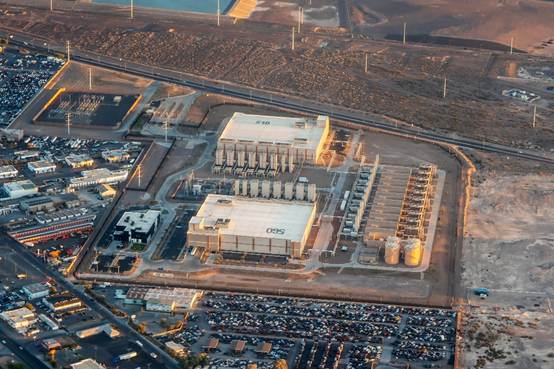
At the same time, energy demand from AI infrastructure is rising sharply. Data centers consume about 1% of global electricity today, but their share of US electricity use is projected to more than double to 8.6% by 2035, according to BloombergNEF.
The IEA predicts they will account for at least 20% of electricity demand growth in wealthy nations by the end of the decade, worsening the AI and carbon footprint of tech operations.
A Google spokesperson defended the company’s calculations, saying: “Our estimated emissions reductions are based on a robust substantiation process grounded in the best available science, and we have transparently shared the principles and methodology that guide it.” Microsoft declined to comment, though analysts stress the need for an AI energy score to measure real climate impact.
AI Climate Tool or Climate Threat?
Experts caution that public debate often conflates very different forms of AI climate. “When we talk about AI that’s relatively bad for the planet, it’s mostly generative AI and large language models,” said Sasha Luccioni, AI and climate lead at Hugging Face.
Traditional AI has shown promise in forecasting extreme weather, optimizing traffic systems, cutting food waste, and improving renewable energy integration. Research co-authored by Roberta Pierfederici suggests AI applications in transport and food systems could significantly reduce emissions by 2035 if deployed for public benefit rather than extraction, lowering the AI carbon footprint in measurable ways.
Yet governance remains the central question. Fossil fuel companies are already using AI to “optimize their exploration and extraction activities,” Pierfederici warned, underscoring the need for guardrails to prevent a carbon AI footprint from growing unchecked.
As Joshi put it, the discourse must be “brought back to reality.” The danger, he argues, is that coupling “a big problem and a small solution” distracts the preventable harms of unchecked AI and carbon footprint expansion.
AI may still become a powerful climate ally, but only if transparency, evidence, and accountability guide its growth, including careful tracking of AI climate to ensure its AI data center energy footprint is actually shrinking.
Inside Telecom provides you with an extensive list of content covering all aspects of the tech industry. Keep an eye on our Intelligent Tech sections to stay informed and up-to-date with our daily articles.