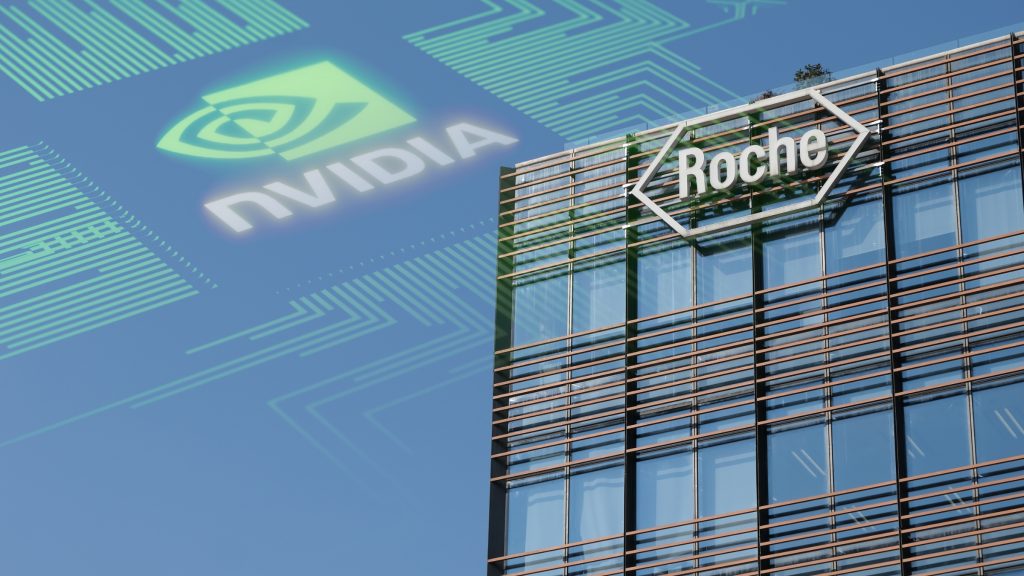
At Nvidia’s annual GPU Technology Conference (GTC) conference, new partnerships and investments highlighted how the chipmaker is moving into pharmaceutical research, deploying AI systems and computing power to accelerate drug discovery, as well as the development across global healthcare industries, in the latest AI drug discovery news today.
The pharmaceutical landscape is witnessing a seismic change with companies embracing agentic AI in drug discovery to accelerate development timelines and treatments for diseases once deemed chronic.
From large-scale collaborations to cutting-edge startups, the race is on to integrate AI into every stage of drug design, testing, and manufacturing. The latest AI drug discovery news today signals how AI has become a central pillar in modern medicine.
Nvidia’s entry into AI drug discovery news today reflects a trend where technology companies are no longer passive infrastructure providers, but active collaborators in scientific innovation.
Pharmaceutical companies, and startups alike, are betting on AI to cut years off the drug development process, enhance predictive accuracy, and reduce costs sometimes by billions.
Role Of Generative AI In Drug Discovery
Pharmaceutical giant Roche recently unveiled a large-scale “AI factory” powered by thousands of Nvidia chips. With 2,176 new Nvidia Blackwell GPU pharma units, Roche claims it’s the largest deployment of its kind, that will “discover, develop, manufacture and commercialize therapies faster.”
Head of Genentech research and early development, Aviv Regev, said, “It does highlight how important AI is for our business… It’s a little bit everything, everywhere, all at once.”
Already, Roche’s AI tools have accelerated molecule design by 25% and predicted immune responses for cancer therapies entering human trials, highlighting the power of agentic AI drug discovery to reduce failure rates and optimize early-stage research.
Across the industry, other top AI drug discovery companies are also investing in computational infrastructure and AI research.
Nvidia’s partnerships, including a $1 billion co-innovation lab with Eli Lilly, illustrate how hardware, software, and agentic AI research labs are merging to create a continuous discovery ecosystem.
The lab leverages the BioNeMo open development platform to build foundation models for biology and chemistry, blending computational “dry labs” with experimental “wet labs” in a continuous feedback cycle.
LLM Drug Discovery and Startup Innovation
Beyond Nvidia’s AI drug discovery news today, established pharmaceutical giants and tech startups are embracing large language model agent drug discovery to tackle “undruggable” conditions, with companies like Proxima developing therapies targeting protein interactions, enabled by AI-driven structural prediction and design tools.
Co-Founder and CEO of Proxima, Zachary Carpenter, emphasized that AI could overcome barriers caused by limited structural data, creating entirely new therapeutic opportunities. Agentic AI drug discovery guides both established companies and innovative startups.
CEO Jensen Huang, said that “AI is transforming every industry, and its most profound impact will be in life sciences… a new blueprint for drug discovery – one where scientists can explore vast biological and chemical spaces in silico before a single molecule is made.”
Nvidia’s vision frames AI not only as a computational tool but a transformative force in research. As this ecosystem expands, agentic AI drug discovery is reshaping research and development (R&D) pipelines.
This aligns with recent AI drug discovery news today, reinforcing that the future of medicine is increasingly defined by intelligent systems rather than traditional trial-and-error methods.
The momentum of these initiatives underscores why top AI drug discovery companies are racing to adopt these technologies, while the broader AI drug discovery partnership news continues to dominate headlines in scientific and business circles alike.
AI drug discovery news today no longer covers just the latest breakthroughs, but rather how central agentic AI has become the next era of medical innovation.
Inside Telecom provides you with an extensive list of content covering all aspects of the tech industry. Keep an eye on our Intelligent Tech sections to stay informed and up-to-date with our daily articles.