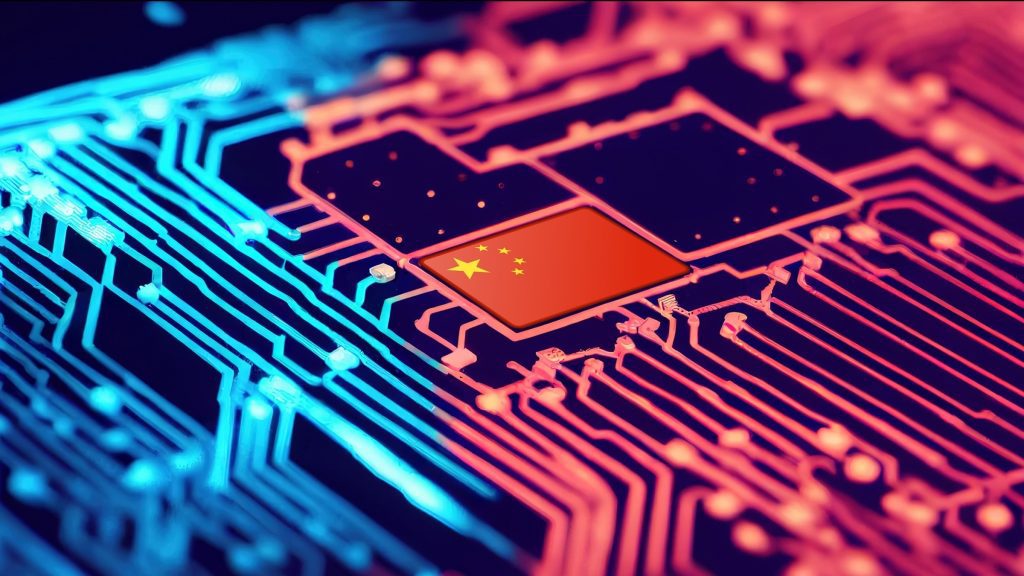
China’s new large language models (LLMs) advances have already descended the AI race into a bitter cycle of recrimination with new accusations from OpenAI and Anthropic CEO accusing Beijing’s AI giants of harvesting data and intellectual property theft.
The latest example comes from Chinese startup, DeepSeek, which trained its newest chatbot model, DeepSeek‑V3.2, on Nvidia’s advanced “Blackwells” chips, despite US export controls explicitly barring such shipments.
“We’re not shipping Blackwells to China, A Trump administration official told Reuters.
Hours later, San Francisco-based and Google-backed Anthropic accused China’s DeepSeek – and two other Chinese companies – of using its AI systems to train their own models.
Earlier this month, Elon Musk also criticized Anthropic’s own AI models as ‘misanthropic and evil,’ highlighting the intensifying scrutiny on AI ethics and bias even within US-based firms. His remarks came just after Anthropic announced a $30 billion funding round at a $380 billion valuation, one of the largest private tech raises to date.
In parallel, OpenAI stolen data were also under the spotlight, as “free-riding on the capabilities developed by OpenAI and other US frontier labs.”
As the US debates the impact of AI on jobs, data theft protection and economic leadership, China’s rapid advances are rattling assumptions about global tech dominance.
“The US perceived monopoly on tech and AI has been broken by China,” chief China economist at TS Lombard, Rory Green, told CNBC. Green also highlighted how Chinese companies harvest data to achieve artificial general intelligence (AGI) and aggressive development of homegrown AI chips, to rival Nvidia.
Harvesting Data
Chinese companies, like DeepSeek, have made headlines for market-shaking models, the technological race extends far beyond labs and trading floors, emphasizing the need for AI data theft prevention.
High performance output from Chinese companies is aggressively being dismissed by US and competitors as the product of systemic data distillation and digital espionage. What’s not dismissed is China’s capacity to deliver on efficiency.
“Whether driven by necessity [chip constraints] or strategy, Chinese labs have made notable advances in inference efficiency and quantization techniques that the broader industry must take seriously,” said AI lead at The Futurum Group, Nick Patience.
By releasing open-source or open weight models, these firms undercut the commercial advantage of US providers, giving enterprises cost-effective alternatives for deploying AI infrastructure and prompting renewed focus on AI model theft safeguards.
In contrast, US companies like Google, Microsoft, and Amazon are racing to maintain a competitive edge, spending hundreds of billions on AI research and infrastructure while trying to prevent AI data theft from undermining their efforts.
Borrowing, Building, and Competing
Chinese firms are acutely aware of their limitations. DeepSeek admitted in a December research paper that it faced “certain limitations when compared to frontier closed-source models,” including compute resources. Yet they continue harvesting data for research and development purposes.
Alibaba’s Qwen team estimated less than a 20% chance that a Chinese company would surpass US AI leaders within the next three to five years. Still, in terms of cost, accessibility, and scaling AI for broad deployment, China may have an edge, particularly in data harvest efficiency.
Global analysts suggest that most of the world’s population could be running on the heist AI Chinese tech stack within five to ten years, particularly in regions where cost matters more than model sophistication.
“The global AI landscape is becoming multi-polar across different layers of the tech stack rather than dominated by a single ecosystem,” said VP at Gartner Julian Sun, emphasizing the threat of data harvest group activities to global tech norms.
Whether accused of unfair practices or lauded for efficiency, China’s AI strategy is reshaping the harvesting data playing field.
While US firms continue to lead in cutting-edge chips and frontier research, harvested data and open-source innovation are giving China new tools to compete, forcing the world to reconsider who sets the pace in the AI era.
Analysts warn that strengthening data theft protection and improving safeguards against AI model theft will be crucial to maintaining US leadership.
The increasing scale of data harvest and the use of harvesting data tactics may redefine how countries protect intellectual property and secure AI-driven economies.
Inside Telecom provides you with an extensive list of content covering all aspects of the tech industry. Keep an eye on our Tech sections to stay informed and up-to-date with our daily articles.