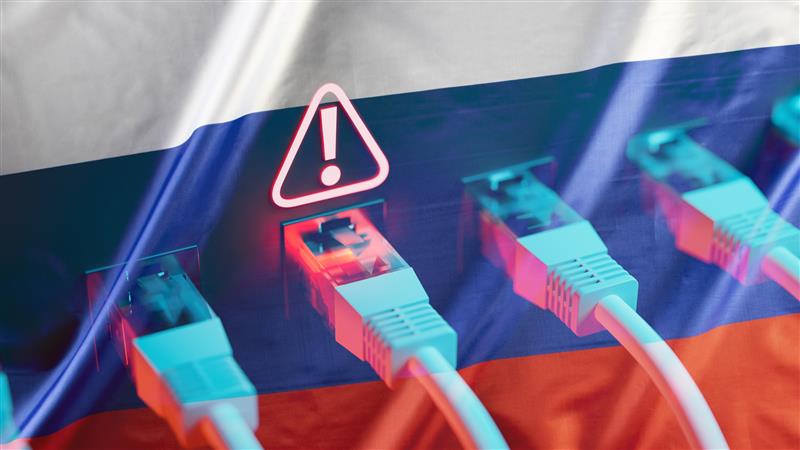
In Moscow, and across other Russian cities, citizens are protesting the government’s decision to restrict the Russian internet, as authorities curb mobile data to tighten control, sparking frustration against these technological barriers.
To many, blocking internet in Russian territories is not merely a political discussion but rather an interruption in their basic mechanisms for functioning in a world dominated by technology.
As Russian internet turns off, what was once an easy daily activity becomes impossible all of a sudden, with experts claiming the Russia internet shutdown issue can be deemed as a human issue.
Human Cost of a Digital Wall
Officials argue these measures are necessary to protect against external threats, but the reality on the ground feels much more personal. In regions far from any conflict, residents find themselves cut off from the global web during a Russian internet down event.
The strategy has shifted from blocking specific websites to creating whitelists -a small group of government-approved apps that are allowed to function while the Russian internet is controlled. This means even if you have a signal, you can only see what the state permits.
The current state of Russia and the internet have hit the country’s economy hard, with businesses losing an estimated $12.85 million (1 billion rubles) for every day the network is silenced. Even loyal supporters of the government are beginning to voice their concerns about the collateral damage to industry.
There is a growing fear that the authorities will eventually use power to Russia turn off internet capabilities entirely for those using unauthorized tools like VPNs.
“The internet is no longer this universal digital good,” lawyer Sarkis Darbinyan, o-founder of the RKS Global digital rights group, told AP news, highlighting the loss of the open web.
A National App and the Battle for Connection
At the heart of this transition is the promotion of MAX, a state-backed super-app designed to replace popular platforms like Telegram. The government is pressuring Russian internet companies to favor this platform over foreign alternatives by making it a pre-installed requirement on all new devices.
While they launch MAX as a convenient tool for banking and services, many see it as a surveillance mirror. Recent reports of a Russian internet down period have only increased the urgency for citizens to find ways to stay connected independently.
In spite of the possible dangers of demonstrating, the frustration is uniting people into a common front against the internet access in Russia. It must be understood that the Russian internet cannot prosper in such conditions where there can be no development of science and technology.
The question of internet connection Russia has become one of the biggest problems for many individuals. As the crackdown intensifies, the Russian internet is losing its status as a bridge to the outside world.
The ongoing shift in Russia and the internet continues to impact internet in Russian territories, where access is often restricted for months at a time.
The absence of stable internet in Russian territories has also caused a disruption in the services like education and healthcare, which have been brought online recently.
After the Russia internet outage, the connectivity’s future in the country still appears to be unclear as even basic online rights are being renegotiated in favor of the state.
Inside Telecom provides you with an extensive list of content covering all aspects of the tech industry. Keep an eye on our Tech sections to stay informed and up-to-date with our daily articles.