This week, the Pentagon introduced a new structural overhaul, Cybercom 2.0, to defend US networks and infrastructure, and counter any cyber attack by China that have successfully compromised US telecommunications and embedded “living off the land” malware within national infrastructure.
The new Cyber Force Generation model was launched as the Pentagon faces blistering scrutiny from lawmakers questioning why the Department of Defense (DoD) still procures hardware from Chinese-linked companies.
In the past, evidence has shown that these vert supply chains are used to facilitate undetectable surveillance of American communications on the long term for China.
For defense leaders, the transition to Cybercom 2.0 is a redirect from reactive defense to a perpetual state of engaged persistence that will hunt for adversaries using system tools to hide their presence – case in study would China’s Typhoon operations.
The cyber standoff between the two powerhouses is all about how military strength is measured by control of networks and data. The balance of power is shaped by cyberspaces, where Beijing’s building offensive hostile operations and the Washington building cyber shields to detect and block hostile operations.
So, why is the Pentagon altering its cyber strategies, and how is China, by expanding cyber status, is forcing Washington to change its defense strategy?
U.S. vs China Cyber Warfare
The Pentagon’s Cybercom 2.0 model is designed to elevate how the US military builds cyber forces to counter the expanding China cyber security threat that has already reached Pentagon telecommunications, power grids, and transport systems. The goal is to match the pace of the ongoing cyber attack by China with faster, smarter, and more precise cyber defense and offense.
“The Chinese have executed a deliberate campaign in order to compromise U.S. networks and then use native commands and native features inside those networks to move around to look like legitimate traffic. That makes it difficult for us to define those,” said Army Lt. Gen. William Hartman acting commander of US Cyber Command and director of the National Security Agency.
In December of 2025, Chinese state-sponsored hackers breached the US Treasury, targeting sanctions and economic intelligence offices, indicating a shift from pure espionage toward strategic cyber positioning.
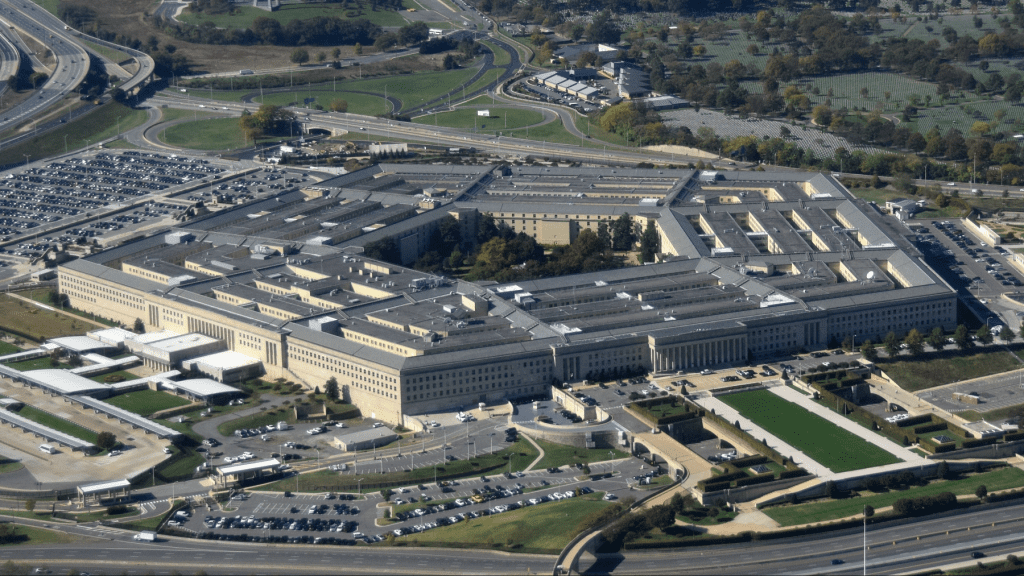
The Cybercom 2.0 initiative now prioritizes specialized units to defend satellites, GPS, and military networks – Pentagon telecommunications – separately. This new structure reflects how China military compared to US has built its cyber forces to target the most sensitive digital systems.
“Our legacy force generation model is inconsistent, hindering our ability to adapt at speed and scale to counter threats like Volt Typhoon and Salt Typhoon,” the Pentagon wrote, referring to the growing China cyber security threat inside US networks.
US officials tell these disturbances are designed to test access and persistence rather than cause immediate damage, allowing Chinese operators to hide for future crises.
According to Katie Siutton, assistant secretary of defense for cyber policy, this approach is approved to be the most suitable to address emerging threats. Hartman added that AI is now essential to combating the expanding China pentagon cyber threats.
“It’s not going to entirely take the human out of the loop, but what it is going to do is identify the most important data that our analysts need to look at in order to best protect our network,” Hartman said.
As China military compared to US continues to invest heavily in cyber operations, Cybercom’s new model is meant to keep the US ahead by linking offensive cyber knowledge directly to defensive protection against another cyber attack by China.
China’s Ocean Exploration Provides Military Intelligence and Threatens U.S. Allies
In order to prove China’s tactics to weaken the American network infrastructure, we shed the light on China’s attempts to use the ocean as a utility to strengthen its China cyber warfare capabilities. Back in October 2025, a report from Auburn University’s McCrary Institute for Cyber and Critical Infrastructure Security mentioned that China was sending research ships, coast guard vessels, and maritime militia to map the seafloor with undersea drones and survey equipment.
Chinese naval forces, coast guard units, and a maritime militia deploy survey vessels and undersea drones to map the seafloor in the South China Sea and Arctic, improving submarine navigation and intelligence collection.
These missions improve submarine navigation and help target US undersea sensor networks and cables, strengthening China cyber capabilities that link maritime data with cyber targeting.
Analysts warn this supports a broader China cyber attack on US strategy that can disrupt both military and civilian systems. The Typhoon hacker campaigns show how this strategy is already in motion.
Additionally, the McCrary Institute warned that Volt Typhoon and Salt Typhoon are probing US energy, water, transportation, and telecom networks, including Pentagon telecommunications.
“Volt Typhoon’s embedded presence in critical infrastructure, Salt Typhoon’s vast surveillance of telecom networks, and the opportunistic exploits of Linen, Violet, and Silk Typhoon are strands of a coherent strategy,” the report mentions.
These operations give Beijing visibility into communications and create serious China pentagon cyber threats, allowing it to interfere with command systems and crisis response while increasing wider China cyber threats to US allies.
As China expands its cyber intelligence power, the US is responding with Cybercom 2.0 to defend networks, and critical infrastructure. The continuing cyber attack by China has turned cyberspace into a battlefield where both nations now compete for long-term digital dominance.
Inside Telecom provides you with an extensive list of content covering all aspects of the tech industry. Keep an eye on our Cybersecurity sections to stay informed and up-to-date with our daily articles.