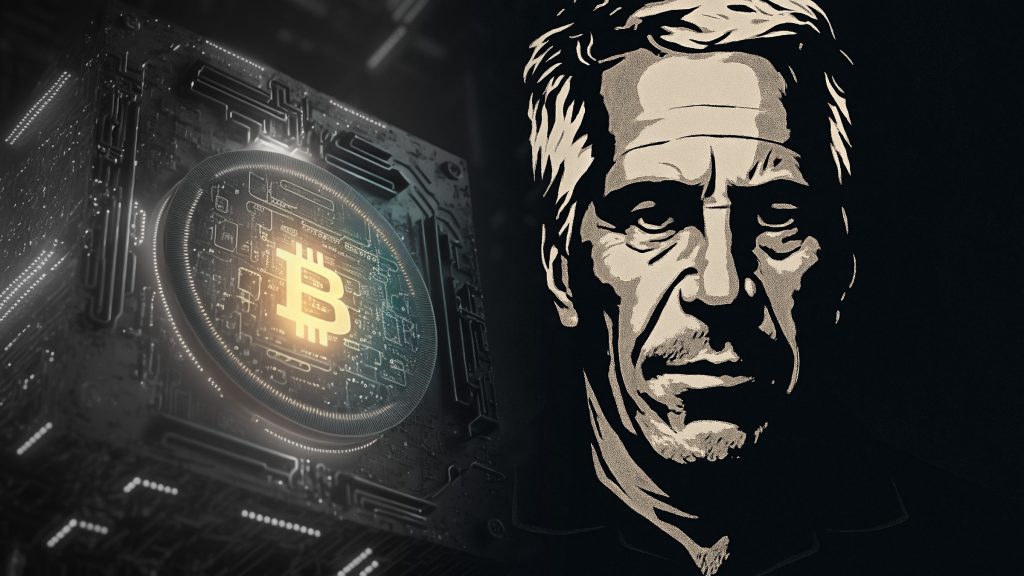
On January 30, the newly released Department of Justice (DoJ) Epstein documents expose the convicted sex offender’s direct financial link to the early inception of the cryptocurrency ecosystem, revealing millions of Epstein Bitcoin investments in the industry’s foundational companies, according to The Guardian.
Jeffrey Epstein’s connection goes all the way back to cryptocurrency’s beginning, along with its most influential early projects, including Bitcoin, crypto exchange and custodian Coinbase, and Massachusetts Institute of Technology (MIT’s) Digital Currency Initiative (DCI) – the “principal home and funding source” for Bitcoin.
The convicted financiers released – but redacted – documents exposed his 2014 investments in Coinbase and blockchain and Bitcoin infrastructure company, Blockstream. During that same year, Blockstream closed a “$21 million seed round.
“Our nearly 40 investors include many well-known pioneers in the Internet and financial services sectors,” according to Blockstrem’s blog post.
Now, people are questioning the cryptocurrency’s origins and the tech elite’s willingness to accept money from a known felon and sex predator.
The Jeffrey Epstein crypto leaks exposed tension at the heart of the Epstein crypto story, specifically Epstein Bitcoin, which was created to bypass government oversight and empower the middle class yet became involved from its main cause with elite investors whose wealth and influence could guide its development.
As the sector grew, these unclear origins highlight crypto’s susceptibility to manipulation and the fragility of its promise.
Epstein’s Hidden Door to Silicon Valley
Documents released by the DoJ show that Epstein Bitcoin connection invested $3 million into Coinbase in 2014, a deal brokered by crypto evangelist Brock Pierce, co-founder of Tether.
Coinbase co-founder, Fred Ehrsam, reportedly courted a meeting with Epstein, while the disgraced financier later sold half his shares to Pierce’s Blockchain Capital for $15 million in 2018.
Even if Epstein funded Bitcoin, the timing was crucial. At the time, Bitcoin was still recovering from the Mt. Gox collapse, and institutional investors largely avoided space. Yet the Jeffrey crypto connection to volumes of capital helped build infrastructure through which millions of retail transactions now flow.
Mt. Gox collapse the was the first “Great Depression” of the crypto world, reaching its peak in 2013. Based in Tokyo, Japan, the Mt. Gox was the largest Bitcoin exchange on Earth – handling over 70% of all global Bitcoin transactions.
Despite online speculation, industry insiders largely shrugged off the implications. Founder of Remilia, Charlotte Fang, dismissed concerns over the Epstein crypto involvement, saying, “only the financially unsophisticated” would assume that he had any degree of influence over the direction of Coinbase.
Some, however, see this early influx of elite money as evidence that the decentralized ethos of crypto may have been compromised from the start.
MIT Media Lab’s Associated to the Elite
The Epstein Bitcoin files also expose how academic institution MIT helped legitimize cryptocurrency while being financially linked to him. Through MIT Media Lab’s then-director, Joi Ito, Epstein directly donated over $800,000 to the institution and facilitated an additional $7 million from other wealthy individuals.
The association between MIT Media Lab and an elite network of power is not new news. Orchestrated by Epstein, the scandal reached its peak way before 2026. The year was 2019, specifically September, when then-director Ito accepted over $7 million from the financier – for the MIT lab and his own private venture capital (VC) funds.
These funds underwrote MIT’s DCI, helping it become the “principal home and funding source” for Bitcoin research. It’s worth mentioning that Epstein also invested the $500,000 in Blockstream – also co-owned with Ito.
The files exposing the Epstein Bitcoin link are not just restricted by the limitations of capital. Jeffrey played a fundamental role as the gatekeeper to other billionaires.
In 2020, Goodwin Procter reported that Epstein brokered $2 million from Microsoft co-founder, Bill Gates, $5.5 million from Apollo Global Management’s Leon Black, and gave access to powerful figures such as LinkedIn’s Reid Hoffman and Palantir/PayPal’s Peter Thiel.

Even though Bitcoin was initially conceived with the pretense to bypass elite financial control, Epstein’s involvement with his network of elite billionaires suggests that some projects could have been potentially meant to be sustained by the 1% elite the blockchain system was designed to circumvent.
One of Bitcoin development’s first contributors, Luke Dashjr, called for Blockstream CEO Adam Back to resign, describing Epstein’s engagement as an attempt to “undermine Bitcoin.”
“Bitcoin is a decentralized technology that required no funding, and Epstein was evidently a skeptical investor, who got in later than I did, and exited earlier than he should have,” Fang told The Guardian.
Epstein Files’ Illusion of Independence
Since its creation, the Epstein Bitcoin controversy and other cryptocurrencies were meant to resist government oversight and allow users to move money outside traditional, state regulated financial systems. Yet the Jeffrey Epstein cryptocurrency revelations show that technology is highly susceptible to be influenced by tainted capital, especially when centralized exchanges such as Coinbase act as gateways to the system.
The files show that while crypto may be able to overcome governments, it’s not immune to the influence of financial elites, raising doubts about its credibility and resilience.
Epstein funded Bitcoin in activities, both financial and academic, is a reminder that volatility comes in many forms, the ideological underpinning of the sector remains tenuous so long as the human infrastructure is supported by individuals with power, money, and dubious intent.
As the sector develops into maturity, the question that remains is whether Epstein Bitcoin truly the potential has to liberate those within the middle class, or if it has quietly fallen under the same tyranny, it sought to avoid.
Inside Telecom provides you with an extensive list of content covering all aspects of the Tech industry. Keep an eye on our Cryptocurrency section to stay informed and updated with our daily articles.