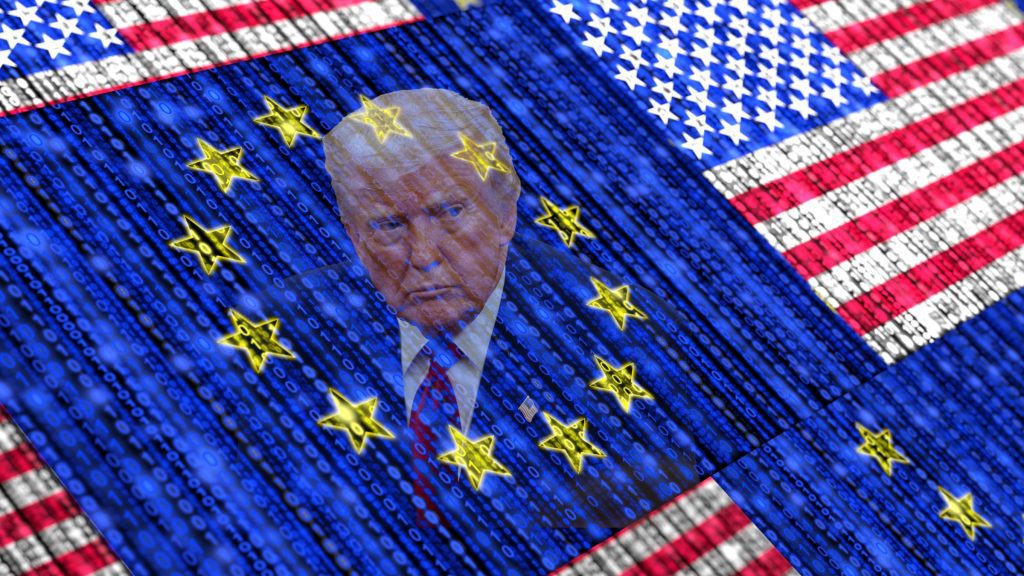
The time has finally come for the European Union (EU) to wake up to the harsh reality that absolute reliance on US technology for militarized protection must reach an end. After decades of technological complacency, the EU digital strategy is taking a different turn, racing against geopolitical time and financial obstacles to decouple its most vital public services, private industries, and citizen data from the near-total domination of American Big Tech.
The EU digital strategy is all about gaining more sovereignty, strengthening the national cloud, AI, and digital infrastructure, and claiming back Europe’s digital power.
The EU’s change of action is driven by a new fear that a soured transatlantic relationship could result in its long-term ally. The US could simply pull the plug on the digital infrastructure Europe relies on for, well, almost everything. And that means from banking to healthcare to government communications.
A new digital Europe means thriving to achieve complete digital sovereignty but also facing the harsh reality of the repercussions of not facing, or dealing with, deep-seated vulnerabilities that have been lingering for a while now.
There’s opportunity to change the global technology influence, to divest from the US into complete autonomy. Will the EU manage to build a strategic autonomy while its societal functions remain hostage to the stability and goodwill of foreign powers?
Europe’s reliance on US-based services is clear. Their banks, healthcare, and communication networks depend highly on Amazon, Microsoft, and Google. Therefore, if access were cut off, disruptions could ripple across society.
Digital EU Sovereignty’s All About the Numbers
Johan Linåker, senior researcher at RISE Research Institutes of Sweden, has mentioned that Europe’s complacency is behind its rising dependence on US Big Tech.
“Public sector and governments have been suffering by a comfort syndrome for decades. There’s a tradition of conservative procurement culture, risk aversiveness, and preference for status quo,” he said.
The EU’s dependence on foreign technology is blunt. Amazon Web Services, Microsoft Azure, and Google Cloud control about 70% of European market share. AI research is dominated by US-based firms like OpenAI and Anthropic.
The Wall Street Journal reports that officials fear a White House executive order that cuts off the region’s access to data centers or email software that businesses and governments need to function.
To oppose this, EU came up with EU digital strategy, including the “Open Digital Ecosystem Strategy” initiative like Eurostack, aiming to foster Europe tech sovereignty.
“Europe’s sovereignty hinges on its competitiveness and innovation,” Linåker said, stressing that even with strong policy, shifting reliance to EU-backed platforms may not eliminate dependence.
Countries like France, Germany, and the Netherlands are investing in open-source tools and domestic cloud infrastructure, supporting both digital EU and digitalization EU efforts. These initiatives will minimize exposure to US tech while ensuring secure, locally controlled digital services.
Practical Steps to Improve EU Digital Strategy
On the ground, European regions are putting effort into the ground. Helsingborg, Sweden, is testing public services under a potential digital blackout. Schleswig-Holstein in Germany replaced nearly 70% of Microsoft systems with open-source alternatives, targeting minimal Big Tech usage by decade’s end.
“Policy-makers and governments need to lead by example by moving the public discourse and communication beyond incumbent platforms as X to options like Mastodon, which enables an open and federated infrastructure, not dependent on any single actor,” Linåker said.
More investments across Europe aim to create digital Europe solutions for chat, video, and document management.
For example, Sweden’s National Insurance Agency offers platforms hosted on local servers, demonstrating the potential of EU digital single market strategy. Yet Europe may still face strategic dependencies on companies like France’s Mistral.
The EU is not pursuing full isolation from global technology. Collaboration with US, China, and other nations remains necessary.
However, these policies are setting a new sovereignty strategy that digital infrastructure is now treated as critical to security and resilience, supporting EU AI development.
Large EU companies like Netherland’s ASML, a leading producer of AI chip lithography machines, further strengthen potential leverage against US tech dominance, hinting at EU tech weaponization.
Open-source projects and platforms listed on sites like Switch to EU or european-alternatives.eu aim to provide citizens and public bodies replacements, demonstrating that Europe internet technology can operate independently from foreign control.
“We need to build a new form of independence” said Ursula von der Leyen, EU President at the World Economic Forum in Davos.
The EU digital strategy represents careful rebranding. Not total isolation, but an effort to regain leverage and protect European digital futures from US dominance. At the end of the day, efforts will show whether Europe nations can truly claim their technology. But for now, a new fear rises, will Europe become a new tech power that others begin to fear?
Inside Telecom provides you with an extensive list of content covering all aspects of the tech industry. Keep an eye on our Tech sections to stay informed and up-to-date with our daily articles.