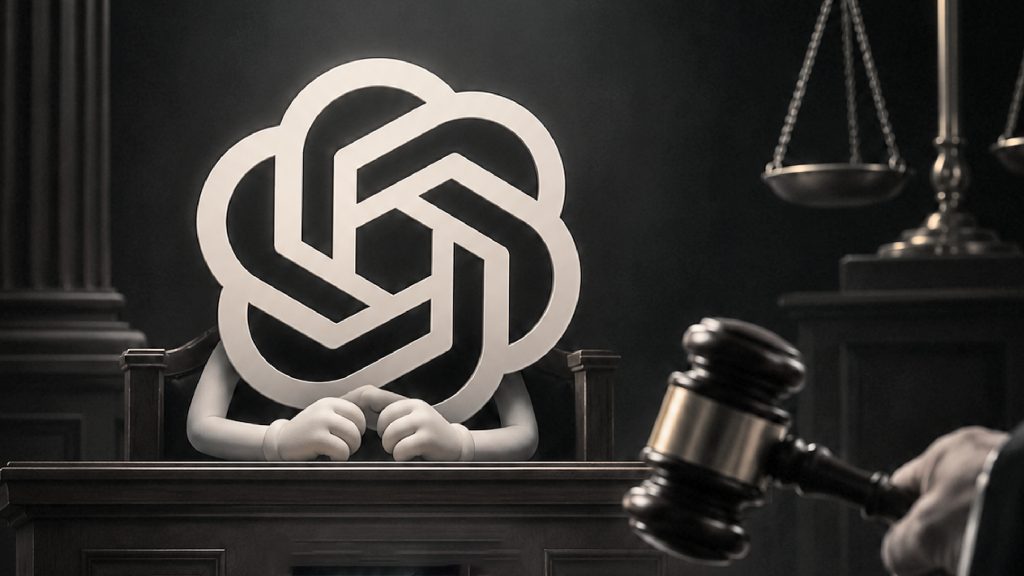
On July 15, the European Union General Court upheld its decision to deny OpenAI trademark protection for its own name across most categories it sought, ruling “OPENAI” is merely deceptive of accessible AI, rather a distinctive brand identified under EU trade mark regulation.
OpenAI applied to register OPENAI as an EU trademark in June 2023 across four classes 9, 38, 42 and 45, covering downloadable media, non-fungible tokens (NFT), computer software, and scientific and technological services.
The European Union Intellectual Property Office’s (EUIPO) examiner partially rejected the application, allowing protection only for class 38 telecommunications services, on the grounds that the term lacked distinctive character.
Judges backed the EUIPO,Judges backed the European Union Intellectual Property Office (EUIPO), finding that “OPENAI” describes technology rather than one commercial source. The ruling does not prevent OpenAI from using its name in Europe but limits the AI lab’s ability to secure exclusive EU-wide protection.
OpenAI may still gain protection by proving that consumers already associate the name with its products and services.
Why Europe Rejected the Name
Under EU trade mark regulation, a sign can be rejected when at least one possible meaning describes a characteristic, purpose, or type of the goods and services offered. The court said English-speaking consumers would separate OPENAI into the familiar words “open” and “AI,” even without a space.
The office found that “open,” meaning available or unrestricted, combined with “AI,” the common abbreviation for artificial intelligence, would be understood by consumers as describing the nature of the underlying goods and services instead of identifying a specific commercial origin.
An EU trademark search may find similar registered names, but don’t guarantee success. OpenAI cited comparable European marks and registrations elsewhere, including the UK. Yet, judges said the EU system is autonomous, and earlier decisions do not bind EUIPO.
How OpenAI Took the News
OpenAI appealed to the General Court, arguing that OPENAI functioned as a “complex sign” with no independent meaning and that the EUIPO has improperly applied blanket reasoning across unrelated goods and services.
OpenAI argued that OPENAI was a new expression without independent meaning. The European court rejected both arguments, emphasizing that a trademark can be refused if one plausible reading of the term describes a characteristic of the underlying product.
The court’s claim also reaffirmed its finding that consumers would naturally parse “OPENAI” into its two recognizable English components, despite the absence of a space between them, and because it follows English grammar: an adjective followed by a noun.
“The lack of a space between the ‘OPEN’ and ‘AI’ elements was not enough to create that difference,” criticized to OpenAI, going for the kill in the Court’s findings.
Fame alone does not satisfy EU trademark registration rules. Market recognition may show that consumers know a company, but the first legal question is whether the name itself distinguishes its products instead of describing them.
The EU trade mark regulation applied in OpenAI’s case protects competition by keeping descriptive language available to developers.

What OpenAI Can Do Next
The ruling issued July 15 in case T-555/25, leaves the ChatGPT-parent without trademark protection across the EU, over its name for most of what it sought, even though “OPENAI” is separately registered in the UK and several other jurisdictions.
The rejected OpenAI trademark does not force a name change or stop European operations. It limits EU-wide protection for the refused categories and may complicate enforcement against similar names.
OpenAI can rely on other rights and claim acquired distinctiveness under Article 7(3). Part of the EU trade mark regulation permits a descriptive sign if consumers identify it with one commercial source.
That route meets demanding EU trademark registration requirements. OpenAI would need evidence showing what consumers understood when it filed in June 2023, only around six months after ChatGPT became publicly available, rather than relying mainly on recognition gained later.
“A company growing this fast will be famous long before it is protected,” the main source said, adding that Europe examines what the public understood on the filing date.
The EU trademark registration database could eventually include the word for more categories if EUIPO accepts acquired-distinctiveness evidence. The office should examine that claim after the judgment becomes final, although classes 42 and 45 may prove difficult.
For the broader technology sector, the new EU trademark regulation lesson is direct, revealing that a name that explains a product clearly can be easier to market but harder to protect. Startups using words such as “open,” “smart,” “generative,” or even “AI” may face the same fate.
A careful EU trademark search before launch can identify competing marks, but it must also test whether the proposed name is descriptive. Businesses can improve protection by adding an invented word, using a distinctive logo, or filing out narrower product classes.
The ruling also distinguishes OpenAI trademarks registered abroad from rights available across the EU. Success before another national office carries no decisive weight in Luxembourg, and that distinction matters across EU intellectual property policy.
For EU intellectual property, the case balances brand investment against competitors’ access to common technical vocabulary. OpenAI remains widely recognized, yet recognition and inherent distinctiveness are legally different questions.
The EUIPO has said it will separately examine the ChatGPT-parent’s alternative claim that the OpenAI trademark acquired distinctiveness through extensive use, once the General Court’s decision becomes final.
The claim itself will require OpenAI to prove that consumers had come to associate the term specifically with the company’s AI lab, rather than with AI technology generally, as of mid-2023 – a higher evidentiary bar than showing current-day brand recognition.
The Court’s finding does not end every path for OpenAI’s EU trademark registration, but it seems it would take some time to reach fruition.
Inside Telecom provides you with an extensive list of content covering all aspects of the tech industry. Keep an eye on our Intelligent Tech sections to stay informed and up-to-date with our daily articles.