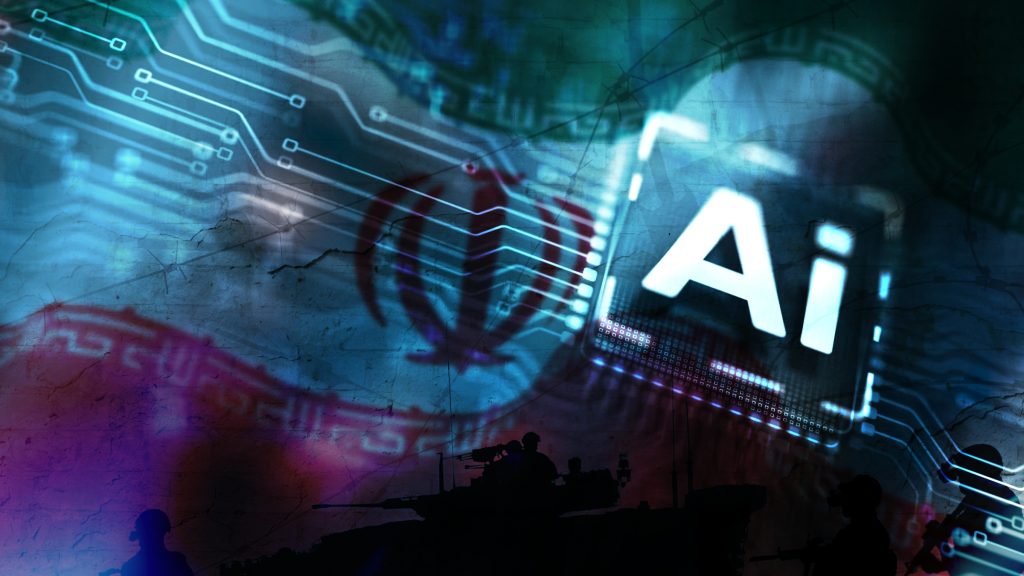
Global technology markets have been sucked into a state of alert, as the Iran tech war escalates, following Iran’s strikes on the biggest Qatari gas hub, Ras Laffan, paralyzing the supply of an essential element for advanced semiconductor manufacturing, helium, according to Reuters.
The missile strike, by most accounts, was over in mere minutes. What it left behind, however, will take years to untangle. The target was not just on energy infrastructure in Qatar, hence why it sent tremors through a mix of boardrooms – not just in Doha and Tehran – but China’s Hsinchu, Netherlands’ Eindhoven, and even the glassed-walled campuses of Silicon Valley.
The byproduct of the recent US-Israeli strikes is not only disrupting Middle East supply chains, but the global flow. AI’s growth from Silicon Valley to global data centers depends on fragile materials like helium. We are seeing a new face of this conflict, which would be a Western world and Iran tech war.
The tech war, now stretching across energy and industrial hubs, is showing a less visible vulnerability in the AI boom, not chips themselves, but the raw materials and logistics systems that make them possible. Qatar is one of the world’s leading helium suppliers, alongside the US.
Helium, that peculiar and finite, and almost willfully unglamorous element in which the semiconductor industry cannot function without. It’s considered one of the backbones of the tech war between the US and China.
In the climate-controlled cathedrals where the world’s most advanced chips are born, helium is the foundational for the cryogenic cooling process that makes the extremely precise manufacturing of chips possible.
“The longer this conflict persists, the more likely it is that some of the critical (materials) the region produces, that go into other supply chains—for example, helium in semiconductors—those start to emerge as a problem too,” says the group chief economist at Capital Economics, Neil Shearing.
Disrupting the extraction of helium not only inconveniences the supply chain but completely puts it at a halt.
Hidden Materials and Exposed Risks
Qatar accounts for more than one-third of global helium supply, and after the drone strikes targeting its Ras Laffan Industrial City, production has been stopped, jeopardizing Doha’s long-standing position as a key liquefied natural gas hub.
Helium, often misunderstood as a party commodity, plays a fundamental role in cooling silicon wafers and stabilizing chip fabrication processes. It is also essential for Magnetic Resonance Imaging (MRI) machines and rocket launches, making its supply chain uniquely sensitive across industries.
Recent attacks of the Iran tech war have forced Qatar to declare force majeure and cut helium exports, with early estimates suggesting a 14% annual reduction. Prices have already surged, with some spot market rates reportedly doubling since the conflict began, signaling tightening supply.
“There are no effective alternatives to helium for these functions,” analysts warn, highlighting the risk of cascading disruptions across semiconductor production and advanced technologies.
Compounding the issue are logistical constraints, with around 200 specialized containers used to transport liquid helium, are reportedly stranded in the region. Designed to keep helium stable for just 35 to 48 days, these units are difficult to replace quickly as already straining supply chains are under pressure.
Beyond helium, in the region, Israel and Jordan produce roughly two-thirds of global bromine, placing the Middle East as a key central hub for other chipmaking inputs.
The Middle East contributes about 8% of global aluminum capacity, both needed for semiconductor manufacturing. Since the eruption of the war, aluminum prices have already hit a four year high, with forecasts warning of further spikes if disruptions intensify.
“These events are exposing how concentrated and logistics dependent many critical mineral supply chains are, allowing shocks to transmit quickly into physical markets,” says a commodities strategist at ING, Ewa Manthey.
Iran Tech War Fastens Demand and Leads to Vulnerability
The industry is worried about AI chip famine. Despite carrying a whiff of hyperbole that usually tags any tech crisis before it becomes real, the underlined tone of the threat on the global supply chain cannot be dismissed.
Chip inventories were already stretched and geopolitical patience was already thin way before the disruption to Qatar’s natural gas extraction facilities.
The supply shock comes as demand for semiconductors is surging, driven by an AI arms race now extending into the battlefield. The Iran tech war itself is being described as the first large-scale deployment of AI enabled warfare by the US.
“Our war fighters are leveraging a variety of advanced AI tools,” said Admiral Brad Cooper, head of U.S. Central Command. “These systems help us sift through vast amounts of data in seconds so our leaders can cut through the noise and make smarter decisions faster than the enemy can react.”
AI can “turn processes that used to take hours, and sometimes even days, into seconds” is increasing reliance on high-performance chips at the very moment their supply chains are under strain.
In the case of the Iranian hit on the Qatari facility, is not the strike itself, but the weapon behind it. Observers from RTE flagged Iran’s deployment of autonomous drone swarms as intelligent targeting where AI enhances military precision.
The new face of tech deployment, as seen in this Iran tech war tactics, is how the drone swarms are not only measured, but hold unmistakable gravity as a threshold moment, with great speed and accuracy.
“‘Prolonged’: The word no tech investor wants to hear,” says Dan Ives of Wedbush, adding, “if this Iran situation lasts until May, then we have some supply chain issues around critical minerals with the AI buildout.”
“Even if production resumes tomorrow, full supply chain recovery would take four-to-six additional months—bringing the total vulnerability window to six-to-nine months,” says Quantum Strategy President, David Roche.
The Iran tech war is reframing from the AI narrative.
How the Iran tech war tactics is completely altering the global AI narrative, where silicon-based intelligence, manufactured in the world’s most advanced labs, is now being used – and turned – against the very infrastructure needed to produce it.
You can say the machines, in a sense, have begun eating the factory.
Inside Telecom provides you with an extensive list of content covering all aspects of the tech industry. Keep an eye on our Tech sections to stay informed and up-to-date with our daily articles.