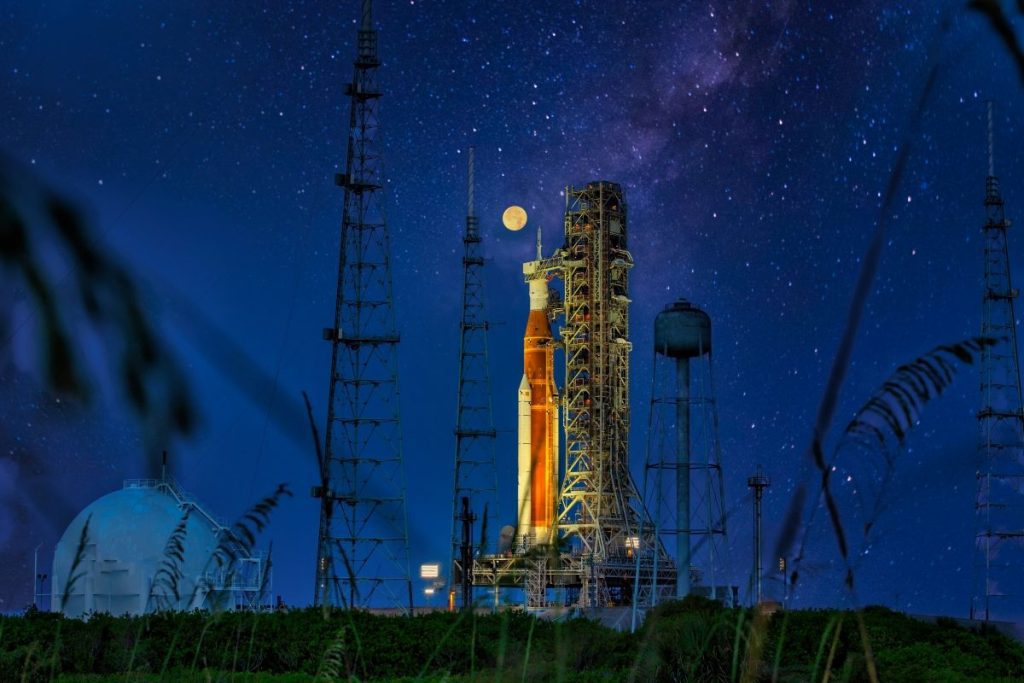
On March 24, a NASA Artemis program reset was announced as a commitment to monthly lunar missions of permanent human base at the Moon’s South Pole by the early 2030s, breaking from its old marquee, one-off moonshots and replacing it with something that looks less like exploration and more like a supply chain, industrializing the lunar agenda.
Where Artemis once operated on an irregular schedule dictated by budget cycles and engineering milestones, NASA has decided to go against the kind of operational tempo, more familiar to freight carriers than space agencies.
The space agency is deliberating outsourcing of heavy lifting, leaning on launch providers from the private sector to sustain the cadence – a tacit acknowledgment that government rockets alone cannot support what NASA is now calling a permanent human presence beyond low-Earth orbit.
The commercial space industry is built on the premise that routine access to space is achievable, but now, it’s being asked to prove it at lunar distances.
Backed by more than $100 billion in public investment, the agency is now directing an additional $250 million toward modernizing launch infrastructure to enable faster turnaround times and more frequent missions once a permanent lunar base is established, another sign of the NASA Artemis program reset.
From Milestone Missions to Repeatable Systems
Artemis, NASA’s plan to return humans to the Moon, is being reshaped into a program built on incremental steps rather than rapid leaps. Instead of moving directly from the upcoming Artemis II crewed flyby to a lunar landing, the agency has added a new mission in 2027 to test critical systems in low Earth orbit, underscoring the NASA Artemis program reset.
Astronauts will rehearse docking procedures, communications and life-support systems with lunar landers developed by SpaceX and Blue Origin, in an environment where rescue remains possible. The first landing near the lunar south pole is now scheduled for 2028, a delay NASA frames as deliberate.
The goal is to build reliability. Rather than aiming for a one-off success, the agency is working toward a steady cadence of missions, eventually launching crews to the Moon every six months. That rhythm depends on infrastructure that does not yet exist but is now central to the program’s design.
NASA Administrator Jared Isaacman made clear the agency is under pressure to deliver results after years of delays and rising costs, a challenge now tied closely to the NASA Artemis program reset.
“We are not going to sit idly by when schedules slip or budgets are exceeded. Expect uncomfortable action if that is what it takes because the public has invested over $100 billion dollars and has been very patient with respect to America’s return to the moon,” Isaacman said.
Building A Permanent Foothold On The Moon
The revised roadmap places new emphasis on surface infrastructure rather than orbital projects. Plans for a lunar base include habitats, power systems and operational networks designed to support continuous human activity, marking a shift away from short-duration missions like those of the Apollo era.
NASA is adjusting its lunar plans, moving away from the Gateway station. The agency is now concentrating on building systems and infrastructure directly on the Moon. This new approach leans heavily on partnerships with private companies, a strategy aimed at spreading out the risk and making sure the program’s success depends on multiple organizations hitting their targets, reflecting the broader NASA Artemis program reset.
The drive to build out infrastructure reaches back to Earth.The $250 million investment in launch facilities is intended to handle a higher frequency of missions, laying the groundwork for the six-month launch cycle envisioned later in the decade.
Beyond the Moon, Artemis is part of a longer path to Mars. NASA is preparing robotic missions to test advanced rockets, nuclear-powered systems and helicopter drones capable of scouting landing sites. These upcoming missions are expected to significantly influence the plans for sending people to Mars, potentially as early as the 2030s.
This shift in strategy has significant consequences. A sustained presence on the Moon will inevitably affect future efforts, influencing everything from daily operations to the legal frameworks that govern them. Furthermore, it puts the US in a better position to compete with other nations venturing into space, especially given the increasing interest in the Moon’s resources and strategically valuable sites.
For NASA, the future isn’t just about a lunar visit, but establishing a lasting presence. What NASA is proposing is something categorically more difficult. But if it works, it’ll be categorically more consequential.
Inside Telecom provides you with an extensive list of content covering all aspects of the tech industry. Keep an eye on our Tech sections to stay informed and up-to-date with our daily articles.