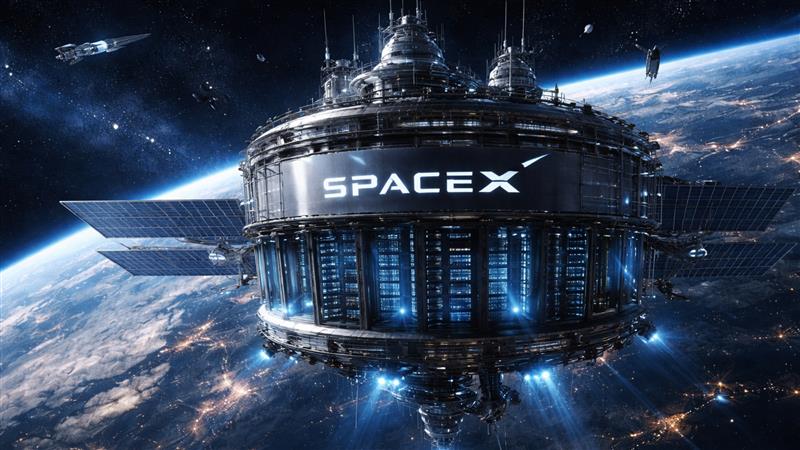
On February 2, Elon Musk confirmed that his company SpaceX acquired his xAI firm, emerging them to build an orbital data center in a $1.25 trillion deal to support AI growth through satellite computing, according to Bloomberg.
Musk’s AI ambitions are beyond Earth. His move links two of most ambitious projects as AI pushes global demand for faster and larger computing systems. By blending rockets and software, the goal is to create a data center in orbit that can serve future AI models.
Musk’s Vision on Data Center in Space
The vision is to build a data center in space using fleets of satellites instead of giant buildings on land. Musk explained the idea in a memo on SpaceX’s website.
“Current advances in AI are dependent on large terrestrial data centers, which require immense amounts of power and cooling. Global electricity demand for AI simply cannot be met with terrestrial solutions, even in the near term, without imposing hardship on communities and the environment,” he wrote.
This merger creates what Musk hopes will become a new orbit data center system that floats above the planet, powered by the sun and cooled by space. Bloomberg News reported the combined company is now valued at about $1.25 trillion, making it the most valuable private company in the world.
Musk also said many satellites would be needed to keep this orbital data center running, which means more launches and steady work for SpaceX in the years ahead.
Orbit Data Center, A Futuristic yet Risky Mission
Indeed, the idea of AI data center in space looks futuristic, however, the timing is driven by money and computing needs. Competition in the industry is intense, and xAI spends around $1 billion per month to keep up with rivals like Google and OpenAI.
Therefore, a data center in space could give the AI firm cheaper and more reliable power for training its systems.
Meanwhile, SpaceX earns most of its income from Starlink, Musk’s satellite internet service. By linking that income to an orbital data center, Musk is turning satellite internet revenue into fuel for AI growth. This also gives xAI access to what could become a massive SpaceX data center network in the sky.
“SpaceX is acquiring xAI to form the most ambitious, vertically-integrated innovation engine on (and off) Earth, with AI, rockets, space-based internet, direct-to-mobile device communications and the world’s foremost real-time information and free speech platform,” Musk said when asked about the merger of the two companies.
SpaceX now is elevating its mission by moving toward deep space operations and building a data center in orbit to meet the rising demand for AI computing. This system would rely on SpaceX’s Starlink network to move huge amounts of data between Earth and orbit with very low delay.
However, the strategy raises risks because SpaceX already deals with technical challenges and Starship test delays, and too strict regulations. By merging both companies together through an orbital data center, Musk is linking the future of his business to expensive and uncertain bets.
The failure of xAI to keep up around AI and digital safety will put pressure into SpaceX and shake its satellite services. SpaceX data center in space is a bold move but could end up testing Musk’s ability to manage growing technical strain, rising costs and public trust.
Inside Telecom provides you with an extensive list of content covering all aspects of the tech industry. Keep an eye on our Tech sections to stay informed and up-to-date with our daily articles.