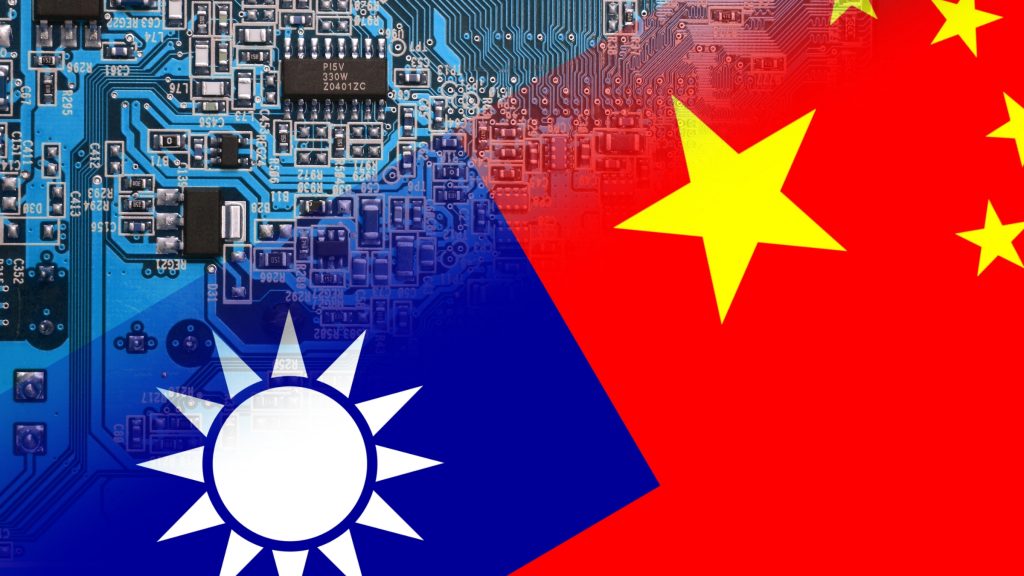
In December 2025, as Taiwan prepared for future elections, investigators and industry leaders in Taipei warned that China’s use of AI and politics to shape public opinion is accelerating, even as Taiwan’s technology sector pushes toward advanced chipmaking to defend both democracy and its global economic standing.
A Taiwanese AI expert shared with the paper that the fast pace of innovations in AI in politics campaigns has made it harder to tell the difference between real online interactions and fraud attempts that are coordinated.
New findings show serious worries about the possible usage of AI or political destabilization by China to meddle in the electoral politics of Taiwan with the investigators warning that there is digital technology of a very high level political deepfakes that is being used for the purpose of influencing people’s opinions before elections.
The source of the news, Taipei Times, points out that manipulation and deepfakes in political campaigns of political destabilization through advanced technology is a coordinated effort.
According to Taipei Times reports that the internal documents acquired by the Institute for National Security at Vanderbilt University reveal the activities of GoLaxy, which is a company believed to have strong connections with Chinese state institutions regarding AI in democratic elections.
It is said that the company has been working on the implementation of AI election interference systems that can supervise online discussions, visualize public opinion, and spot powerful social media users who can be used to sway the political discourse amid political destabilization.
Chip Competition and Taiwan’s Strategic Pivot
The Taiwanese semiconductor industry has also experienced growing pressure from foundries in China, including Nexchip, that quickly occupied a certain market share within the mature chip market through deep discounts and capacity expansion.
Powerchip Technology has had to withdraw not only from the profitable business of producing integrated circuits for flat panels sold to China, but United Microelectronics Corporation (UMC) and others are now concentrating on more sophisticated technology.
With robust AI in politics government spending and low profit margins, the Chinese foundries have increased production capacity, which is price competitive against Taiwanese players. In 2027, the global mature node wafer production capacity in China is expected to overtake Taiwan’s.
In the meantime, Taiwanese executives are striving to go deeper into their playing fields by immersing themselves into the world of 3D stacking, a process that entails combining logic and Dynamic Random-Access Memory (DRAM) memory to boost performance.
Taiwan is still ahead of the game in terms of process stability and production results, however, the dual pressure of Chinese competition and geopolitical instability is making the industry rethink its future right now when the island is encountering and facing growing political deepfake threats to its AI and politics democratic foundations.
Inside Telecom provides you with an extensive list of content covering all aspects of the tech industry. Keep an eye on our Tech sections to stay informed and up-to-date with our daily articles.