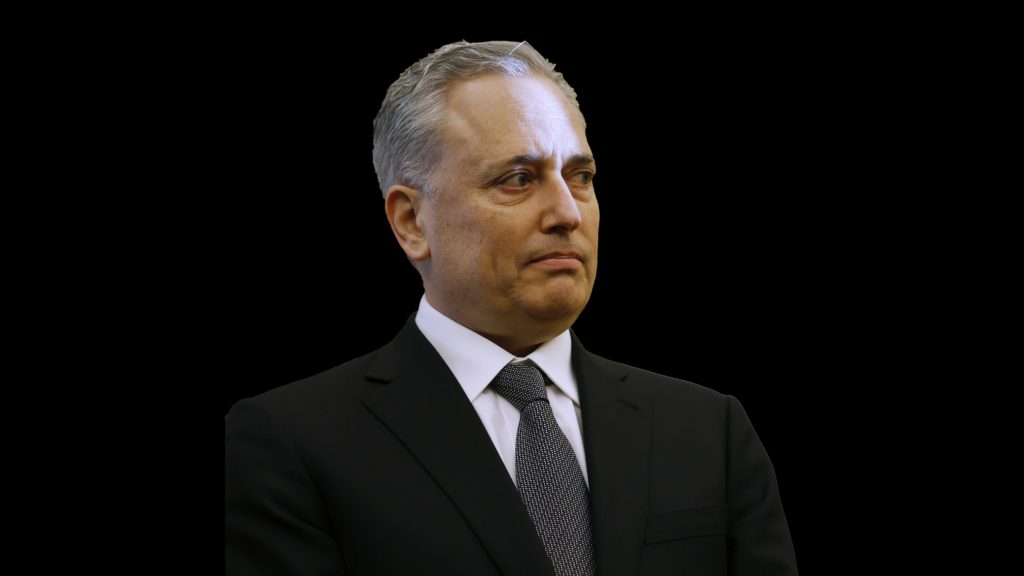
As 2025 comes to an end, President Donald Trump’s aggressive move to block states from regulating AI usage policy has split the tech lobby and redirected frustration toward the White House’s top AI adviser, David Sacks, whose push for executive action has set back a sensitive congressional strategy.
Supporters of a single federal AI acceptable use policy standard say the order addresses a growing “patchwork” of state rules. But tech companies and lobbyists warn that the rushed approach has created new uncertainty, hardened opposition across parties, and turned leading solutions for enforcing AI usage policies into a national political fight.
A Sweeping AI Usage Policy and a Fast Backlash
A San Francisco based investor, Sacks, wrote a big chunk in the US AI policy news executive order Trump signed last week, deploying the legal and financial power of the federal government against state AI laws. Standing beside the president at the signing, Sacks said, “You’ve got 50 states running in 50 different directions — it just doesn’t make sense.”
Many tech companies agree with the goal of a single national framework. But more than half a dozen people involved in Washington discussions told POLITICO the executive order undercut industry efforts to craft a permanent congressional solution, instead triggering backlash from governors, lawmakers, and advocacy groups.
“He’s made it a lot harder,” said Brad Carson, president of Americans for Responsible Innovation. “Thanks to the preemption fights, you have kids’ safety groups, you have Republican governors, Republican attorneys general — it’s become a thing.”
Carson’s organization is often opposite to the tech lobby, yet several industry figures echoed with his concern that the AI acceptable use policy order is an uncertain legal standing may not even shield companies from state AI usage policy laws in the meantime. “Businesses don’t like uncertainty,” said Bilal Zuberi of Red Glass Ventures. “And this is an uncertain future for any EO.”
Trump’s AI governance frameworks mirrors Silicon Valley’s fast pace mindset, treating governance like software deployment ship first, fix late showing how platform logic is reshaping Washington’s lawmaking process in real time power struggles.
The AI Czar’s Rise and the Cost of Speed
The escalating concern regarding the AI usage policy reflects the unease that comes with Sacks’ intense charging approach to Washington. An Elon Musk confidant with limited AI policy framework government experience, Sacks has already notched wins on crypto legislation and loosened chip restrictions benefiting Nvidia.
But on AI enterprise governance preemption, his refusal to compromise disrupted momentum including a bipartisan breakthrough in California, where Gov. Gavin Newsom signed an AI safety law supported by industry and lawmakers.
That national AI framework cooperation collapsed after Trump’s order threatened Justice Department action against states. Within minutes of the AI business-specific governance talk, Newsom fired back, “President Trump and Davis [sic] Sacks aren’t making policy — they’re running a con.”
Florida Gov. Ron DeSantis said states “has a right” to regulate the US AI policy news and predicted Florida “would be well positioned to prevail” in court.
Several people involved in Capitol Hill negotiations said the White House’s uncompromising posture attributed largely to Sacks stopped a deal that would not have used responsible AI policies and frameworks in exchange for new federal guardrails on child safety and frontier AI models.
One person familiar with the talks said, “David was unwilling to make that compromise, so we are where we are — and for now, preemption is on life support.”
The executive order now directs federal agencies to challenge state AI usage policy laws, condition funding, and evaluate rules that “alter truthful outputs.” While some firms welcomed their call for Congress to act, most lobbyists believe the leading solutions for enforcing AI usage policies is legally shaky and politically unsafe.
“I welcome the consistency of having one single rulebook,” said CEO of Gavel, Dorna Moini. “But the reality is that the uncertainty isn’t reduced. It’s whiplash.”
Sacks pledged to “work with Congress,” and the final US AI policy news order includes a place for child safety. Still, many remain unconvinced that the White House is ready to compromise.
As Trump said at a holiday party, even without congressional action, “it’s good for three years and two months.”
In trying to force clarity at Silicon Valley speed, the White House may have slowed the very compromise to govern AI industry needs to move forward.
Inside Telecom provides you with an extensive list of content covering all aspects of the tech industry. Keep an eye on our Intelligent Tech sections to stay informed and up-to-date with our daily articles.