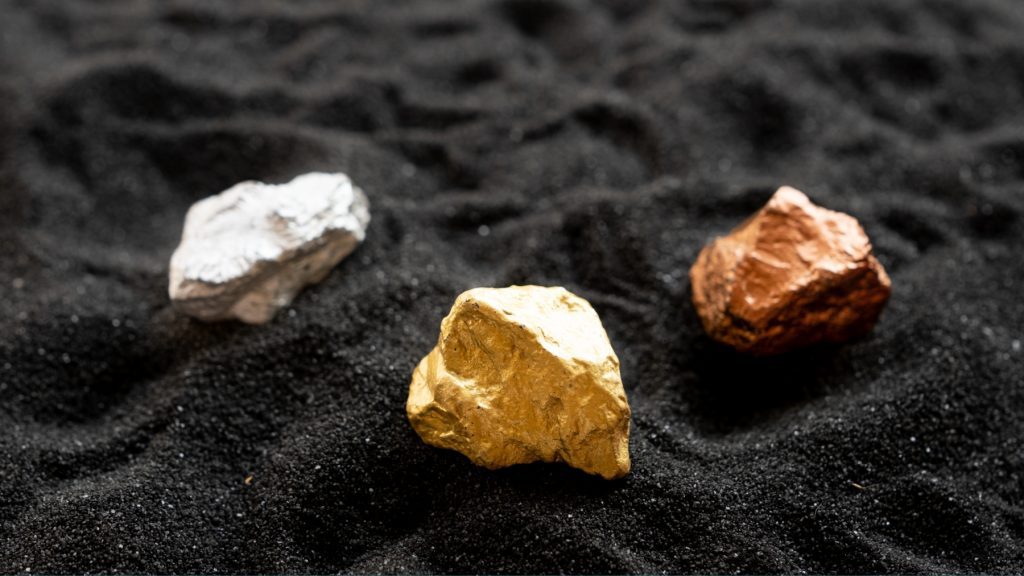
In the high desert of Mountain Pass, California, the US is resuscitating a once dormant mine into its new supply chain for rare-earth magnets and elements, much needed for everything from electric vehicles (EV) to fighter jets, as China nears total domination over raw minerals of the 21st century.
The US reopening its only active rare earths site, the Mountain Pass mine, is the latest geopolitical experiment in onshoring a complex, chemically intensive, and historically dirty process – not just an industrial project to extract rare earth deposits in the US.
An independent and stable supply chain for US rare earth producers has become an essential and economic priority for Washington. A value chain completely controlled by Beijing.
The Mountain Pass mine can extract raw ore, but the key that will open wide the doors of true supply chain independence from Beijing’s grip is mastering the stages of separating, refining, and magnet-making.
Regaining Domestic Control of Strategic Mineral
Rare-earth magnets elements, although “not really rare,” but are “really difficult to extract and process,” is why production is mainly concentrated in only a few places. These rare earth getting ready minerals are what will create powerful magnets to power a large segment of modern life.
For years, the US based rare earth mining companies have depended mainly on China for such resources, carrying risks along the way, including weakened supply chains that harm the US economy, and threaten its national security.
Having a production level of 45,000 tons is considered hefty evidence that the US can handle its own demand and allows it to produce tech in the country.
Apart from being strategic, this achievement is also valuable for the neighboring communities of mine, as new jobs and economic avenues translate to positive impacts. Of course, this map of rare earth minerals record-breaking production level is considerable, as it may translate to “thousands of electric vehicles, millions of smartphones, and wind turbines that generate clean energy.”
The Yttrium Challenge
Despite the domestic success at Mountain Pass, the US’ bid to reign as the global producer of rare earth metals is not so tangible, as it’s rare earth mineral processing and extraction is confronted by a geological – and geopolitical – slap to the face by China.
The richest and most accessible deposits containing a key element needed for EVs and precision guided missiles, yttrium, is not within American borders, but Chinese.
Even if the US mines thousands of Mountain Pass mines, filled with cerium and neodymium, it will still be dependent on Chinese supply for the heavier, silvery rare earth metal, yttrium, to manufacture high-performance lasers, satellite communications, and missile defense systems.
China’s monopoly on heavier rare earths means a large amount of rare earth mineral processing material should be still sent to other countries to be refined, preventing the US from controlling the entire process – as it usually does.
Yttrium’s value is seen in its use as a thermal mechanical strength promoter for materials working under extreme conditions, due to its importance in jet blades and chip production. Chinese controls over “almost the entire global yttrium supply chain,” is also fluctuating this rare earth prices.
Recent data revealed that the US imports 100% of its yttrium needs, 93% of which comes directly from China. In Europe, yttrium oxide prices have heightened, reaching a 4,400 percent increase from the beginning of 2025.
The reliance created “enormous geopolitical vulnerability,” which also contributed to the China rare earth minerals export ban with companies reporting delays and uncertainty.
Aerospace and semiconductor companies have called the situation a “serious” threat as China strategically further tightens its control by monitoring the expertise of rare earth technicians and maintaining bans on the export of advanced processing technologies.
The US government, the Department of Defense (DoD), and private companies are working together to build a rare earth production for a “stronger and more secure rare earth system,” and that includes investments in Mountain Pass Mine and new refining capacity.
Private US initiatives, such as ReElement Technologies, aim to produce yttrium oxide domestically soon, while a joint agreement with Japan to explore the giant Minamitori undersea deposit in the Pacific offers a long-term alternative.
The rare-earth magnets and absence of a complete, end-to-end supply chain allows for the process to take place but in a slow manner due to the global rare earth metals prices. This permits US China trade talks rare earths to maintain its “dominant position” as a powerful negotiating lever. The country has big hopes when it comes to controlling the entire process.
Can the US truly be independent in its technology when the very foundational materials it digs up at home still must be sent overseas to be fully finished. Or even worse, some key minerals are not only non-existent on American soil but need to be exported from its powerhouse rival on the global stage, China.
Inside Telecom provides you with an extensive list of content covering all aspects of the tech industry. Keep an eye on our Tech sections to stay informed and up-to-date with our daily articles.