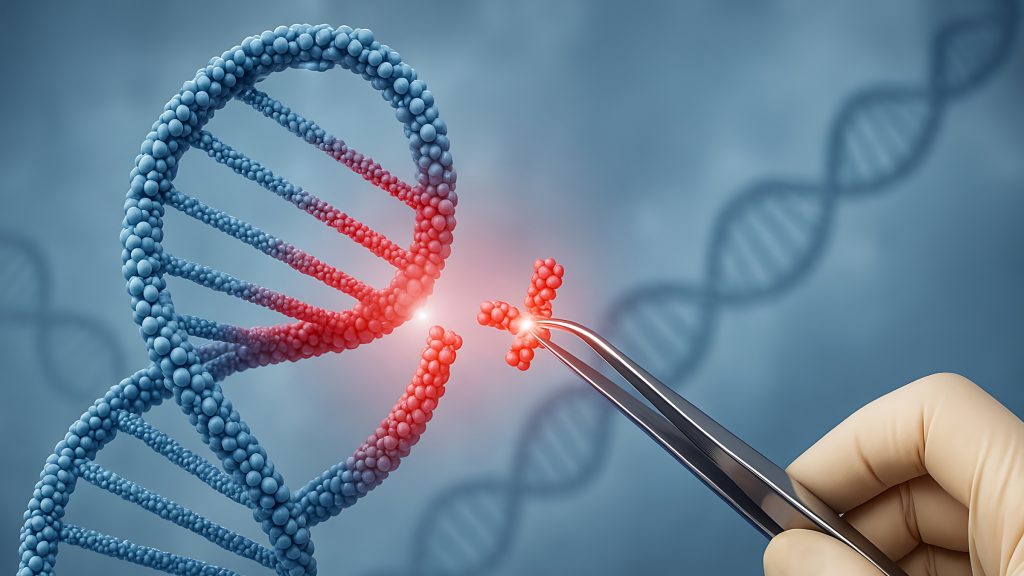
Google DeepMind’s Alphagenome could unlock the secrets of the human genome and transform how scientists understand disease, offering the potential to target cancer, rare genetic disorders, and other conditions through AI insights into gene regulation.
The human genome contains roughly 3 billion letters of DNA, yet only 2% directly codes for proteins, leaving the vast majority once considered “junk DNA” to orchestrate how, when, and where genes are expressed.
Understanding these non-coding regions has long challenged scientists, but AlphaGenome, a new AI tool from Google DeepMind, promises to illuminate this so-called genetic dark matter.
Decoding the Genome’s Hidden Signals
AlphaGenome predicts how mutations disrupt gene regulation across different cell types, tissues, and biological processes, helping researchers identify the mutations most likely to drive disease.
“We see AlphaGenome as a tool for understanding what the functional elements in the genome do, which we hope will accelerate our fundamental understanding of the code of life,” said a DeepMind researcher, Natasha Latysheva.
Trained on extensive human and mouse genomic data, the AI analysis which gets up to 1 million DNA letters at once, surpassing previous models that handled roughly half that volume. The AI insights system can map which strands of DNA are essential for developing tissues like nerve or liver cells and flag mutations implicated in cancer, heart disease, autoimmune disorders, and mental health conditions.
“AlphaGenome can identify whether mutations affect genome regulation, which genes are impacted and how, and in what cell types. A drug could then be developed to counteract this effect,” said a University of British Columbia researcher not involved in the study, Carl de Boer.
From Research Tool to Therapeutic Potential
Early users are already seeing practical AI insights applications. A pediatric haemato-oncologist at UCL, Marc Mansour , called it a “step change” in efforts to pinpoint genetic drivers of cancer, while a geneticist at the University of Exeter, Gareth Hawkes, emphasized the model’s ability to make sense of the genome’s remaining 98%,
Mansour continued to state that “We understand the 2% fairly well, but the fact that we’ve got AlphaGenome that can make predictions of what this other 2.94 billion base pair region is doing is a big step forward for us.”
Beyond mapping mutations, AlphaGenome may support new gene therapies, allowing scientists to design DNA sequences that selectively activate genes in certain cell types. Pushmeet Kohli, vice president of research at DeepMind, said the model is intended to be a practical tool, “We are thrilled to introduce AlphaGenome, our solution to deciphering the complex regulatory code.”
While AlphaGenome is not a complete solution, experts see it as a milestone for AI insights in genomics. Ben Lehner, from the Wellcome Sanger Institute, cautioned that “AI models are only as good as the data used to train them,” yet acknowledged the promise, “AlphaGenome marks a true milestone in AI genomics that could help better diagnose rare diseases, identify cancer-driving mutations, and uncover new drug targets.”
Inside Telecom provides you with an extensive list of content covering all aspects of the Tech industry. Keep an eye on our Medtech section to stay informed and updated with our daily articles.