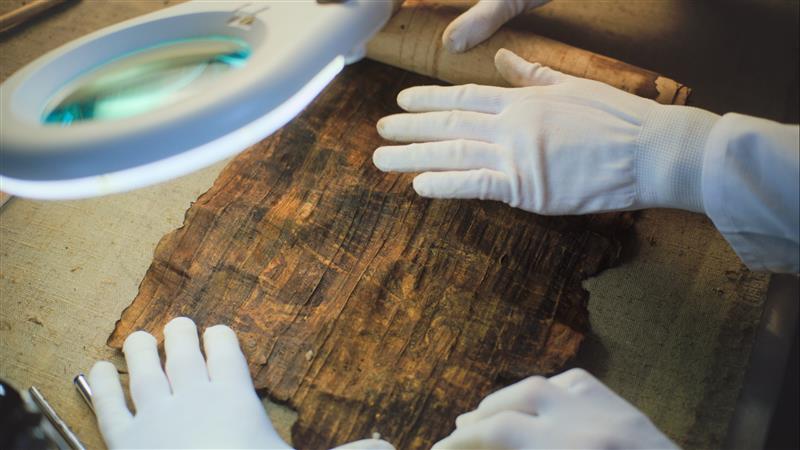
China and Europe are employing sub-millimeter digital scanning, AI, and principles of open science to document, restore to change the face of digital archaeology and share the world’s most treasured artifacts and sites.
Cultural heritage sites are now turning to innovative approaches to sharing ancient artworks without putting additional pressure on delicate sites, impacting how specialists manage pressure from tourist visits and environmental factors for site preservation, as well as AI in cultural heritage preservation.
Digital Applications in Archaeology and Cultural Heritage
In Chongqing, a city in southwest China, UNESCO World Heritage Site “Dazu Rock Carvings”, is now being under digital heritage restoration. Instead of traditional means, 3D scanning with a resolution of sub millimeters, holographic recording, and models from AI are now used to study every aspect of these decades’ year-old cave temples.
Through this technology, the preservation of cultural heritage ensures that teams can examine these sculptures without even having to make contact with them, which would solve long-standing issues with the structure.
According to a specialist, AI and cultural heritage now make it possible to document every contour of carving with a precision that would not be feasible with traditional tools, which enhances the preservation of their cultural heritage.
To limit the physical pressure that tourists cause on sites, an 8K immersive dome has been developed where tourists can see the sculptures in a vibrant digital form.
Cloud computing archaeology, AI, and Big Data are used to support these experiences, which facilitate VR programs that help tourists explore this site from a distance and are also used in preservation endeavors.
Pictures from June 2025 reveal employees capturing digital information, working on 3D restoration, as well as providing tourists with digital visual experiences, contributing to the long-term digital preservation of cultural heritage, allowing researchers to monitor changes, evaluate damage, and compare data.
Conservation groups working in a digital studio at the site are now using 3D reconstruction, microscopy, and high-resolution imaging, serving in the enhancement of digital preservation technology for cultural heritage.
Digital Heritage Preservation
In Amsterdam, the Rijks Museum adopted a very open policy in conservation work related to Rembrandt’s Night Watch.
Tourists can witness a complete restoration of this work in front of their eyes with the help of imaging technology and studies of materials that emphasize new digital archaeology applications and cultural heritage.
In a very detail-oriented work, aged varnishes are being removed with care by experts, along with microscopic imaging that aims to examine pigments and layers. High-resolution scanning directs all actions, which in turn assists in worldwide digital archaeology projects.
Rijksmuseum tries to educate people on technology artifacts used in major restorations through live viewing of the work by visitors. This also enhances trust as it goes through one of its most detailed analyses in many years.
The project demonstrates how imaging analysis technology has been growing in significance as technological artifacts in long term conservation, as it has been assisting supervisors in understanding original materials.
In parallel, China’s conservation teams are also using cloud computing archaeology to tackle huge amounts of data from 3D models to multispectral images, which also makes it possible to protect large heritage sites.
nside Telecom provides you with an extensive list of content covering all aspects of the tech industry. Keep an eye on our Intelligent Tech sections to stay informed and up-to-date with our daily articles.