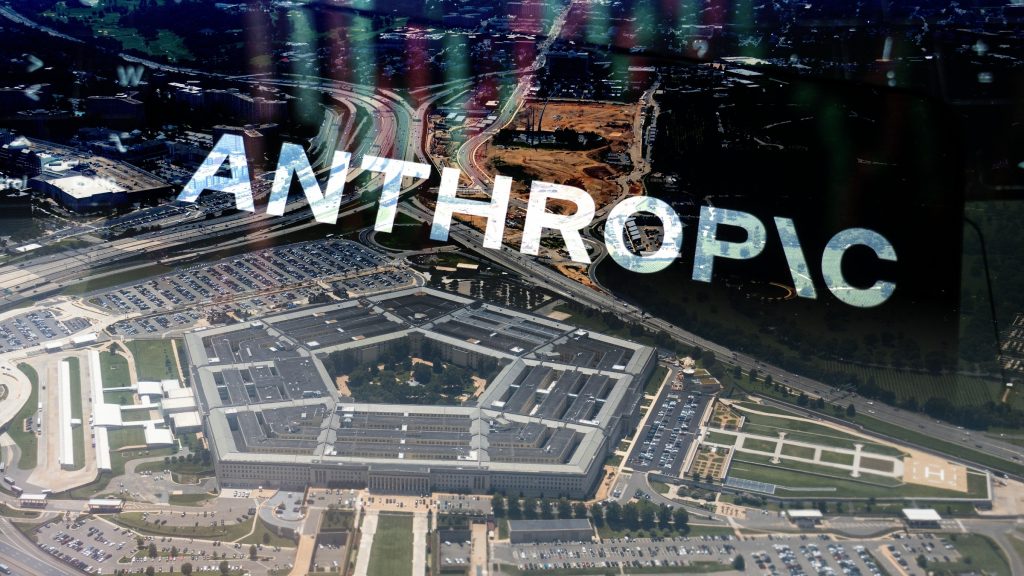
Anthropic’s push to restrict how its Claude AI is used by the Pentagon has triggered a high-stakes standoff, as the Department of Defense DoD AI strategy demands unrestricted access for “all lawful use cases” while warning that limits could jeopardize national security operations.
The clash underscores a broader tension gripping the AI industry: how to balance ethical safeguards with military ambitions. Anthropic, a five-year-old startup founded by former OpenAI researchers, is the only AI company to have deployed its models on classified department of defense AI networks.
But its $200 million contract with the Pentagon is now “under review,” Pentagon spokesperson told CNBC, as negotiations over future terms grow increasingly fraught.
Safeguards vs. “All Lawful Use Cases”
At the center of the dispute is how Claude, Anthropic’s flagship family of AI models, can be used. The Pentagon wants access “for all lawful use cases” without limitation.
“We have to be able to use any model for all lawful use cases,” said Emil Michael, the undersecretary of defense for research and engineering. If a company resists, he warned, “that’s a problem for us.”
He described the DoD AI strategy scenario in which the military becomes reliant on a model, only to find it restricted during an urgent mission.
Anthropic, by contrast, is seeking assurances that its technology will not be used for fully autonomous weapons or to conduct mass domestic surveillance.
A company spokesperson said Anthropic is having “productive conversations, in good faith” with the DoD approved AI tools and remains “committed to using frontier AI in support of U.S. national security.”
Tensions escalated after reports that Claude was used during a US operation to capture Venezuela’s Nicolás Maduro. Axios reported that the pentagon AI began reevaluating its partnership following concerns that Anthropic questioned whether its software had been used in the raid.
How Is the DoD Using AI to Improve Its Operations?
The Pentagon has also awarded contracts of up to $200 million to OpenAI, Google, and xAI. According to Defense officials, those companies have agreed to broader usage terms, including deployment across unclassified systems and in at least one case, across “all systems.”
Michael described the four firms as America’s “AI champions” and stressed the need for alignment. “We actually signed contracts with all four of them over the summer without a lot of specificity,” he said.
Now, the Pentagon wants clarity before expanding AI department of defense agents and pilots across its networks.
Anthropic’s resistance could carry consequences. If it refuses the Pentagon’s terms, officials may designate the company a “supply chain risk,” a label typically reserved for foreign adversaries and one that could require contractors to certify they do not use AI military pentagon contract models.
But as Defense Secretary Pete Hegseth pushes rapid AI integration to stay ahead of China, the open AI department of defense collaboration space for compromise appears to be narrowing.
The conversation around anthropic DoD reflects broader debates over DoD AI contracts and the evolving DoD AI strategy shaping the future of US military technology.
The Pentagon’s push for DoD AI contracts underscores its drive to accelerate department of defense AI adoption, even as companies weigh ethical limits.
Ultimately, the DoD approved AI tools and DoD AI strategy debate is emblematic of how pentagon AI is redefining national security priorities.
Policymakers and tech firms alike are grappling with how frontier AI fits into broader DoD AI strategy, balancing rapid deployment with careful oversight.
For companies like Anthropic, these choices will determine not only their military engagements but also the broader role of pentagon AI in shaping future conflicts.
Inside Telecom provides you with an extensive list of content covering all aspects of the tech industry. Keep an eye on our Intelligent Tech sections to stay informed and up-to-date with our daily articles.