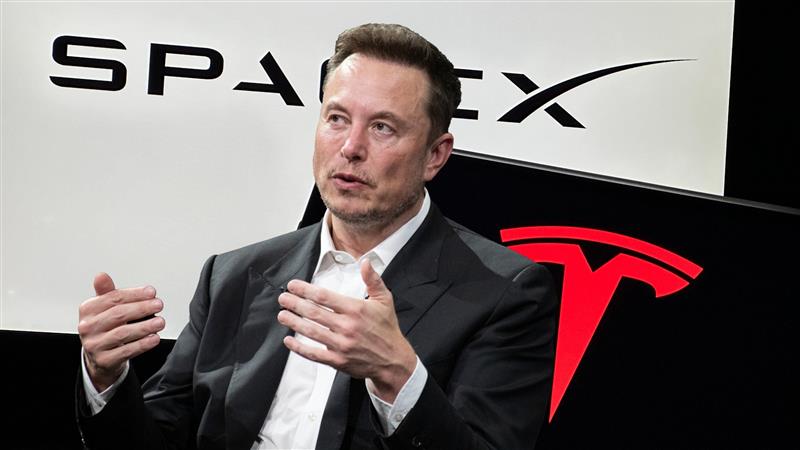
On March 21, Terafab Elon Musk chip factory, was unveiled in Austin, Texas. This $25 billion joint venture aims to create the most advanced 2 nanometer chip technology to drive the future of AI and robotics.
For Musk’s industrial empire, this is considered a huge step, as he moves away from depending completely on the world’s semiconductor giants. By bringing every step of chip-making, the Elon Musk chip manufacturing project is designed to avoid the bottlenecks that limit his pace of innovation.
A Bold Vision for Self-Reliance
The project is born out of a perceived necessity for the Tesla Terafab. Musk explained that current manufacturers simply cannot keep up with the scale of his dreams for self-driving cars and humanoid robots.
“We’re very grateful to our existing supply chain, to Samsung, TSMC, Micron and others,” Musk noted. “There’s a maximum rate at which they’re comfortable expanding. That rate is much less than we would like… and we need the chips, so we’re going to build the Terafab.”
The Elon Musk chip factory, planned for the North Campus of Giga Texas, is designed to be a “one-stop shop” for Silicon. It will handle everything from initial design and lithography to final testing.
Furthermore, his goals are massive since he intends to produce 100 to 200 billion custom AI chips annually. These processors will be the brains for the Cybercab robotaxi and the Optimus humanoid robot.
In a characteristic twist, Musk even suggested that millions of Optimus robots would eventually help build and run the Elon Musk chip factory itself.
Taking Computing to Space
While the terrestrial plans for the Elon Musk chip factory are great, the most striking part of the mission looks upward through a partnership between Tesla and SpaceX. Musk revealed that 80% of the facility’s output is intended for SpaceX orbital data centers.
He argued that the environment of space -offering intense solar power and unique cooling advantages- could make orbital AI compute more efficient than those on Earth within just a few years.
“We’re starting a galactic civilization,” Musk declared during the presentation regarding the future of space computing.
This vision involves a specialized D3 chips custom-designed for orbital AI satellites. To fund this leap, Tesla and SpaceX are looking toward a massive Initial Public Offering (IPO) for the rocket company, which could value it at over $1.75 trillion.
However, experts remain cautious about the Elon Musk chip factory timeline and critics point out that Musk has a history of ambitious goals that don’t always happen. Building 2nm chip manufacturing is one of the most complex engineering feats on the planet. Whether it becomes a reality or remains a digital dream, Musk is clearly betting on the future of space computing on its own Silicon and the deployment of SpaceX data centers.
Inside Telecom provides you with an extensive list of content covering all aspects of the tech industry. Keep an eye on our Tech sections to stay informed and up-to-date with our daily articles.