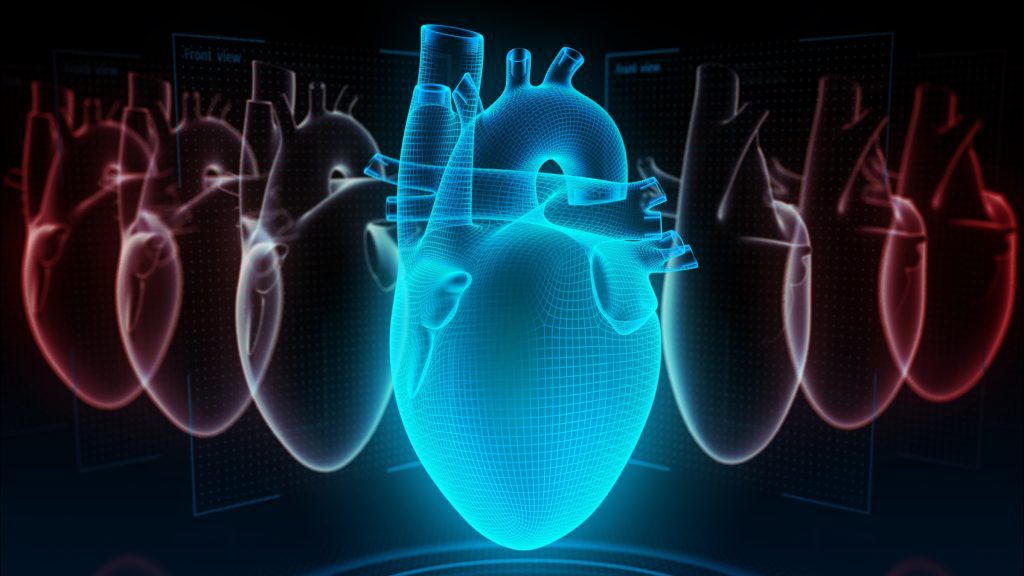
Researchers at MIT, Harvard Medical School, and Mass General Brigham published a deep-learning model that can forecast which patients will experience dangerous cardiac decline up to a year in advance. Cardiologists are now adopting cardiac AI tools to detect, predict, and manage heart failure.
Heart disease remains one of the leading causes of deaths, but now, Massachusetts Institute of Technology (MIT) , Mass General Brigham, and Harvard Medical School researchers say cardiac AI tools are beginning to change that reality through early AI diagnosis, more precise monitoring, and smarter treatment decisions before symptoms become life threatening.
The development came alongside a wave of clinical findings presented at the 2026 Technology and Heart Therapeutics (THT) conference, in Boston, Massachusetts.
The MIT-led model, PULSE-HF, analyses electrocardiograms (ECG) readings to predict whether a patient’s left ventricular ejection fraction – measure of how efficiently the heart pumps blood – will deteriorate below a key threshold within the following year.
The model evaluates clinical signals from ECG recordings and other medical records to perform AI-powered cardiac risk assessment, helping doctors identify high-risk patients who may need closer monitoring.
With the AI-powered cardiac risk assessment the model achieved accuracy scores between 0.87 and 0.91 across three separate cohorts, according to Al-Jazeera.
AI-driven cardiac diagnostics are shifting from simple detection to long-term forecasting.
Predicting Heart Failure
Around half of all patients diagnosed with heart failure die within five years. The PULSE-HF, model can be deployed in low-resource settings, including rural clinics without access to cardiac sonographers.
Through the model, AI and heart disease prediction will be democratized in a form of early warning that has historically depended on expensive specialist infrastructure.
“About half of the people diagnosed with heart failure will die within five years of diagnosis,” said Teya Bergamaschi, an MIT PhD student involved in the research., adding that “understanding how a patient will fare after hospitalization is really important in allocating finite resources.”
To train the system, scientists relied on massive clinical databases and a carefully curated heart disease data set, demonstrating the growing importance of large medical datasets in modern research. Specialists, such as a cardiac data analyst, often play a key role in preparing and interpreting this information for machine-learning systems.
The approach also highlights advances in early prediction of heart diseases using data mining techniques, where algorithms detect hidden patterns in patient records that clinicians might otherwise miss.
AI Stethoscopes and Smarter Screening
Beyond predictive cardiac AI models, researchers are also developing new diagnostic tools powered by AI and cardiology research to detect structural heart disease earlier and more accurately.
Recent studies show that algorithms behavior of AI and heart disease prediction trained models on echocardiography data can analyze heart-sound recordings captured by digital stethoscopes and identify valvular heart disease with impressive accuracy, representing another leap in AI-driven cardiac diagnostics.
These innovations are part of a broader push toward detecting structural heart disease from electrocardiograms using AI, allowing hospitals to screen patients using simple ECG tests before referring them for more expensive imaging.
At NewYork-Presbyterian Hospital and Columbia University Irving Medical Center, researchers developed an AI-ECG system designed to flag high-risk patients and direct them toward echocardiography for further evaluation.
“This is the beginning of the next era of medical diagnostics where AI-based technologies are facilitating detection of diseases that would’ve otherwise gone undiagnosed,” said cardiologist, Heidi Hartman.
Discussions at the THT Conference 2026 highlighted how cardiac AI is also transforming clinical workflows, from AI-driven cardiac diagnostics with automated documentation to real-time monitoring of patients through wearable devices.
Cardiologist Anu Lala emphasized that the shift toward proactive care is happening “with proper integration and leverage of AI, we can anticipate,” adding, “we can personalize and ultimately make better decisions for the right patients.”
Researchers are also exploring AI-driven cardiac diagnostics and new drug discovery tools built on large clinical databases. At Imperial College London, scientists developed an AI platform that combines medical imaging with genomic information from a large data set for heart disease to identify potential therapies more quickly.
Together, these advances are driving a wave of heart failure AI news, signaling a future where cardiac AI could become a central tool in preventing cardiovascular disease rather than simply treating it after symptoms appear.
Inside Telecom provides you with an extensive list of content covering all aspects of the Tech industry. Keep an eye on our Medtech section to stay informed and updated with our daily articles.