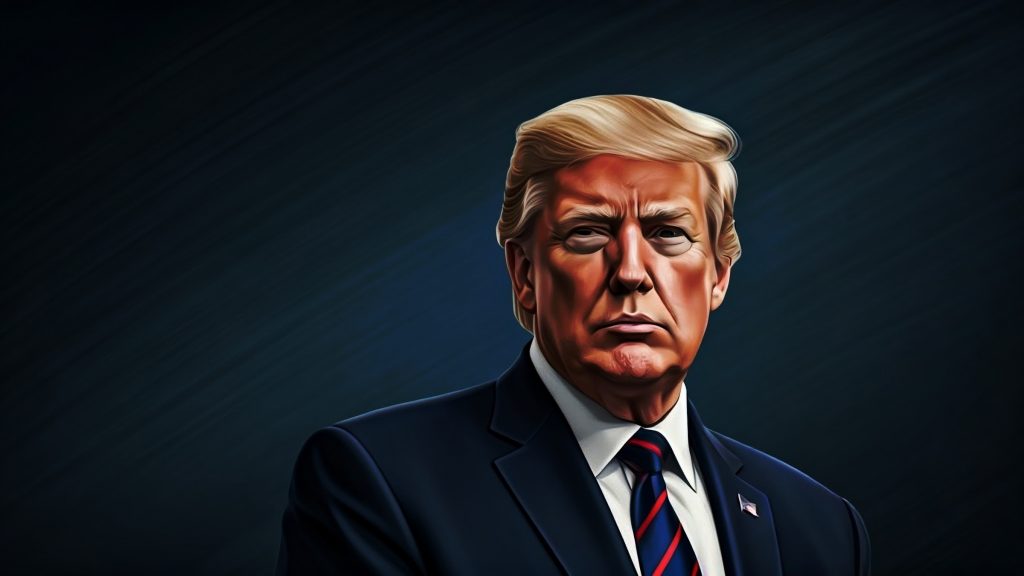
On Thursday, President Donald Trump signed an executive order creating a single federal standard for artificial intelligence, a sweeping move that blocks states from enforcing their own AI rules and ignites a fierce political fight over who should govern the technology a clash intensified by calls for an AI regulation moratorium.
The order marks the administration’s most assertive attempt yet to rein in what it calls a destabilizing “patchwork of 50 State Regulatory Regimes,” a mosaic of differing AI laws that Republican leaders, tech executives, and the White House argue threatens US innovation and its race against China.
Supporters say national uniformity will accelerate AI development; critics warn it strips states of essential oversight tools; a debate increasingly tied to how the United States defines its AI legal framework.
A National Framework and a National Fight
The executive order directs federal agencies to challenge state AI laws deemed “onerous,” establishes an AI Litigation Task Force inside the Department of Justice, and allows federal grant funding to be withheld from states with regulations that conflict with federal policy. The move mirrors concern raised across the tech sector about fragmented rules and the future of generative AI regulation.
White House aide Will Scharf described the action as ensuring that AI can operate within “a single national framework,” while AI and crypto czar David Sacks said the directive provides tools to “push back on the most excessive state regulations.” Supporters say it aligns closely with broader Republican priorities, including emerging debates around Trump AI regulation.
But the order explicitly avoids contesting state rules on child safety in AI a nod to bipartisan concern. Sacks later clarified the EO “does not mean the Administration will challenge every State AI law,” leaving room for continued discussions around targeted forms of AI regulation.
The AI regulation moratorium push follows Congress’ rejection last summer of a 10-year moratorium on state AI laws, a proposal that died in a near-unanimous Senate vote. GOP leaders now appear ready to try again, arguing that only a unified approach can create a durable legal framework for AI.
Opponents many of them conservatives call the move an attack on federalism. “States must retain the right to regulate and make laws on AI,” Rep. Marjorie Taylor Greene said.
Florida Gov. Ron DeSantis argued that stripping state authority “is a subsidy to Big Tech,” reigniting long-standing tensions over how far a federal AI framework should reach.
Innovation vs. Oversight
Tech industry leaders, including OpenAI CEO Sam Altman, have long argued that navigating a maze of state laws could slow innovation and weaken US competitiveness in the global AI race. Their push for national clarity echoes Republican calls for what some members have labeled one big beautiful bill AI regulation, a single set of standards governing all AI applications.
But watchdog groups contend deregulation could give AI companies too much latitude. Brad Carson of Americans for Responsible Innovation said the order “directly attacks the state-passed safeguards that we’ve seen vocal public support for,” warning that industry-friendly proposals including what critics call an AI big beautiful bill could go too far.
The broader regulatory vacuum persists. The US still lacks comprehensive federal AI legislation, while states have passed rules to curb risks such as deepfakes and algorithmic discrimination. Trump argues these laws force AI models to embed “ideological bias,” citing Colorado’s ban on algorithmic discrimination as an example of legislation that threatens national consistency, especially in the context of big beautiful bill and AI debates.
As Republicans debate whether a unified national framework protects innovation or undermines states’ rights, one thing is clear: the battle over who governs AI is becoming a defining political and technological showdown. Trump’s allies argue that innovation will accelerate once Congress codifies stronger national standards, including potential references to AI in the big beautiful bill.
The question now is not whether AI regulation moratorium will reshape American life, but who gets to decide how and under whose rules it happens a conflict that will intensify as lawmakers spar over future big beautiful bill AI regulation proposals.
With Congress signaling renewed interest in overarching legislation, policymakers are already debating what a big beautiful bill AI provision might look like and how far it should constrain or empower emerging technologies.
Inside Telecom provides you with an extensive list of content covering all aspects of the tech industry. Keep an eye on our Intelligent Tech sections to stay informed and up-to-date with our daily articles.