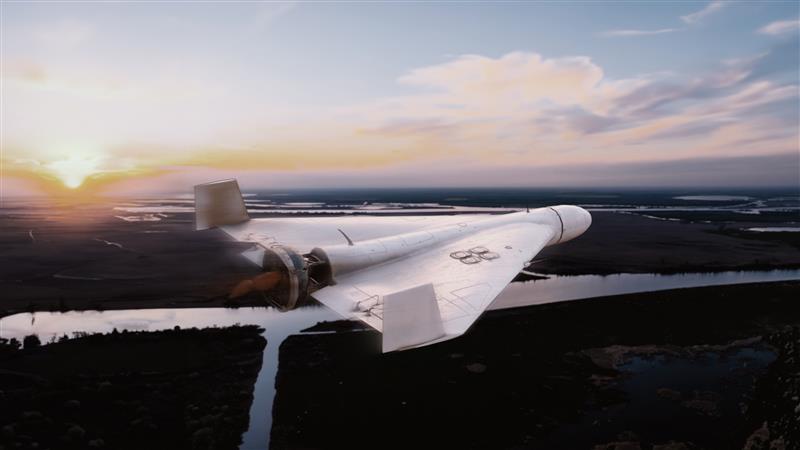
On March 1, the US military issued the first combat strikes with LUCAS drone technology in the Middle East, as part of Operation Epic Fury, countering any Iranian kamikaze drone with the low-cost hardware to redesign the economics of aerial warfare.
For years, the US relied on multi-million-dollar missiles to down cheap enemy drones, creating an imbalance that drained budgets and supplies. Suicide drone tactics, once perfected by Iran, are now altered by the US to compete in this new phase of digital and economic erosion.
The US version of the Iran kamikaze drone is a smart mix that blends Iranian cost-efficiency with American technical superiority.
Silicon Valley Meets the Shahed 136 Drone
Even though the US LUCAS drone matches a carbon copy of the Shahed drone, the similarity runs deeper. The American version, produced by Arizona-based SpektreWorks, takes the basic triangular delta-wing frame and fills it with sophisticated software.
Unlike the original kamikaze drone that relies on simpler navigation, the LUCAS uses a mesh network of Multi-domain Unmanned Systems Communications (MUSIC) that allows AI suicide drones to communicate with each other. It also allows them to fly in autonomous swarms and act as communication relays, if traditional signals are jammed.
Iran’s approach has focused on high deadliness at low cost, using the massive Shahed drone range that can hit targets hundreds of miles away, to overwhelm defenses through volume. The US has countered this model by adding a digital brain to drone’s body, creating American suicide drones far more precise and adaptable.
By combining a $35,000 price tag with a smart modular design, the US has created a kamikaze drone that is cheap enough to lose but too capable for an enemy to ignore.
“After only a few years, we continue to refine that and make that something that we can mass produce at scale,” Emil Michael, the undersecretary of defense for research and engineering, said according to the Wall Street Journal.
“They’ve worked very well so far and it’s proven out to be a useful tool in the arsenal.”
New Battlefield Economics
Cloning and altering one way attack drones is an acknowledgement that the old way of fighting, where battlefields relied on $2 million missiles to hit bomb-laden suicide drones, is no longer sustainable.
With the cost of the war already estimated at $16 billion for the US, the world’s most powerful military is changing tactics and pivoting toward economic competition by mass-producing this kamikaze drone. The US military seeks to turn the tables on its enemies by requiring them to launch costly interceptors to stop the relatively cheap American suicide drone clones.
According to ABC News, America’s highly advanced $16 million MQ-9 Reaper drone has already fallen victim to Iranian attacks more than a dozen times, pointing to the need for such a disposable drone.
The high-tech race comes with hurdles, the US is leaning into software, Iran and US drone cloning efforts continue to evolve on both sides.
Russia has reportedly been sharing satellite imagery and navigation upgrades with Iran, helping the Shahed 136 drone withstand electronic jamming. Even as the US explores futuristic options like $5 per shot with laser, these systems often struggle in the sandy, harsh environments of the desert.
For now, this new one way attack drone remains the most practical tool. As the Wall Street Journal reported regarding the Shahed 136 drone, these systems are becoming much more difficult to intercept.
Therefore, the US intends to keep its kamikaze drone production lines moving to meet this new global reality, ensuring that the next chapter of the war is fighting on its own economic terms.
Inside Telecom provides you with an extensive list of content covering all aspects of the tech industry. Keep an eye on our Tech sections to stay informed and up-to-date with our daily articles.