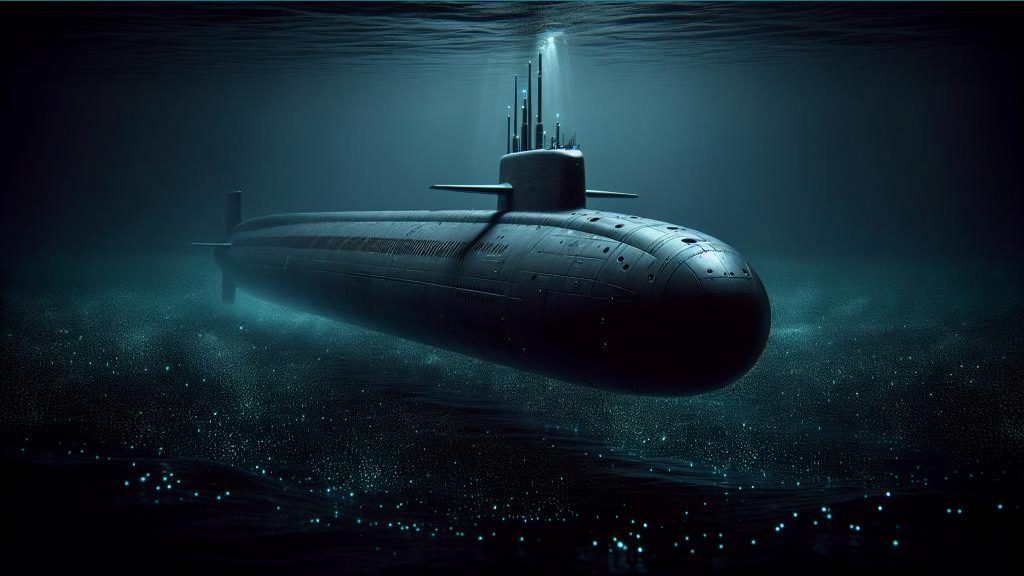
The UK Ministry of Defense launched the Atlantic Bastion program, a new strategy combining AI autonomous vessels, warships, and aircraft to better protect the North Atlantic’s undersea cables and pipelines, in response to underwater activity of Russian submarines.
Atlantic Bastion program’s launch shifts the UK naval strategy, toward a “hybrid naval force” to counter what British intelligence deems a threat from Russian submarine technology.
The Royal Navy’s move is a clear sign that the global struggle for influence is moving into the deep, dark expanse beneath the waves. The program will create a digital targeting web of interconnected ships, submarines, and aircraft, for faster decision making through AI acoustic detection technology.
“People should be in no doubt of the new threats facing the UK, and our allies under the sea, where adversaries are targeting infrastructure that is so critical to our way of life,” said Defence Secretary John Healey, on the dangers of Russian nuclear submarine technology.
This warning comes after Russia largest submarine, the spy ship Yantar, was recently observed in UK waters, a ship Healey said it was “designed for gathering intelligence and mapping our undersea cables.”
The Ministry of Defense and Industry has already invested a combined 14$ million into the effort, with capabilities expected to be deployed underwater by 2026.
The UK’s Chief of the Naval Staff, Gwyn Jenkins, is expected to call Atlantic Bastion a “revolutionary underwater network… More autonomous, more resilient, more lethal – and British built.”
Russia’s Secret Arctic Surveillance System
UK’s high tech defensive program necessity is emphasized by revelations concerning Russia’s own aggressive technological advances in the underwater domain. A cross-border investigation, Russian Secrets, exposed Moscow’s decade long, covert effort to build a sophisticated undersea surveillance network in the Arctic, code-named “Harmony,” to protect its nuclear Russia newest submarine fleet.
This system, which fights Russian submarines, uses a constellation of seabed sensors to detect approaching enemy submarine technology was largely constructed using sensitive high-tech equipment secretly acquired from European, US, and Asian companies. The investigation found that over$50 million worth of sonars, underwater robots, and fiber optic cables were sold to a Cypriot entity secretly linked to a Russian defense contractor.
EU Sanctions Envoy David O’Sullivan, told reporters he was “not surprised to learn about the sophisticated system uncovered,” adding that the Russians are “very clever at circumventing our sanctions.” This specific procurement network, involving dozens of shell companies, largely escaped Western authorities’ scrutiny until the full investigation following during the 2022 invasion of Ukraine.
Russia New Nuclear-Powered Submarine Launch Scaring the UK
With complications over nuclear submarine models that growing day by day, the global security landscape is Russia’s apparent willingness to export sensitive naval technology to its allies. North Korea has been rapidly developing its submarine-launched ballistic missile (SLBM) capability but lacks a platform large enough to carry its latest missiles.
Reports, reinforced by comments from South Korea’s Defense Minister Ahn Gyu-back, suggest that Russia is likely supplying Pyongyang with nuclear propulsion for submarines, possibly from decommissioned Akula class boats. The transfer of this technology, which is considered possible, is thought to be part of the exchange for North Korean submarine technology arms used in the war with Ukraine.
Russian assistance could “speed up development process and help North Korea immensely,” said one analysis, by providing a working reactor and components for North Korea’s new, larger nuclear-powered submarine.
The most technologically advanced submarine danger is that a North Korean nuclear submarine, operating in the vast North Pacific, could theoretically threaten the mainland United States, a factor that regional allies will have to consider as they “up their submarine game to keep pace with the emerging threat.”
US Response to the Outer World
These geopolitical tensions are also driving a response from the United States, focused on mitigating supply chain vulnerabilities. Russia’s advanced sonar technology move shows a growing concern among national security experts that dependence on such “adversarial sources” poses a clear risk to US national security, especially in the event of a conflict.
The new phase of the naval competition highlights the UK’s move to highly use AI to protect its infrastructure, the discovery of Russian submarines secret underwater surveillance network, and the transfer of nuclear propulsion technology to North Korea, highlights a renewed global arms race beneath the waves.
As nations rush to join the race to develop and deploy new generation military tech and future submarine technology, often by avoiding global controls.
Inside Telecom provides you with an extensive list of content covering all aspects of the tech industry. Keep an eye on our Intelligent Tech sections to stay informed and up-to-date with our daily articles.