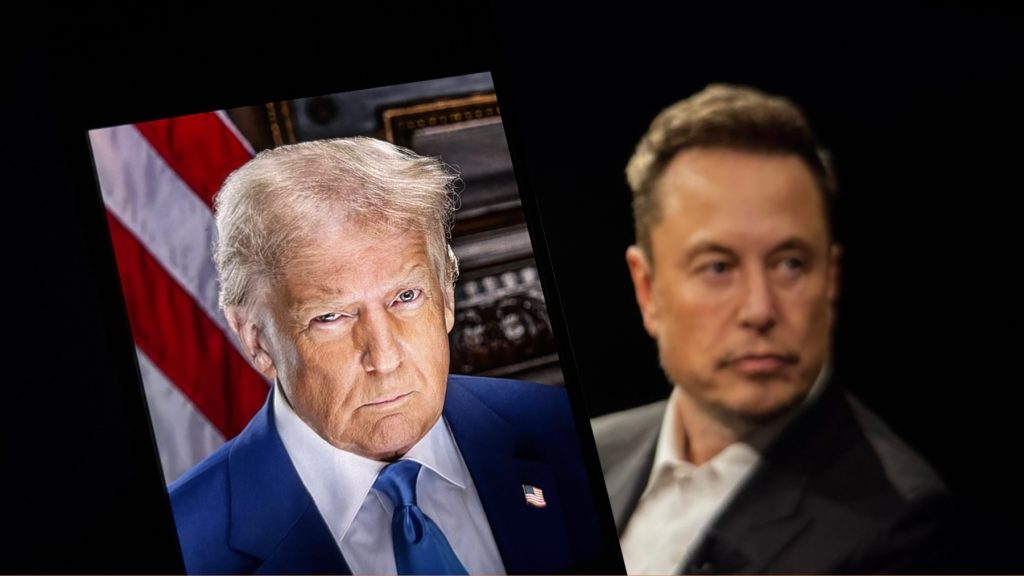
Big Tech’s alliance with President Trump faces growing resistance following the November 2026 US midterms, as voters challenge AI data center expansion, raising questions about Silicon Valley politics and whether technology executives can maintain their political influence while facing public opposition.
For two years, America’s technology leaders cultivated close relationships with Trump’s administration, benefiting from regulatory relief and favorable AI policies. However, election setbacks and resistance to infrastructure development are forcing companies to reconsider whether political access alone can secure the industry’s expansion.
Tech Money Meets Voter Resistance
At a White House gathering earlier this year, Elon Musk and Nvidia chief Jensen Huang sat alongside Trump as executives promoted an American AI future built on rapid infrastructure investment and fewer regulations.
The alliance placed executives close to federal decision-making, but November’s midterms exposed the limits of Silicon Valley political influence once communities began challenging the projects behind that vision.
According to The Guardian, Democrat Gina Hinojosa defeated Texas Governor Greg Abbott after promising an immediate halt on data center development, becoming the state’s first Democratic governor in decades. Hinojosa’s victory questioned whether money could overcome concerns about AI infrastructure.
In Ohio, Democrat Sherrod Brown targeted Republican Jon Husted over his association with data centers and won the state’s Senate seat. Ohio also carried more local data center ballot measures of any other state.
Nationwide, voters favored limiting data center development in 46 of 47 local ballot measures decided during 2026, according to Ballotpedia. On election day, 40 of 41 contests went the same way, with voters approving 27 restrictions and rejecting 13 measures that would have supported development.
These developments complicated Silicon Valley political donations, since companies depend on local approvals, electricity, and land to expand computing capacity.
The backlash reached financial markets, with technology stocks selling off sharply after the elections. For investors financing expensive AI projects, political uncertainty joined existing questions about profitability and cost.
What makes this setback important for Silicon Valley politics is that communities, not Washington, decide whether new facilities get approved.
The politics of Silicon Valley has moved beyond debates over innovation and federal regulations toward electricity bills, water consumption, and costs borne by residents.
Data centers require substantial electricity and cooling, so expansion affects surrounding communities. That challenges the Silicon Valley political agenda, which has prioritized rapid AI development to maintain American leadership against China.
The Guardian also examined the UK’s AI growth zones, where nationally significant infrastructure decisions can bypass local councils. A Spotlight on Corruption report cited by the newspaper found ministers consulted only two community groups and no environmental organizations while developing the policy, showing how Silicon Valley and politics intersect with public participation in planning.
Silicon Valley’s Politics Liberal with One Big Exception
The backlash is dividing the industry, where executives who supported President Trump face pressure from investors and advisers urging a different approach.
The Washington Post reported that left-leaning donors and industry figures are discussing changes to the political affiliation in Silicon Valley, including closer cooperation with Democrats and more community involvement in AI development.
Their proposals include slowing data center construction, protecting residents from higher electricity bills, investing in schools and job training, and requiring union labor for infrastructure projects.
These discussions reflect Silicon Valley elites divided politics between executives prioritizing expansion and those arguing that community resistance must be addressed first.
“The public has felt in a lot of communities that this is happening to them and they don’t have a voice,” Jay Carney, former White House press secretary and investor told The Washington Post.
Google and Microsoft have agreed to stop requiring government officials to sign nondisclosure agreements over data center projects, while Amazon has pledged greater transparency on electricity and water use.
Meta and Amazon each committed $1 billion toward communities hosting their infrastructure, tying Silicon Valley political affiliation to investment commitments.
OpenAI’s chief global affairs officer, Chris Lehane, told The Washington Post that communities should have greater influence over projects affecting their areas. Meanwhile, CoreWeave backed Texas Hinojosa’s position that households should not finance infrastructure benefiting data center operators.
These adjustments do not mean the industry has abandoned its strategy. Trump-aligned investors David Sacks and Marc Andreessen remain influential, while investor Chamath Palihapitiya acknowledged that economic growth driven by asset owners had not delivered the wider benefits he previously expected.
The split illustrates Silicon Valley elites divided politics over deregulation, public accountability, and the costs of building AI.
TechCrunch reported that OpenAI hired Jessica Schumer, daughter of Democratic Senator Chuck Schumer, shortly before the elections and began calling its data centers compute campuses. Silicon Valley politics now involves rebuilding relationships with lawmakers who may favor stronger oversight.
Dina Powell McCormick, who joined Meta as president and vice chairman in January after advising President Trump during his first term, has emphasized bipartisan cooperation. Policy advocates questioned whether such partnerships address deeper concerns about AI’s social impact.
The politics of Silicon Valley could grow more complicated as states restrict chatbots, deepfakes, and infrastructure development despite President Trump’s federal efforts to challenge AI regulations.
According to TechCrunch, the administration established an AI Litigation Task Force to contest state legislation. Such differences could weaken Silicon Valley political influence by leaving companies with varying legal obligations depending on where they operate.
They also bring renewed attention to Silicon Valley political donations, as financial contributions and lobbying relationships face closer scrutiny when voters demand stronger safeguards.
The broader debate surrounding Bit Tyrants the political economy of Silicon Valley concerns whether concentrated technological wealth can continue translating into political power without securing public approval.
For companies involved in Silicon Valley politics lobbying Washington, that distinction matters because favorable federal rules cannot independently guarantee infrastructure expansion.
“We expect the data centre issue to somewhat fade in importance and any moratoria on data centre development to be short-lived,” nevertheless, Goldman Sachs offered a different interpretation of the backlash, writing in a note cited by The Guardian.
That assessment contrasts with concerns that resistance could delay projects and disrupt investment expectations.
Ultimately, Silicon Valley politics faces a question extending beyond Trump’s electoral setbacks: whether the industry can sustain rapid technological development while responding to communities demanding greater control over the infrastructure being built around them.
Inside Telecom provides you with an extensive list of content covering all aspects of the tech industry. Keep an eye on our Tech sections to stay informed and up-to-date with our daily articles.
