
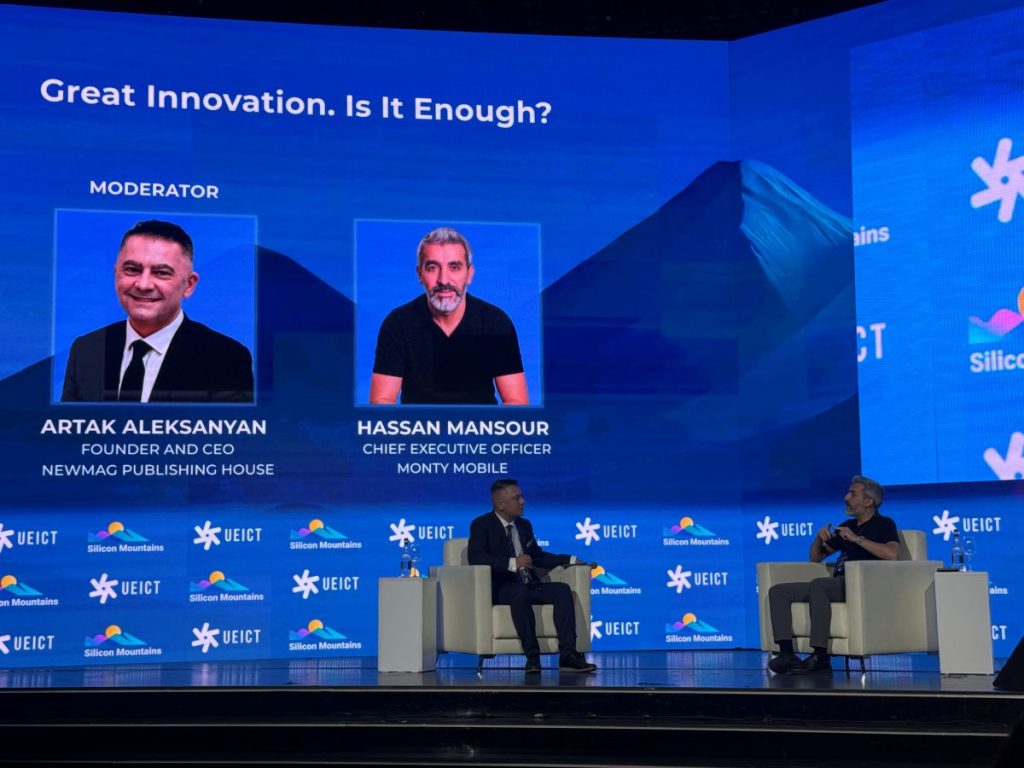
At the Silicon Mountains Summit in Armenia, Chief Executive Officer (CEO) of Monty Mobile, Hassan Mansour’s keynote put everyday frustrations at the center of a wider technology question: how much does innovation achieve if people still struggle to access accounts, protect their money, or use essential services?
Under the summit’s Invest in Innovation theme, his keynote connected customer experience with telecom security and cooperation between industries. His argument was straightforward: technical progress earns its value when it solves problems people face and gives them a reason to keep using a service.
Mansour began by talking about the links between Lebanon and Armenia, mentioning their diasporas, cultural ties and technology companies. He gave Picsart and Anghami as examples of products whose appeal came from meeting a need and becoming part of people’s lives.
When a Lost Account Means Lost Business
Mansour spoke about a gap between technical capability and everyday experience, and to explain the gap he gave an example of a coach.
The coach lost access to his WhatsApp account after it was hacked and could not regain access for 10 days. The disruption extended beyond daily conversations with friends. The coach’s clients used the account to book sessions, cancel appointments, and share their progress.
For someone running a small business through a messaging service, losing an account can interrupt the working day and cut off the main route to customers.
“But for Coach Jad, WhatsApp is not just a messaging app. It is his business,” said Mansour.
The example gave Mansour’s security argument a practical focus. A verification process may involve substantial investment and sophisticated engineering, yet its value depends on whether the person using it can access a service safely.
He also described a hypothetical bank impersonation scam in which a caller persuades someone to hand over a verification code. The scenario illustrates how criminals can exploit human behavior even when technical safeguards are present.
Mansour applied the same customer perspective to business performance. Complaints offer one source of information, but customers who quietly delete an application or stop using a service also send a message.
Understanding that departure requires companies to connect information held across departments. Sales figures, support complaints, application activity, and system performance can each be accurate while offering only part of the explanation.
“Each team can be looking at accurate information and still have an incomplete picture of the customer,” said Mansour.
His proposed starting point was to bring a company’s own data together, allowing teams to understand the experience behind the numbers.
Can Telecom Checks Make Everyday Services Safer?
Mansour then turned to Network APIs, which allow business applications to request specific information or checks from telecom networks.
His remarks described these interfaces as a way to obtain a relevant answer while limiting the information exchanged. A business might need confirmation that a phone number matches the device being used, for example, rather than accessing a broader customer record.
One example was Silent Network Authentication (SNA), which uses network APIs to help verify a user without requiring manually entered code. Mansour presented this as an opportunity to reduce friction while strengthening account access.
Another was a Subscriber Identity Module (SIM) swap check. A bank could ask whether a customer’s number had recently moved to another SIM before approving a transaction. A recent change could prompt additional checks, helping the bank assess suspicious activity.
These examples supported his broader call for cooperation. Telecom operators hold information that can help other businesses make decisions, but Mansour also proposed a more reciprocal relationship.

In a hypothetical handset instalment purchase, an operator could, with the customer’s permission, ask a bank whether regular income had exceeded a specified amount over six months. The bank could return a limited answer without supplying statements, purchases, or an exact salary.
The proposal extended his argument beyond telecom services: companies across sectors could contribute narrowly defined checks that make a customer’s next step easier. Putting such arrangements into practice would require clear consent, appropriate access controls, and agreement over responsibility.
“Because in the end, innovation is not about what technology can do. It’s about what technology can do for people,” said Mansour.
For investors, Mansour’s closing message returned to the people behind adoption figures and customer dashboards. Listening to complaints matters, but so does understanding why people leave without explaining.
Inside Telecom provides you with an extensive list of content covering all aspects of the tech industry. Keep an eye on our Spotlight to stay informed and up-to-date with our daily articles.
