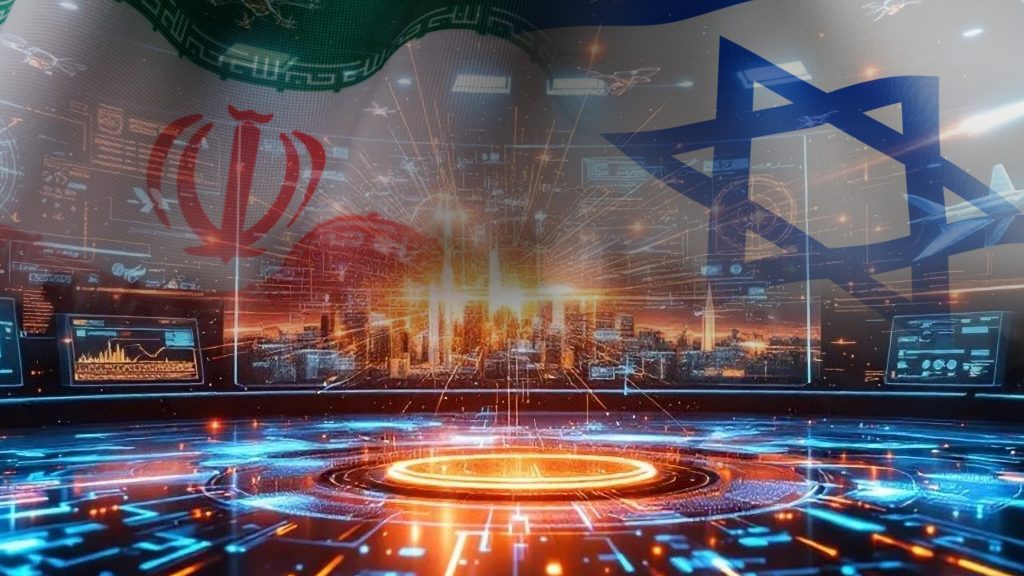
AI has moved from the background of intelligence analysis to the center of the battlefield as the US and Israel Iran tensions in 2026 escalate, turning Israel’s “Operation Roaring Lion,” known in Washington as “Epic Fury,” into what analysts describe as the first large scale AI-assisted war.
The latest on Israel and Iran war technologies are algorithms that now help plan strikes, process intelligence, coordinate aircraft, and intercept missiles within mere milliseconds.
Intelligence, that once required thousands of analysts and months of preparation, can now be processed by machine learning (ML) systems in minutes, accelerating the pace of any AI-guided Israel Iran missile and how modern wars are fought.
For almost two weeks now – and spilling for the last 12-Days War back in June 2024 – Israel Iran tensions have proliferated, with military experts saying the transformation as structural rather than temporary.
AI as a support in military planning tool is no longer a thing as various shapes and faces of this intelligent technology have indulged in reconnaissance, targeting, cyber warfare, and missile defense systems. AI is now literally setting the tempo and precision of operations.
The buildup of the war has been lingering for almost 40 years, according to Israeli Prime Minister Benjamin Netanyahu. More accurately, his greatest dream in life is the a war between the US and Iran, not Israel.
So, based on that, the doomsday scenarios of Israel threatened by Iran has been the drive taking the region into this war.
For almost more than 10 years, the Jewish state has been preparing its military cyber branch, Unit 8200, for a longstanding digital war against Iran. It was always known that the true battle between Tel Aviv and Tehran will be through cyberwarerfare, and the war between Washington and Tehran would dominantly be AI-based advanced missile targeting and assasinations.
AI: The Proud Engine of Modern Warfare
Centering the Israel Iran tensions in the AI-based “kill chain” tactics, reducing the time between identifying a target and launching an attack.
US forces rely on the Maven Smart System (MSS), developed by Palantir, which analyzes massive streams of data from satellite images and radar signals to drone footage to identify potential targets. Reports stated that Anthropic’s Claude generative AI model has been integrated into the system to improve detection and simulation capabilities.
AI systems in the Israel Iran tensions are capable of processing enormous volumes of intelligence simultaneously. They can analyze “satellite images, radar, electromagnetic waves, sound, drone images and sometimes real-time video,” according to head of the French army’s AI agency Agence du Militaire pour l’Intelligence Artificielle et la Défense (AMIAD), Bertrand Rondepierre.
As Rondepierre explained, AI algorithms in the current situation between Iran and Israel “allow us to move much faster in handling information, and above all to be more comprehensive.”
Israel has also used AI-driven targeting tools in recent conflicts, including systems such as Lavender, which reportedly helped identify potential militant targets in Gaza by analyzing surveillance data and social networks. While powerful, these systems remain controversial because they operate within a margin of error.
Experts emphasize that technology now touches nearly every aspect of warfare. Laure de Roucy-Rochegonde of the French think tank Institut Français des Relations Internationales (IFRI) said that today “every military power of any significance invests hugely in military applications of AI.”
“Almost any military function can be boosted with AI,” she added, including “logistics to reconnaissance, observation, information warfare, electronic warfare and cybersecurity.”
At the same time, Israel targets Iran with AI tools which are embedded in semiautonomous weapons systems and drones, further compressing the time between detection and strike.
Israel vs Iran Military Power Comparison
Israel threatened by Iran and vice versa also highlights a growing technological gap between Israel’s highly integrated military systems and Iran’s strategy of asymmetric deterrence.
Israel Iran new battle fields is one of the world’s most technologically advanced wars. Israels fields combine domestic defense industries with deep intelligence and technological integration with the US. Its capabilities include layered missile-defense systems, advanced cyber warfare units, and increasingly sophisticated AI supported command networks.

Iran, by contrast, relies heavily on volume and deterrence large stockpiles of ballistic missiles and drones designed to overwhelm defenses through repeated by the tactics latest on Iran and Israel war attacks. Estimates suggest Iran possesses fewer than 3,000 ballistic missiles capable of reaching Israel and parts of Europe.
Yet, the war and the AI-guided Israel Iran missile show that the war has clearly shown to be a tech war, but with this tech war going on for now and changing modern warfare, how will this heighten tech innovation and export for the economy of these countries.
Wars have historically fastened technological innovation, and in the way Israel targets Iran with AI driven battlefield, the emerging today may reshape defense industries and export markets worldwide. Israeli defense startups, drone manufacturers, and cyber firms could see rising demand as allied countries seek similar technologies.
But the rise of algorithmic warfare also raises serious ethical questions. If an AI assisted targeting system makes a mistake, responsibility becomes harder to assign, specifically in the Israel Iran tensions.
“If something does go wrong, then who’s responsible?” asked Peter Asaro, chair of the International Committee for Robot Arms Control.
Analysts believe the current conflict may only be the beginning of a much broader transformation in military strategy highlighting the AI-guided Israel Iran missile.
As Benjamin Jensen, of the Center for Strategic and International Studies warned, global armies are only beginning to understand the implications of AI warfare.
“The world’s armies haven’t fundamentally rethought how we plan, how we conduct operations, to take advantage of AI’s capabilities,” he said. “It’s going to take a generation for us to really figure this out.”
One thing is certain is that the building blocks of war are changing and this is clearly showing in the Israel Iran situation. Tanks and missiles might still matter till this very minute, but the outcome may depend on something far less visible, the speed and intelligence of the algorithms behind them.
Inside Telecom provides you with an extensive list of content covering all aspects of the tech industry. Keep an eye on our Intelligent Tech sections to stay informed and up-to-date with our daily articles.