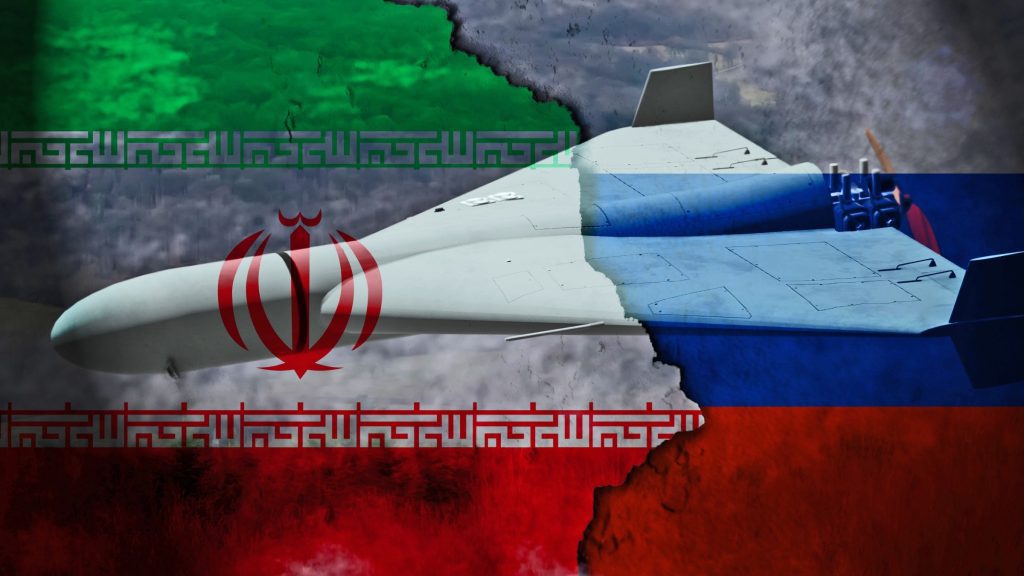
On March 1, a drone strike on the British RAF base at Akrotiri in Cyprus exposed a deeper layer of the Iran conflict, recovered wreckage revealed Russian military navigation technology inside the aircraft, raising fears that Moscow is indirectly joining Iran’s confrontation with the US and Israel and intensifying Iran relations with Russia in the wider tech‑war context.
It’s the first confirmed case of Russian military equipment inside an Iranian drone used in the war against Iran, suggesting the war’s technological geopolitical dimension may now be expanding beyond regional actors. It’s more evident than ever that the Iran-Russia relations are evolving in ways that challenge Western assumptions.
Russian Hardware Appears in Iran’s Drone Arsenal
The Kometa system provides resilient satellite guidance for military platforms, allowing drones to maintain accuracy even under GPS jamming.
Previously identified in Russian Geran drones in Ukraine, its appearance in an Iranian drone signal that the once one-directional Iran and Russia relationship may now be reversing.
In 2022, Iran first supplied Russia with Shahed-type drones, sharing blueprints and technical know-how that allowed Moscow to build a production facility in Tatarstan. That plant now produces hundreds of Geran-2 drones daily.
Analysts long described the deal as one-way, limited to Iran providing expertise and Russia paying in cash or gold. But now, the Kometa discovery demonstrated that the level in which Russia supports Iran with advanced military hardware is reversing the previous dynamic.
“I think all of this is found in the fragments of the Shaheds striking the Middle East today. Iranian Shaheds contain Russian-made components. This is something we know for certain,” said Ukrainian President, Volodymyr Zelensky, on how Iran was receiving Russian arms support.
Intelligence Sharing Raises Stakes
Beyond hardware and the Iran relations with Russia, Western officials say Moscow is sharing intelligence with Tehran about US military deployments. Air Chief Marshal Sir Richard Knighton said there was “no doubt” Russia had passed information about the location of US warships and aircraft.
“This is an axis that we must denounce. Cooperation between Iran and Russia makes their forces more capable and more dangerous,” Knighton warned, highlighting Iran-Russia relations as a major threat multiplier. Russia’s ambassador to the UK, Andrey Kelin, said Moscow was “supportive” and “not neutral,” confirming Russian support for Iran.
Analysts warn that Iranian drones equipped with Kometa navigation systems and intelligence from Russia on Iran Israel war could be far more precise and resilient than older GPS-guided designs. This signals the real expansion of the technological battlefield.
Will Russia join Iran war against Israel and US?
The Akrotiri strike, launched from Lebanon by an Iranian-backed group, raises the specter of Russia and China on Iran Israel US war coordination. Russian intelligence support could help Iranian proxies target US and British assets, demonstrating how Iran’s relationship with Russia is creating a multi-layered threat.
Western experts now caution that the war is no longer regional. Instead, the Iran alliance with Russia is forming a broader technology-driven conflict, where Russia backs Iran indirectly against US and Israeli power.
The Kometa fragment from Cyprus may be the clearest indicator yet the Iran-Russia relations dynamic is reshaping the Middle East battlefield.
Inside Telecom provides you with an extensive list of content covering all aspects of the tech industry. Keep an eye on our Tech sections to stay informed and up-to-date with our daily articles.