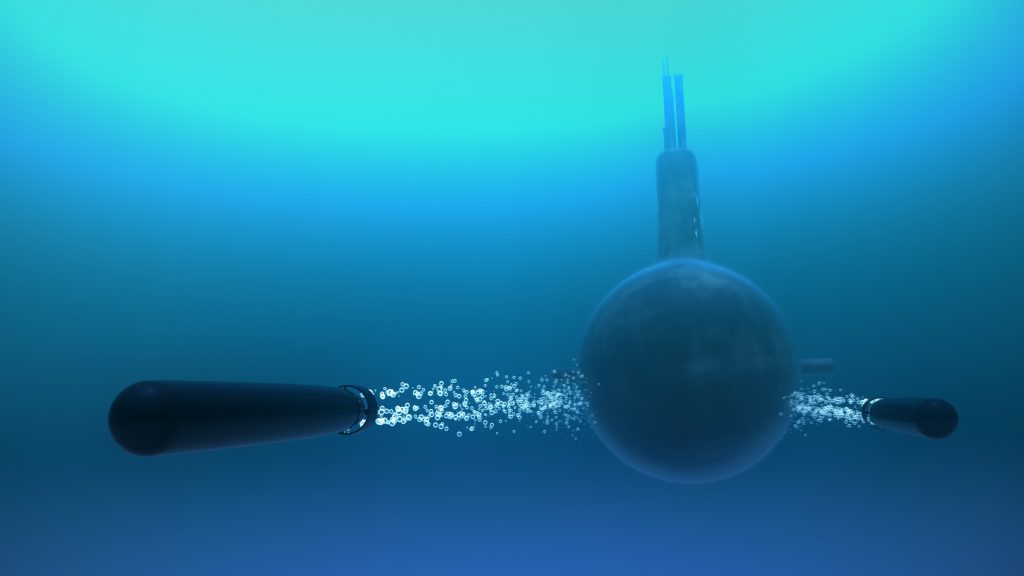
on November 10, the UK announced a $120 million (£90 million) investment in AI-powered underwater drones and advanced sensors to track Russian submarines across the North Atlantic, strengthening protection for critical internet cables, energy networks, and other vulnerable maritime infrastructure.
The investment comes as Britain expands naval monitoring capabilities beyond traditional submarine hunting, combining autonomous technology, AI, and crewed warships under its Atlantic Bastion program.
Atlantic Net is the first element of that program, a surveillance network meant to detect suspicious underwater movements before they threaten the infrastructure connecting Britain with its allies.
UK Is Mass-producing New Submarine Hunting Drones to Secure the North Atlantic
Announced aboard the HMS Prince of Wales at the International Sea Power Conference in Oslo, Norway, which the UK co-hosted with Norway, the investment will support a new generation of unmanned maritime systems built to operate alongside conventional naval forces, letting the UK monitor wider stretches of the Atlantic without relying on crewed patrols.
The Ministry of Defense (MoD) has agreed a framework with Southhampton-based ocean infinity solutions that opens the way for an initial $121 million (£90 million) investment in Atlantic Net, bringing together underwater sensors, maritime robotics, communications, and remote operations in a system directed by the Royal Navy.
The £90 million is the initial investment under a framework agreement, not a fixed contract value, which matters because it means the figure can grow.
The MoD describes it as a contractor-owned, contractor-operated naval oversight service, meaning the company will own and run the surveillance infrastructure while the Navy directs its use.
Rather than replacing warships, the program will use underwater drones where conventional patrols cannot maintain a continuous presence, with AI processing the data to identify movements that might otherwise go unnoticed.
Much of that monitoring will focus on the Greenland-Iceland-UK gap, a strategic passage between the Arctic and Atlantic Oceans where submarine surveillance has long shaped Western naval security. Submarines moving through these waters could approach major shipping routes and subsea infrastructure, making early detection increasingly important as governments worry about potential interference with communication and energy networks.
According to the MoD, Atlantic Net will give submarine-hunting warships and Astute-class submarines earlier warnings, letting naval commanders assess threats before they reach sensitive locations.
UK Minister for Defense Readiness and Industry Luke Pollard acknowledged the changing security environment.
“The threats beneath the North Atlantic are changing, and we are changing with them,” said Pollard.
First sEA lORD, General Sir Gwyn Jenkins rejected suggestions that the Navy should move more cautiously, arguing that the real risk lies in being unready for war.
Both men were addressing the Russian submarine threat, which the UK increasingly treats as a question of infrastructure security, particularly when the same underwater routes used for military operations also carry services essential to civilian life.
The technology behind Atlantic Net could change how naval monitoring works, since an autonomous submarine drone equipped with sonar and other sensors may collect information over extended periods while AI helps identify unusual patterns in the surrounding waters.
By that, it strengthens anti submarine surveillance by reducing the need for sailors to monitor every location directly, although identifying an unusual movement would still require human assessment before determining whether it represents a genuine threat.
Alongside the technological investment, the agreement with ocean infinity solutions is expected to support nearly 200 skilled jobs, with British suppliers contributing to the equipment and software required for the program.
According to USNI News, Ocean Infinity operates 14 Armada-class vessels built for offshore data collection using underwater robotics, providing experience that could support Atlantic Net’s planned operations.
Joe Robinson, president of Solutions at Ocean Infinity, described the project as a significant development in naval operations, mentioning it would use uncrewed and autonomous systems at a scale that has not been seen before.
The company’s involvement also reflects the UK’s attempt to accelerate defense procurement, with Atlantic Net expected to reach an operational stage from 2027 rather than follow the longer development schedules associated with conventional naval equipment.
Can AI Detect Underwater Drones Before Infrastructure Damage?
While submarine hunting remains central to Atlantic Net, the investment points to a problem, as internet cables and energy connections beneath the ocean have become increasingly important to national economies.
These networks carry international communications and support electricity transmission, meaning damage to a relatively small section of underwater infrastructure can have consequences far beyond the location of an incident.
For the UK, the royal navy tracking Russian submarine activity therefore involves more than identifying military vessels, since monitoring the waters surrounding critical infrastructure is becoming closely connected to protecting digital connectivity and energy supplies.
Atlantic Net is intended to address vulnerability through a network of sensors and underwater drones capable of gathering information continuously, giving operators more opportunities to notice suspicious activity before physical damage occurs.
However, the ability to detect something unusual does not necessarily mean the system can determine whether sabotage is being planned, particularly in busy maritime environments where commercial, scientific, and military activities overlap.
An underwater drone with camera could provide visual evidence in suitable conditions, but visibility is often limited beneath the surface, which is why sonar and other underwater sensors remain important for detecting objects and tracking movement.
Combining these technologies could improve submarine surveillance.
According to UKTech, the programme is expected to take about two years to develop, while Pollard indicated that its initial capabilities could become operational in 2027, although the government has not detailed how the investment will be divided between hardware, software, and services.
NATO is meanwhile conducting Dynamic Merlin 26 in the Baltic Sea to strengthen allied anti-submarine operations as European navies increase their attention to underwater security.
Britain is also expanding autonomous operations through a separate agreement with Saab UK to install counter-drone radar on Kraken K3 for uncrewed boats, illustrating how new unmanned maritime systems technology is entering wider naval modernization.
Still, the future of unmanned maritime systems depends on whether these platforms can deliver reliable information during sustained operations. An autonomous submarine drone could increase monitoring coverage, but secure communications and protection against connected sensors from interference will be essential if naval commanders are to trust the information they receive.
As Britain adds more unmanned maritime systems, Atlantic Net will depend on how well autonomous sensors, AI analysis, and human decision-making work together when suspicious activity is detected.
Ultimately, the spread of underwater drones suggests maritime defense is moving toward a model where protecting critical infrastructure matters alongside traditional military protection, although the ability to anticipate hostile activity before damage occurs remains an important test for the technology.
Inside Telecom provides you with an extensive list of content covering all aspects of the tech industry. Keep an eye on our Intelligent Tech sections to stay informed and up-to-date with our daily articles.
