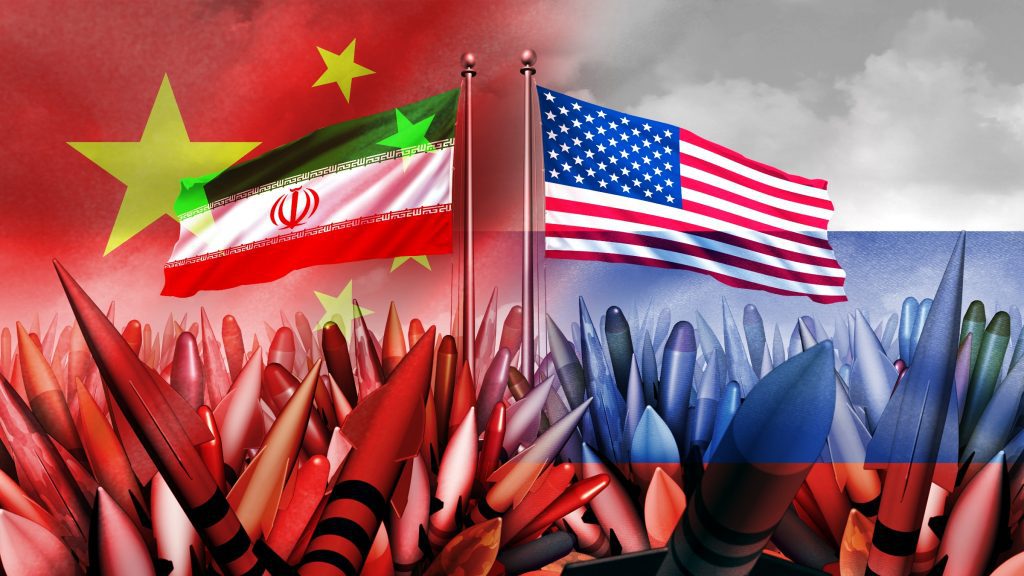
The US and Israel are accelerating the pace of the prosecution of their air campaign on Iran, and as that happens, Beijing and Moscow are extracting strategic intelligence from the war, with the China, Russia, and Iran alliance being the consequential beneficiary of the Middle East war.
Beijing is studying the live performance of its own military doctrine and hardware deployed by Iranian forces. Simultaneously, China’s also publishing its five-year technology blueprint designed to surpass the US in AI, space internet, and green energy infrastructure.
Washington will have to come to peace with the fact that the war it is wagging on Iran has raised the prospect that the biggest beneficiaries of the Middle East war are the two powerhouses waiting for what they deem the inevitable fall of the American Empire.
Moscow and Beijing are watching it most carefully from the outside, assessing military lessons, geopolitical advantages and global balance of power, clearing the glue to the bond of the Russia China and Iran alliance.
Although the immediate consequences of a war involving Iran would be felt most across the Middle East through security instability, economic disruption and shifting alliances, the alliance between China and Russia and Iran remains steadfast, holding together.
Analysts say the extended US commitment in the Middle East would, eventually, strain American resources and divert attention away from the Indo-Pacific, where Washington has spent years reinforcing alliances and counterbalancing Beijing’s influence, according to NBC News.
Beyond the battlefield, in the eyes of the US, the Russia China and Iran alliance is becoming a geopolitical test, carefully examined by global powers seeking to understand how this balance of power might evolve, assessing how a long war could affect US military priorities and regional strategic competition.
Asia’s Powerhouses Eyeing the Battlefield
China has developed strategic partnerships with Iran in recent years. China and Russia and Iran rely on Iranian energy resources and views the country as an important node within its wider economic and connectivity initiatives, while Russia has expanded military cooperation with Tehran.
At first glance, instability in Iran could appear to weaken those Iran China Russia partnerships. If the war continues to linger, it could drain US military strength and attention, keeping the Russia China and Iran alliance intact.
Today’s warfare involves precision-guided munitions, missile defense systems, and logistics. Therefore, maintaining a war can exhaust even great supplies relatively soon.
If Washington digs deeper into another protracted war in the Middle East, analysts have also predicted that it could blur its strategic priorities, including its pivot to the Indo-Pacific region and its rivalry with China, which could allow Beijing to make inroads while the US remains focused on the war.
For China and Russia, a shift such as this could bring indirect advantages, with Western support for Ukraine deepening on American military assistance, and a diversion of resources toward the Middle East will slow that support.
Yet, the Iran China Russia approach is more analytical, with Beijing studying how the US conducts complex military operations across multiple theatres.
According to SIGNAL Group’s Founder and Executive Director, Carice Witte, and technologist Amir Husain, the war is becoming a real-time case study for future wars.
“China is studying every battlefield innovation, every US decision, and every strategic ripple with extraordinary intensity,” they said.
Military analysts also note that Iranian tactics reflect strategies associated with Chinese military doctrine. Speaking to RFE/RL, Israeli military analyst and reserve Brigadier General Eran Ortal explained that the conflict offers valuable lessons for both sides. China and Russia allies with Iran but the tactics in this case differ.
“The US and Chinese military would be ‘taking notes’ as the current conflict played out,” Ortal said.
Iran Russia military collaboration highlights what military planners call anti-access area denial (A2AD), a concept designed to prevent adversaries from freely operating in contested regions.
“The Chinese strategy for its own future theater of war is very similar,” Ortal said, adding “they would push to Taiwan and then try to deter the Americans from coming in with that strategy exactly.”
Will Russia and China Defend Iran if Things Get Worse?
Despite the Russia China and Iran alliance, the current geopolitical and collaborative dynamic between these countries shows that it’s unlikely for Beijing and Moscow to directly jump into the war.
But that remains to be seen. If Europe shows a more active role in the war on Iran, then these dynamics can easily change.
Beijing has strong ties with countries on the global stage, making it unlikely to get directly militarily involved in the war to support Tehran. A pivot from Beijing’s strategy such as this might have serious repercussions for the Chinese economy – regardless of the Iran China Russia ties.
The same can be said of Moscow, which has strengthened its relations with Tehran in recent years, but is currently preoccupied with the Ukraine war and might not be able to be involved in another war.
What is expected of Putin xi Russia China partnership, therefore, is that they will take their time and be cautious, while ensuring that their strategic interests are protected.
The Russia China Iran alliance above developments also show the larger technology rivalry between China and the US. As tensions rise in the Middle East, countries are increasingly relying on Chinese drones, artificial intelligence, and telecommunication technology.
This might propel China’s rise as a technology leader in sensitive areas regarding the Russia China and Iran alliance. For China, the ongoing Middle East war not only marks an observation point but also an opportunity to tap into new markets as countries seek new security technologies, giving Chinese technology companies access to new data environments and markets, thus bolstering China’s strategic position while the US remains preoccupied with military operations in the Middle East.
China and Russia support Iran but they will not destroy what they have built economically and technologically, for a main reason, they must win over the US in one way or another.
History has shown that the largest geopolitical spillover of the war has not been determined by who wins, but by how the conflict changes the world’s focus, resources, and global positioning of the major world powers.
Inside Telecom provides you with an extensive list of content covering all aspects of the tech industry. Keep an eye on our Tech sections to stay informed and up-to-date with our daily articles.