 Credit: Nvidia
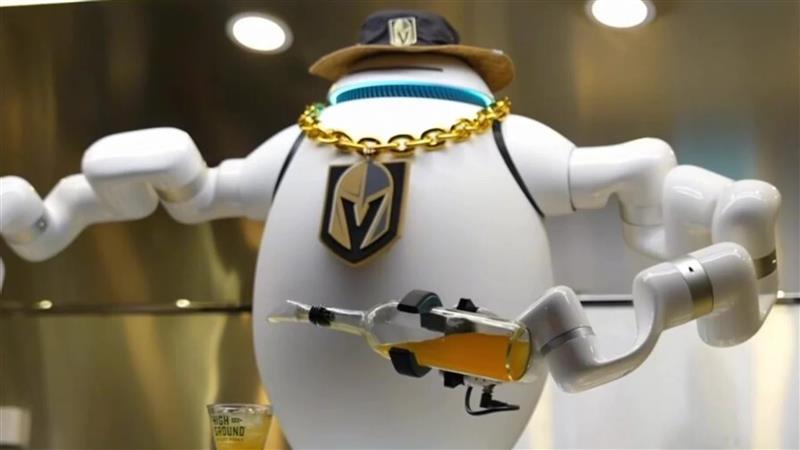
 Hockey lovers attending games at the T-Mobile Arena, in Las Vegas, are being served by a robotic bartender, thanks to the increasing use of AI and automation by hospitality businesses to mitigate the effects of labor shortages.
In a situation where labor shortages are a norm in hotels, restaurants, and arenas, businesses are encouraging technology to move past kitchen and back-office work. Robots in hospitality industry are communicating with consumers and human beings to deal with experience and care.
The Robot Behind the Bar
During the matches, beverages are made by the ADAM robotic bartender, developed by Richtech Robotics in Las Vegas, relying on Nvidia’s robotics software, Isaac. Isaac is the driver of ADAM’s robotic interactions with customers, as opposed to automated preprogrammed routines.
ADAM, also known as a bartending robot, was trained within a virtual environment before being used. With the aid of Nvidia Isaac Sim, its working environment was created digitally, including variations in lighting, reflections, and varying items.
This allowed the AI bartender to learn how to detect cups, detect liquid amounts, and control pouring.
“The hospitality industry faces significant labor challenges and ADAM is our answer to meeting those needs while elevating the customer experience,” says Matt Casella, former President of Richtech Robotics.
Based on Nvidia Jetson AGX Orin, this robotic bartender processes information locally with edge AI. This means that the system reacts in less than 40 milliseconds, identifying misplaced cups or halting a drink if foam reaches the rim.
Of course, in practice, the AI bartender is less like a computer and more like a cautious robot bartender.
What Robot Bartenders Mean for the Hospitality Industry
The success of ADAM bartender robot highlights the trend becoming more prominent in the hospitality environment. Robot bartenders may still spark debates about their authenticity, but they are considered devices that augment, rather than substitute, human employees.
While performing repetitive tasks, the bartender robot may enable human workers to concentrate on interacting with the customer, customer service, and problem-solving activities. This is particularly needed since the demands for speed and customization are increasing with time.
Richtech’s contributions also transcend the nightclubs and bars. It has recently launched Dex, a mobile humanoid robot targeted at factories and warehouses, based on the same simulation technology.
Richtech’s contribution indicates how food and beverage robotics integration is adopting advancements made in the industrial sector.
“The response at T-Mobile Arena has been phenomenal – people love interacting with ADAM,” Matt says.
Whether or not patrons are ready to fully adopt the idea of an autonomous bartender is still unclear. However, as robotic bartenders become increasingly common, venues offering hospitality may become where clients determine how comfortable they are with sharing in there personal lives with machines.
However, as demonstrated in the video of the AI bartender at the hockey game, the future of serving could be the reality now, as it is pouring drinks.
Inside Telecom provides you with an extensive list of content covering all aspects of the tech industry. Keep an eye on our Intelligent Tech sections to stay informed and up-to-date with our daily articles.