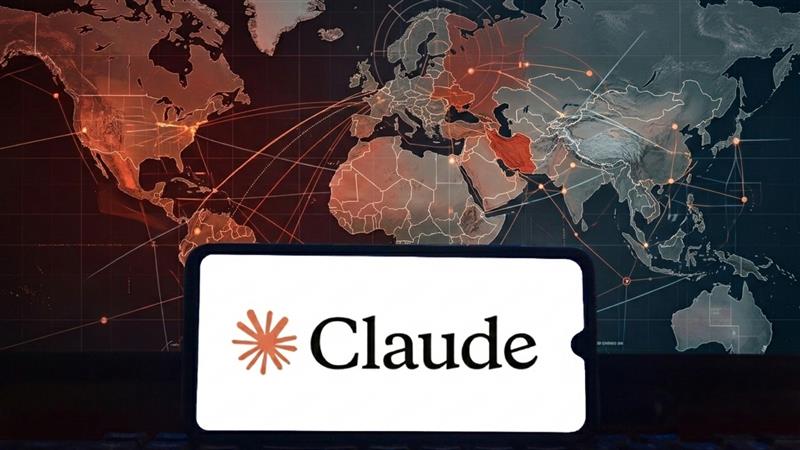
The 4th of March marked the turning point of a global war, as the US military used AI assisted strikes in Iran which led to the tech decoupling of nations, as the Chinese believe that this technology is a threat to their sovereignty and national security.
What was once seen as a matter of corporate rivalry is now seen as a pillar of national survival, as the lines continue to blur between innovation and military competence. This marks the age of the interdependence of science and technology, where a scientific breakthrough can instantly become a military advantage.
Tech decoupling means the strategic process through which nations, especially the US and China, are moving towards reduced interdependencies on each other’s technologies, software, and supply chains. This is aimed at attaining sovereignty through separate and competing technologies in fields like AI and chips.
Therefore, the move toward tech decoupling is no longer a choice but a requirement for survival.
The Dawn of Algorithmic Warfare
The latest conflict in Iran witnessed the deployment of advanced technologies by the US Department of Defense (DoD), including those offered by Anthropic’s Claude, to manage the complexities of modern combat.
These AI programs were not merely conducting background checks but were employed for intelligence evaluations, target identification, and war scenario simulation. For many, this represents a declaration of independence AI from traditional, slower human decision-making.
This shift allows for a pace of operations that manual command structures simply cannot match in a high-intensity environment. For observers in Beijing, this wasn’t just a display of efficiency, but a definitive signal.
“The militarisation of AI is a wake-up call for the entire industry,” said William Wei, vice-president of the Chinese cybersecurity firm WebRAY. “It underscores the urgency of technological self-reliance.”
Analysts suggest that the US has successfully proven that AI can efficiently achieve operational objectives. This demonstration only intensifies the global race regarding who controls AI in the coming decade.
The military application of these tools proves that the era of technological interdependence is rapidly coming to an end. Nations are now prioritizing secure, internal systems over the convenience of global collaboration. This strategic pivot ensures that the tech decoupling process remains the top priority for defense ministries worldwide.
The Struggle for Innovation Sovereignty
This conflict is no longer just about trade issues and manufacturing costs. This is a struggle for innovation sovereignty, meaning the capacity of a country to build its own future without being subject to outside pressure. This desire for AI innovation control is restructuring global alliances, forcing middle powers to choose sides.
As countries pull away from shared platforms, the emergence of bifurcated technology creates a world of incompatible digital ecosystems. Arun Menon, a principal analyst at MTN Consulting, notes that while China has been working toward this for years, the Pentagon’s partnerships provide a clear reinforcement of the need for tech decoupling.
It underscores the urgency of technological self-reliance,” Menon said.
The stakes are equally high for the physical components that make this intelligence possible. While the US and its allies control the bottlenecks of high-end chip manufacturing, China’s own strategy involves strict Chinese party AI controls to ensure domestic stability.
These internal regulations are designed to align private sector progress with the state’s broader geopolitical goals.
“China has already been pushing domestic chips and AI infrastructure to reduce reliance on foreign suppliers,” Menon said.
This trend is forcing a massive supply chain diversification across the globe, as companies move factories to neutral ground. Such a massive reorganization of industry highlights the growing US China tech decoupling that defines modern trade.
Even as the declaration of independence AI reshapes the battlefield, the economic fallout is felt in every factory and laboratory.
Nations are finding it impossible to maintain a neutral stance as the US China tech decoupling forces a hard choice between competing standards. The belief that a single, unified global market could exist for high-end tech has largely vanished.
Ultimately, the current US China tech decoupling ensures that the most valuable territory isn’t just land, but the silicon and code that power the modern world.
Inside Telecom provides you with an extensive list of content covering all aspects of the tech industry. Keep an eye on our Tech sections to stay informed and up-to-date with our daily articles.