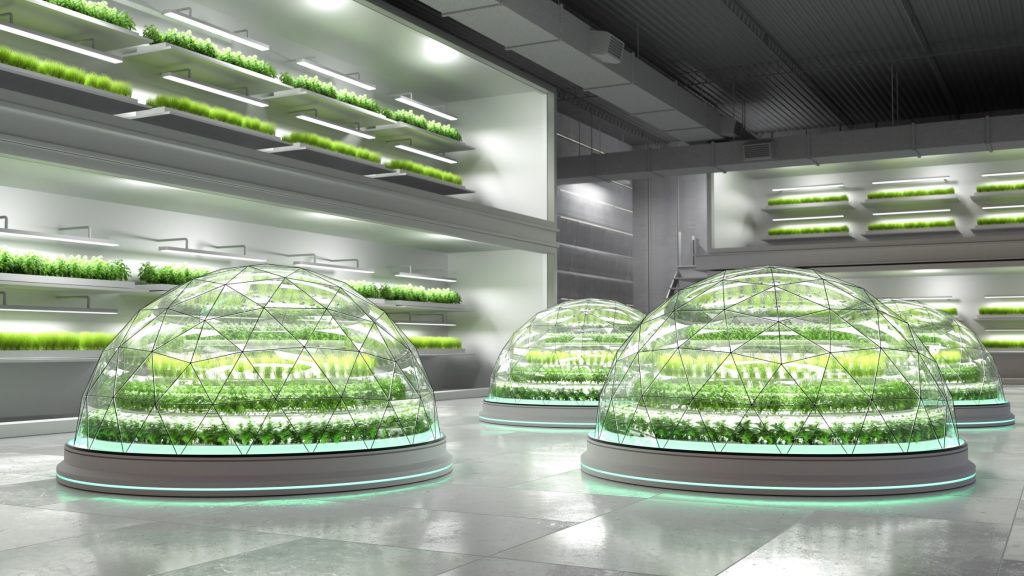
Governments and investors are pumping billions into AI and precision farming agriculture, including Big Tech’s Google, Microsoft and Amazon, partnering with agribusiness companies worldwide to deploy the cloud and algorithms to dictate what and how farmers grow, taking food systems from smallholder fields to Silicon Valley.
Food security experts warn this digitalization endangers generations of traditional farming knowledge.
A new International Panel of Experts on Sustainable Food Systems (IPES-Food) report, Head in the Cloud, argues that AI precision farming agriculture platforms to smart farming AI can be both a blessing and a curse. It’s true that such technologies boost efficiency but simultaneously, they also deepen dependency and narrow crop diversity.
As AI agriculture companies expand their reach, the debate over precision farming agriculture intensifies.
Top-down Food System
According to the report, companies are using data harvested from satellites, drones and farm machinery to feed AI systems that recommend which crops to plant and which inputs to buy.
Critics say this creates a “top-down” model in which large corporations steer decisions traditionally made by farmers, reshaping precision farming agriculture through proprietary precision agriculture systems.
The growing use of drone and precision agriculture technologies, alongside precision agriculture drones, is central to this shift. These tools power what some describe as an emerging AI farm, where algorithms guide everything from irrigation to fertilizer use. But the report questions who ultimately controls these systems
“Companies are playing with the food system, and we can’t afford to have that played with,” said Canadian author and agriculture expert who contributed to the report, Pat Mooney.
Mooney warned that corporate algorithms behind precision farming agriculture usually focus on five major crops: corn, rice, wheat, soya beans and potatoes – at the expense of locally adapted varieties.
“Their advice is going to be: ‘Well, we don’t know about your using [the grain] teff in Ethiopia – we never heard about teff – but we do know about how to use corn in Ethiopia,” he said, describing how proprietary systems can push farmers toward crops linked to corporate seeds, fertilizers and pesticides, often reinforced by precision agriculture drones and data-driven inputs.
IPES-Food co-chair, Lim Li Ching, cautioned that innovation is becoming “deeply political,” further cementing existing power structures.
“These tools are expensive, highly energy- and resource-intensive […] They rely on constant connectivity and subscription models that most smallholder farmers simply cannot access,” Lim Li Ching said, noting that many AI farmer solutions are built around high-cost ecosystems.
Critics say this dynamic could AI limit farming choices rather than expand them.
The report also raises alarms about data ownership and “surveillance” of soils, seeds and farming practices, arguing that when a handful of corporations control algorithms, cloud infrastructure and precision agriculture and smart farming tools, they begin shaping what gets planted and who benefits.
Empty Promises and Pushbacks
Supporters of digital agriculture say AI is essential in an era of climate crisis and unpredictable weather. Proponents argue that drone and precision agriculture combined with precision agriculture drones can reduce waste and optimize yields.
Advocates envision an empowered AI farmer using precision farming agriculture to navigate volatile seasons.
In Peru, the Association of Guardians of the Native Potato of Central Peru (AGUAPAN)initiative has conserved more than 1,000 native potato varieties in collaboration with Indigenous farmers. In Tanzania, farmers use social media to share weather updates and market prices without relying on precision agriculture drones or expensive subscriptions.
Lim argues that “farming by algorithm” is not what most farmers are asking for. “Innovation that actually works for people has to be grounded in their realities … [It should support them] as guardians and stewards of agricultural biodiversity,” she said, urging policymakers to weigh whether precision farming agriculture strengthens farmer autonomy or replaces it.
Inside Telecom provides you with an extensive list of content covering all aspects of the tech industry. Keep an eye on our Tech sections to stay informed and up-to-date with our daily articles.