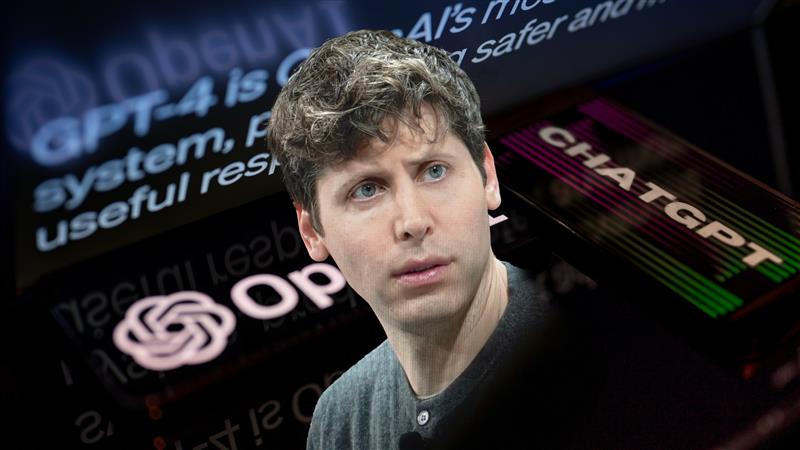
On March 12, OpenAI CEO Sam Altman was questioned by US senators about his company’s ethics in its latest Pentagon contract and military ChatGPT integration, with lawmakers pressing him in detail about surveillance and AI’s role in military kill chains.
The confrontation comes after weeks of turbulence in which Altman publicly admitted he has rushed the deal with the Department of War – formerly Department of Defense (DoD) – calling it “opportunistic and sloppy.”
OpenAI was forced to negotiate the deal’s terms, under scrutinizing public backlash, internal employee revolt, and a congressional push to legislate guardrails around AI contracts with the DoD.
Engineers now fall into the dilemma of their professional obligations and the ethical values of AI in surveillance systems. As the lines between commercial software and military tools blur, those building these systems are now the ones deciding exactly how much power the machine holds on its own in a war zone.
Weight of Digital Guardrails
In contrary of what the media shows, the situation is changing inside major tech firms. Engineers who once focused on creative chatbots are now tasked with building the safety stacks intended to keep a military ChatGPT steady.
This sparked a crisis of integrity, leading nearly 900 employees from Google and OpenAI to sign an open letter regarding OpenAI military contracts. According to The Guardian, they are pressuring their leaders to refuse agreements that involve autonomous killing or mass surveillance, warning that the government is attempting to divide each company with fear that the other will give in.
“We hope our leaders will put aside their differences and stand together to continue to refuse the DoW’s current demands,” employees wrote.
Senator Mark Kelly, who met with Altman, mentioned the high stakes of these choices. He noted that the group discussed how a military ChatGPT might be used within a kill chain.
“There’s got to be guardrails in place, and we’ve got to make sure that we’re always thinking about the Constitution and making sure that we comply with it,” Kelly said.
The tension is intense regarding the OpenAI Pentagon relationship, as the rollout felt chaotic to engineers.
The shift in military ChatGPT also raises questions about AI in surveillance and technology and how these models interact with existing defense infrastructure.
Previously, Anthropic’s Claude was integrated into the Palantir AI surveillance system during the war with Iran to help process battlefield data with a focus on ethical constraints. However, after the Pentagon dropped Anthropic, experts now question where the new AI model will exactly be positioned within supervision operations.
The fear now grows around any OpenAI autonomous weapons integration, and whether a general-purpose model can truly be restrained when blocked into a system designed for high-speed targeting.
New Red Lines for AI Military Integration
Is it logical to trust a machine with decisions that historically require human empathy?
While the OpenAI Pentagon contract announces the military may use the AI system for all lawful purposes, the company insists its technical safeguards will prevent the technology from operating without human oversight. Altman told CNBC that OpenAI military and warfare involvement is necessary.
“We think it’s very important to support the United States government and the democratic process,” said the OpenAI chief.
However, many experts remain skeptical of this logic that pretends to be democratic. They argue that as an AI war ChatGPT becomes more complex, the human in the loop concept might blur for an algorithm recommendation, meaning people are no longer in control and trust AI’s work blindly.
Discussions surrounding OpenAI military contracts often overlook the fact that AI in surveillance practices can suffer from hallucinations, presenting false information as fact.
This makes the OpenAI US defense contract a point of debate for those who believe machines lack the nuance for ethical judgment. As the OpenAI Pentagon partnership moves forward, engineers are effectively building the moral trajectory of the military’s future.
Military ChatGPT is moving faster than the law, and Altman has even stated he would rather go to jail than follow an unconstitutional order, yet the technical reality of OpenAI defense contracts often lacks such straightforward dual choices.
Dealing with the OpenAI pentagon office requires a delicate balance of power, especially as an AI war ChatGPT is deployed in classified networks globally.
Ultimately, the transition from civilian assistant to battlefield tool forces us to ask if we are ready for the consequences. Whether a military ChatGPT can be safely managed remains the most critical question of the AI era.
If a machine makes a mistake in a targeting sequence, will the responsibility fall on the Pentagon and Sam Altman for dragging technology into war field or people who programmed its limits?
Inside Telecom provides you with an extensive list of content covering all aspects of the tech industry. Keep an eye on our Tech sections to stay informed and up-to-date with our daily articles.