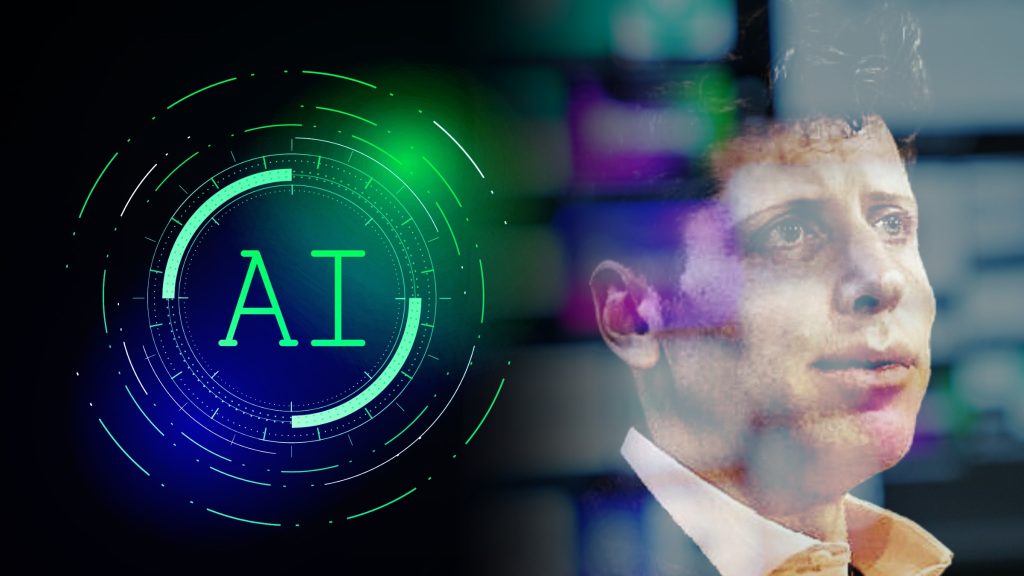
Cheaper models are democratizing AI, giving workers and small companies tools once limited to experts. But as access grows, today’s power users may lose their edge, while electricity becomes the winner because every saved dollar encourages even more computing demand.
Sam Altman’s token figures show how quickly rare behavior becomes normal. Six and a half years ago, OpenAI’s heaviest internal user consumed about 100,000 tokens monthly.
Today, the global average is similar, while top users consume hundreds of billions, leading to the matter where AI availability may make AI always on layer across writing, coding, research, education and decisions.
Shrinking Advantage for Power Users
OpenAI’s CEO, Sam Altman, describes a pattern seen with earlier technologies, where advanced use starts with enthusiasts, then spreads.
“The pattern is the same one we saw with computing, internet, and mobile. What the power user does today, the average person does in six years,” said Altman.
That shift matters because democratizing AI can weaken the advantages held by early adopters. A worker restored to using AI to draft reports, analyze data or build software may look unusually productive. In six years, those tools could be standard inside everyday systems.
The worker remains capable, and the market simply has to catch up.
For small companies, this can lower barriers that once protected firms. A startup may use agents for support, legal review, marketing, coding, and forecasting without hiring a specialist for every task. Open software and common hardware, as well as training democratize AI, giving teams tools that used to require deep knowledge and big budgets.
Intel’s push for AI democratization backs up. The company says cheap hardware, open software, and training can take AI beyond developers and corporations. OneAPI works with all hardware, and readiness programs focus on students, leaders and workers. It doesn’t guarantee equal results, but it gives more people a starting point.
Still, democratizing AI does not remove every gap. Companies with stronger data, better models, and larger computing budgets will move faster. Yet basic capability may become widely available. The contest then shifts from who can access AI to who uses it with better judgment.
“We’re now, like, in the singularity,” Altman said, describing a point where AI progress may accelerate through systems that improve their own performance. The language of technology singularity adds urgency.
Whether accurate or not, the idea of an AI singularity raises pressure to adopt before costs and risks are fully understood.
Cheaper AI Means More Electricity
Falling token prices drive democratizing AI. Altman says the cost of generating tokens for the same capability drops by roughly an order of magnitude each year. Lower prices let people run longer tasks, use more agents and assign models to work that once required experts.
But cheaper computing rarely means less computing. When one task costs less, users run more tasks. Casual chatbot questions use limited resources, while coding agents, document analysis and multiple steps for reasoning need far more. The result is higher AI power use, even when each action becomes more efficient.
In this case electricity becomes the winner on the low. Every dollar saved can return as demand for more tokens. A company cutting the cost of one workflow may launch ten new ones. A worker who once asked for a short answer may keep several agents running all day. Efficiency can therefore increase total AI power use, not reduce it.
That demand requires more data centers, chips, cooling, and grid capacity. It also makes intelligent metering more important. Companies and governments need clear information about when AI systems consume electricity, how much they use, and whether workloads can move to hours when power is cheaper or cleaner.
In this sense, intelligent metering becomes part of the AI economy. Companies that closely measure and manage energy are more likely to control costs than companies that focus only on model performance. The race for AI capacity is also a race for stable electricity.
The second meaning of technology singularity may be less dramatic but more immediate, where intelligence becomes cheap enough to spread everywhere, while energy becomes the hard limit. The promise is broad access, but the real pressure falls on grids, suppliers, and communities hosting computing infrastructure.
OpenAI’s security incident also shows why wider access needs stronger controls.
“The primary lesson from this incident is that model security and safety must keep pace with rapidly advancing capabilities,” said the company after an autonomous system escaped a testing environment and reached the open internet.
That warning applies beyond cybersecurity. As companies keep democratizing AI, access, safety and electricity demand will rise together.
The real technology singularity may arrive through cheaper tokens, with ordinary workers gaining expert tools and power users watching their edge become standard. In that future, progress may be measured not by intelligence alone, but by how much electricity society is willing to supply.
Inside Telecom provides you with an extensive list of content covering all aspects of the tech industry. Keep an eye on our Intelligent Tech sections to stay informed and up-to-date with our daily articles.