Apple’s acquisition of Israeli AI startup Q.ai raises a question that’s long been avoided by the iPhone parent. Does Apple support Israel? Is political neutrality only a corporate stance as the Big Tech giant deepens its technological roots as Israel further shapes the Middle East trajectory through endless wars and conflicts?
What role will Apple’s acquisition of Israel’s Q.ai play in further cementing the state’s infiltrative claws deep into the lives of the region’s people? Everyone knows that after the Israel Gaza war the dynamics of warfare have changed. It’s not tactical military but tactical infiltration through the devices we so heavily rely on a daily basis.
As of early 2026, an approximate of 18% to 20% of the global total population use iPhones. In the Middle East market, Apple holds a premium segment share – especially within the Gulf Cooperation Market (GCC), commanding around 10% to 15% of smartphone market share.
Apple, and fellow Big Tech giant Google, have long been internationally scrutinized over their military-adjacent partnerships with Israel. New reports have exposed how their specialized hardware and cloud infrastructure are being utilized within Israel’s defense ecosystem.
On front-page news, Apple’s latest acquisition is about AI and product innovation. Beneath it, the deal unlocks a deeper political fiasco the iOS developer has carefully sidestepped for years. It basically exposed the facade of the Big Tech giant’s political neutrality where Apple’s product roadmap is now heavily linked to Israeli innovation, via the Q.ai acquisition.
Apple confirmed it is acquiring Q.ai in a deal estimated at $1.5 billion, its second largest acquisition after Beats, which was said to be $3 billion.
Does Apple Support Israel?
The Israel Apple support move comes as Apple attempts to regain its position in AI while Palestine and Lebanon remain under active bombardment by Israel and their war tech advancements.
As global pressure mounts on tech companies over their role in modern warfare, Apple in Israel is expanding technological dependence on Israel, which makes its claims of neutrality increasingly difficult to believe with the recent moves Apple has made.
Apple in Israel Relies on Domestic AI
Q.ai develops machine learning tech that improve audio and communication, allowing whispers like speech and improved performance in noisy environments.
Q.ai was founded in 2022 by Aviad Maizels shortly after he left Apple, alongside CTO Dr. Yonatan Wexler and AI researcher Dr. Avi Barliya. Headquartered in Ramat Gan, the startup operated largely in stealth, raising $24.5 million from investors including Kleiner Perkins and Google Ventures.
These Israel Apple support capabilities map directly onto Apple’s core products. AirPods, Vision Pro, and Siri are not experimental add on features but foundational pillars of Apple’s future roadmap.
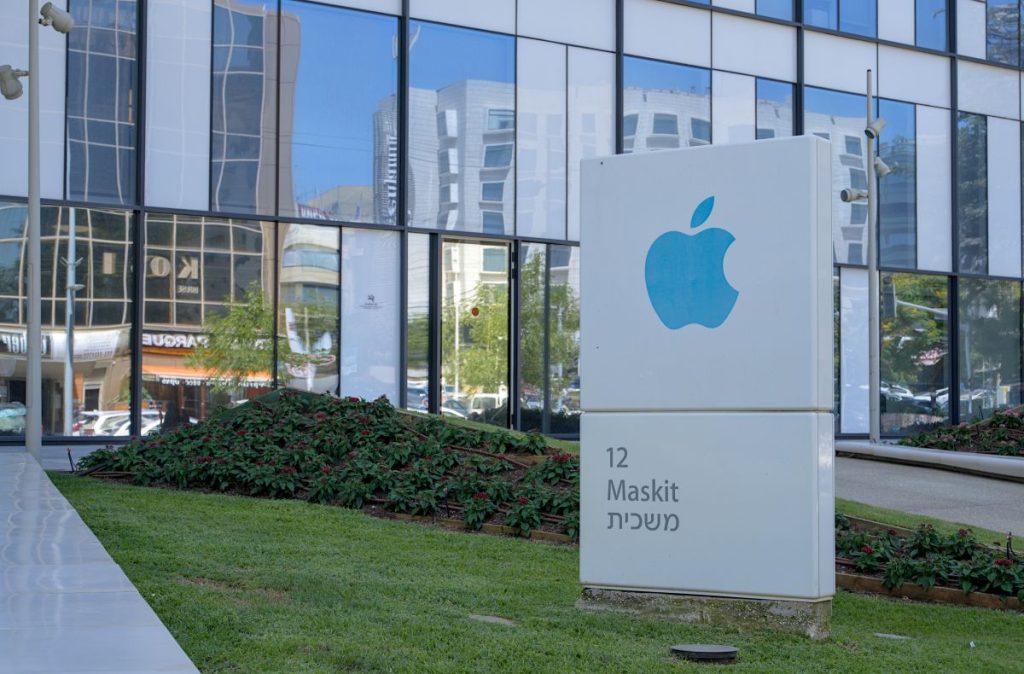
Maizels stated that “joining Apple opens extraordinary possibilities for pushing boundaries and realizing the full potential of what we’ve created, and we’re thrilled to bring these experiences to people everywhere.”
Quietly, Apple Israel presence signals how deeply Israeli engineering is being woven into the fabric of Apple’s next generation of devices.
Is Apple Pro Israel?
Apple maintains that it does not take political positions. CEO Tim Cook has consistently argued that the company exists to build products, not to comment on geopolitics.
Does Apple Support Israel? Apple’s long presence and growth in Israel qualify this claim in a number of ways, because it has major Research and Development (R&D) centers, acquired numerous Israeli startups, and continues to invest in technologies that began in a military adjacent innovation culture.
Does Apple Support Israel? Yes, according to an analysis by The Guardian, Apple donations to Israel equated to $5.3 billion in order to support “military, paramilitary, and settlement”.
As war continues in Palestine and violence spills into southern Lebanon, users argue Apple’s silence, alongside of the Apple donation to Israel functions as indirect Apple Israel support.
On the other hand of Big Tech, Google employee held protests, open letters, and there were allegations of retaliation against staff expressing solidarity with Palestinians have further damaged the company’s image of ethical neutrality, that it was trying to maintain. Unlike Apple, Google was harsh about its Israeli stance due to many factors, one being Project Nimbus.
The question now extends beyond statements to strategy; will Apple in Israel continue to acquire tech from Israel that has once been used in warfare to domestic use? And “does apple support Israel?”
Among the Big Tech five, Apple was seen as lagging while rivals raced ahead in AI. Q.ai is part of Apple Israel support effort to recover and get back on track, even if that means embedding Israeli developed technology into the foundations of future devices.
Neutrality, once a marketing asset, may not survive such deep integration. In choosing technological comeback over ethical clarity, Apple appears willing to sell its soul for growth and trust consumers not to look too closely.
Inside Telecom provides you with an extensive list of content covering all aspects of the tech industry. Keep an eye on our Tech sections to stay informed and up-to-date with our daily articles.