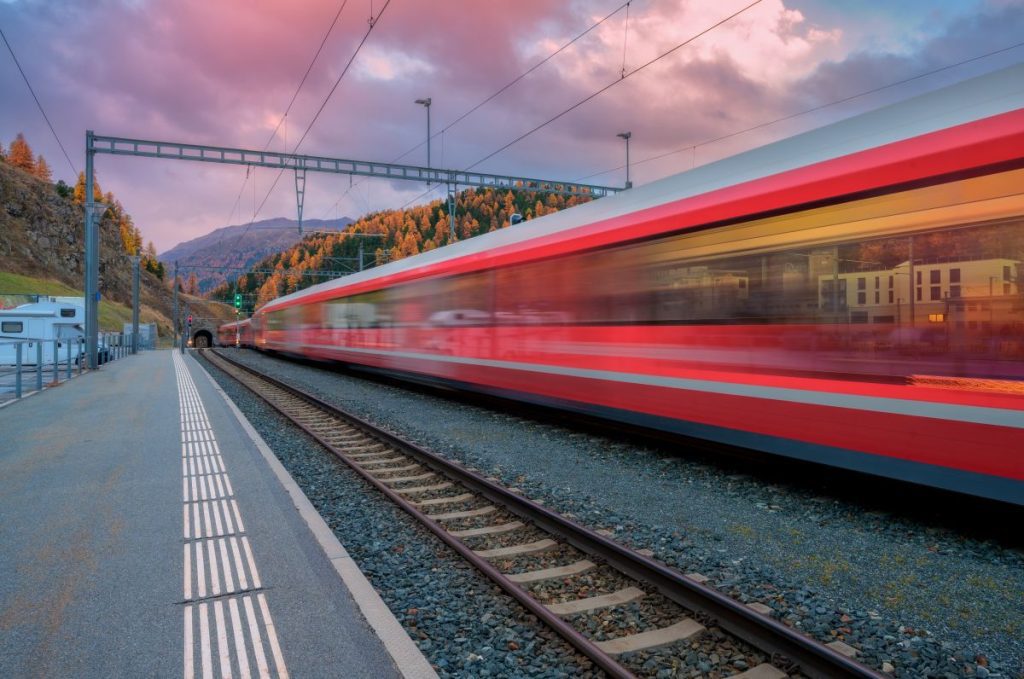
Rail makers Alstom and Deutsche Bahn are testing driverless trains in the UK and Germany, using digital labs and special test trains to prove how advanced rail technology can safely guide passengers across networks before it enters daily service.
Behind these trials is a deep shift in how railways are built and checked. Engineers now combine physical train parts with software, creating a bridge between the real world and virtual testing that is shaping the future of transport.
AI in Railways?
At Alstom’s “Train Zero” lab in Derby, engineers are building the future of driverless trains by recreating an entire Aventra train in digital form. Real buttons, screens, wiring and control units are linked to software that copies how the train would behave on an actual railway.
“In here we are mainly testing one product, and that’s called the Aventra trai,n and that is actually delivered into six different projects,” said David Cox, head of train control at Alstom.
This mix of real hardware and digital rail technology lets engineers run thousands of tests without risking a single passenger. It also supports the move toward autonomous trains, where software takes on more of the driving and decision making.
Each Aventra unit contains more than five miles of cables, all of which are mirrored inside the lab. These links connect doors, brakes, lighting, screens and communication tools, allowing the automated rail system to be checked in full before trains reach the network.
“We can test the audio system, visual and other systems integrated together,” added Jabeen Yousaf, a test and validation engineer.
At the heart of this setup is the TCMS (Train Control and Management System), which connects every part of the train. This kind of digitization of modern rail control systems means that when a door opens or a brake is applied, the correct data and power signals move instantly across the train.
One of the most important tools being tested is the European Train Control System (ETCS), a digital signaling system that sends live track data to the train, rolled out across UK networks.
“So that sort of stuff will come into the ETCS. It’ll process that information and at the right time, it’ll apply automatic braking. When we get to the station, it’ll apply automatic door release as well,” said Ibtihaj Yousaf, a Simulation Engineer at Alstom.
This is a critical step toward driverless trains and safer autonomous trains.
Digital Rail Testing Real Tracks
In Germany, Deutsche Bahn uses two ICE TrainLabs to take testing autonomous rail beyond the lab and onto real tracks. These trains look like normal high speed ICE units, but inside they carry sensors, computers and measuring tools instead of rows of seats.
They run eco-diesel, allowing them to operate on non-electrified routes, which gives engineers more freedom to test a growing automated rail system across different environments.
These labs are a major part of today’s train innovation, letting companies and researchers’ trial new braking systems, communication tools and passenger technology without disrupting normal services.
The data they collect feeds directly into the wider digital rail network.
For now, labs like Train Zero and Germany’s TrainLabs are quietly making sure the next generation of driverless trains is tested, proven and ready before it ever carries passengers.
Inside Telecom provides you with an extensive list of content covering all aspects of the tech industry. Keep an eye on our Intelligent Tech sections to stay informed and up-to-date with our daily articles.