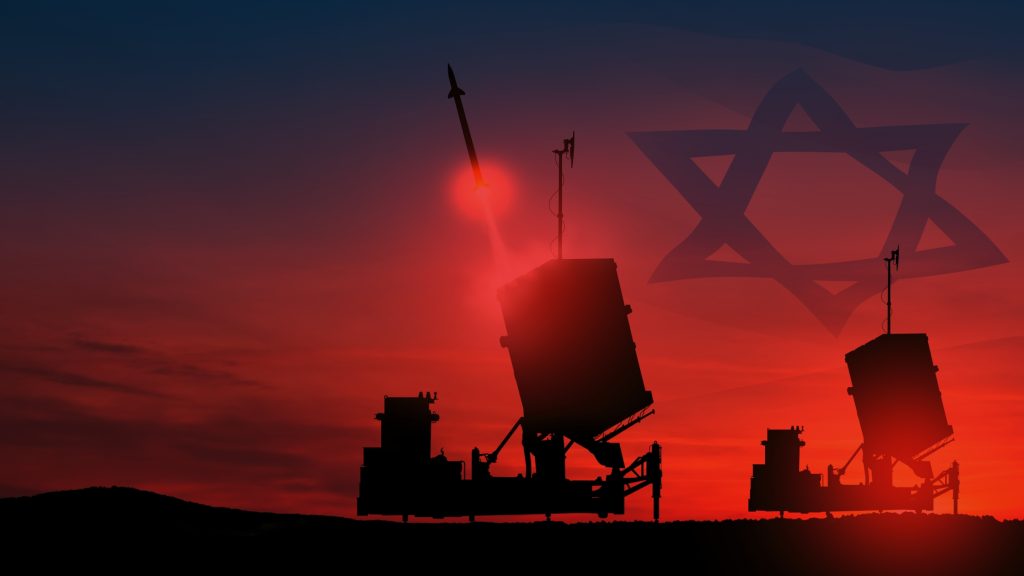
The Israeli story today dates to 1948 till our modern-day present, where tensions, foreign aid, and technology advancements continue to support the Israeli military industries that’s creating a plethora destruction in Gaza and Lebanon.
The story didn’t end back then, nor is going to end any time soon, as evidently described by former Israeli Air Force commander, Amir Eshel, depicting how the events taking place and well-documented on social media are good for military business to unmask the best Israeli weapons to the world.
The Israel Palestine war pics promoted its military industrial complex.
Present military tech that was present back then, and the Israel high-tech weapons we see today, will be nothing compared to what’s coming in years to come.
The Middle East regional war is good for its military business, showcasing Israeli secret weapons is an economic driver for the Jewish state.
It’s not just good, it’s more than profitable in the eyes of the Israeli industrial complex. Particularly the events ignited by the Hamas attack in 2023, that was taken advantage off by the government as a testing-ground for its advanced secret Israeli weapons technology in the Gaza and Lebanon, making it highly profitable.
Empowered the defense sector was marketed – and still marketed – as in defense of Israel yet the subliminal reason was always to endorse its economy on lives of the innocents though its military and increase of death tolls.
The period of intense warfare cemented the notion for Israel, where fighting is no longer restricted to boots in the grounds, but evolved into a high-tech business, where massive success for companies meets investors’ reliance on the cycle of conflict to keep generating profit.
Colonel Yishai Kohn, an Israeli defense expert confirms that exports are soaring. Not only that, but “Israel’s export has been breaking its record for the past three years each year in a row. And we expect that this year will end with a new record, too.”
And Israeli military industries have never been one to care about global outcry over infamous civilian death toll in Gaza, and Lebanon. Evident in the officials’ attendance from over 20 countries to a recent Defense Tech Summit,in Tel Aviv, putting on full display, braggingly even, that Israel – through its high-body count bloody wars – managed to sustain international demand for this combat-tested technology.
Sudden interest, from countries like Germany, which views Russian aggression on Ukraine as an existential threat yet sees Israeli tech such as the Arrow defense system as essential.
Germany is one of biggest supporters of the Israeli military industrial complex, with the Federal Government’s long-standing defense cooperation with the Jewish state. And after October 7, 2023, specifically in 2024, Germany approved around $376 millions in arms exports to Israel – new license approvals, not necessarily deliveries, as the actual data was never released.
Not to mention that Germany basically gave Israel a carte blanche to wreak absolute havoc on Palestinians and Lebanon from 2023 till present day.
Automated Warfare
Israel’s wars on its neighboring countries are testing grounds for new weaponry, transforming the battlefield with autonomous and AI powered systems. Israel is now selling technology, much of which was recently developed or deployed, to other countries.
News about Israel war were the best marketing for its military industrial complex, revealing to the world Israel’s new arsenal, which included:
- Rafael’s Iron Beam
A new high-powered laser system, developed by Rafael and is set for deployment upon order. Executive and leading scientist at Rafael, Ari Sacher, described it as an interception system with rockets, mortars, and cruise missiles. The system is designed to complement existing air defenses like the Iron Dome.
“It takes a very powerful beam of light. We heat the target, we deep fry it, and then (claps hands) the target (imitates explosion) blows up by itself.”
It can also be used as an Israeli military industries anti drone system throughout any attack.
- eyesAtop Surveillance Drones
The IDF’s military has also used any new Israel drone attack that’s supported by surveillance and targeting in Lebanon, Gaza, and Syria, developed by like eyesAtop, and other manufacturers.
eyesAtop drones provide orchestration systems that allow soldiers to coordinate multiple Israel drone strike by different generations, including kamikaze or strike drones, to “close the kill chain with the single operator. So, through our orchestration system, you can call in a kamikaze drone or a strike,” according to CEO Daniel Almog.
“So that any new drone the IDF wants to introduce, the pilot can fly on Day 1, like a Jedi,” Almog said.
- Ottopia Unmanned Vehicles
On the ground, unmanned vehicles made by Ottopia, which roll into enemy territory to scan and identify targets using AI, keep soldiers out of harm’s way.
Founder Amit Rosenzweig noted that a soldier “can drink coffee while using a joystick to control a tank or an APC or whatever it is that he or she needs to control to get the job done,” even those vehicles designed “to go somewhere and explode… maybe take down a bad guy.”
Investment Spike and Future Threats
The economic impact of the war on Israeli military industries has been significant, particularly for defense and security sectors. Following a period of hesitancy, investors returned in 2025, pouring billions into Israeli ventures, especially in defense tech, cyber, and AI. This renewed confidence is reflected in striking macro numbers: private funding in the first three quarters of 2025 totaled $12 billion (up 13%), while M&A activity reached $71 billion, nearly five times higher than the previous year.
Nevertheless, against the background of such a boom, there are rising warnings regarding potential threats. At the defense summit, Eshel, called for major spending on defense innovation, as the ongoing conflict was merely a “tasting menu” compared to what was expected.
In Israeli military industries defense manufacturers, the world is nothing but a “tasting menu” and future wars, well, would be based on stealth and AI autonomous warfare.
“The next wars – ours and everyone else’s – will be orders of magnitude more challenging. We must prepare now,” Eshel stated, emphasizing the need for affordable, mass produced defensive and offensive capabilities to maintain Israel’s qualitative military edge.
Another player on the military stage is Israel Aerospace Industries (IAI).
Since 2006, the IAI transformed battlefield necessities into a powerful export engine, due to its relentless operational demands of wars in Lebanon, Syria, and especially Gaza. These wars were a brutal proving ground, enticing Western governments.
Systems like the Heron drone and Iron Dome’s interceptor technology were refined under fire, becoming combat-proven brands attracting European buyers. Essentially, IAI has monetized regional instability, making use of destruction in Gaza to turn it into lucrative defense contracts worldwide.
Inside Telecom provides you with an extensive list of content covering all aspects of the tech industry. Keep an eye on our Tech sections to stay informed and up-to-date with our daily articles.