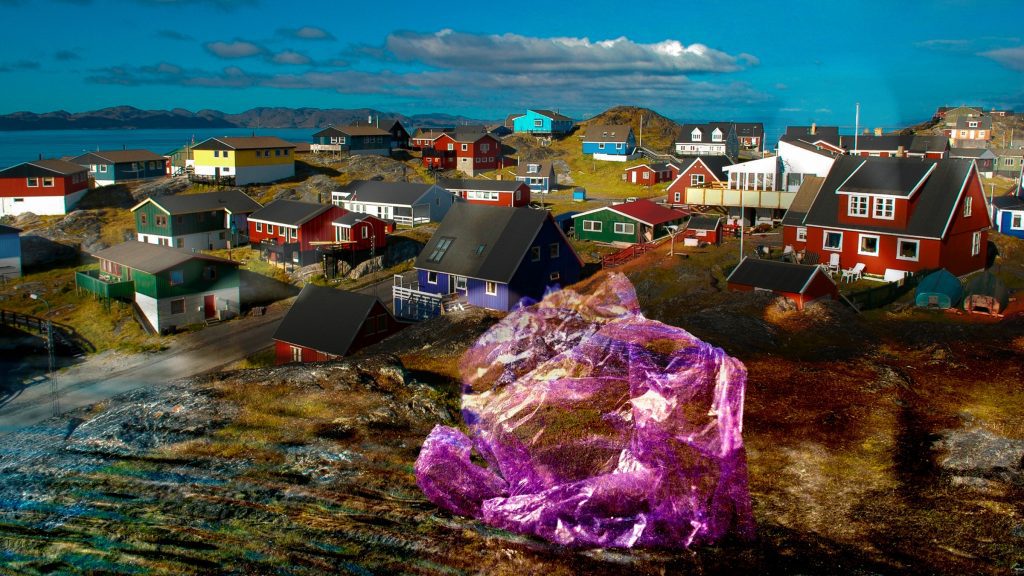
Greenland, the ice island holding up to a quarter of global rare minerals, much needed for a country’s global reign of the tech sector, has reached a pivotal point where it’s no longer a land covered in ice but a volatile and multi-sided geological struggle between the US and Europe. What do the Greenland rare earth minerals really mean for President Trump’s aggressive acquisition campaign?
President Trump says he has secured a “framework for a future deal” tied to ice island’s defense and access to minerals in Greenland.
Now, the talk of the town has really been circulating around one question: Who will control the resources essential to AI, clean energy, and military technology industries?
Beneath the security rhetoric, AI leadership now lays on two fundamentals where critical minerals in Greenland are found and who controls the infrastructure to extract them.
American and European interests scramble to secure an Arctic foothold and break Beijing’s global stranglehold on global critical minerals that will quite literally define the remaining trajectory of the 21st century’s economy and military power.
What Rare Earth Minerals Does Greenland Have?
Greenland sits on one of the world’s most concentrated collections of rare earth minerals.
According to the Geological Survey of Denmark and Greenland, 25 of the 34 minerals in Greenlandareclassified as critical by the European Commission.These includes graphite, niobium, titanium, and minerals that are present on the island.
“Greenland’s strategic importance is not just about defense,” said junior US Senator for Texas, Ted Cruz, during a Senate hearing last year. Cruz also addressed the island’s “vast reserves of rare earth elements.” While Trump has framed his interest as a security imperative, “I want Greenland for security – I don’t want it for anything else.”
Trump, NATO Chief Reach ‘Future Deal’ on Greenland Resources
Last week, President Trump himself recognized the challenge of extraction in the Arctic, telling reporters in Davos, Switzerland, that mining requires digging “25ft down through ice,” a barrier that has historically prevented large scale development.
Yet warm temperatures, expanding shipping lanes, and advances in AI-based Greenland minerals deal with Europe mining are changing these economics.
The week in Switzerland’s Alps saw a plethora of discussions on the trajectory of the upcoming year, and century. Europe wants to pump more money into its sectorial digital transformation with a massive budget/investments for military and AI. President Trump, however, took a different turn of addressing the attendees at the World Economic Forum (WEF) in Davos.
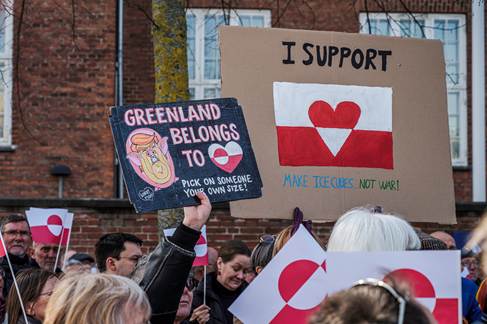
President Trump basically said, in a nutshell, that the world owes the US a great debt, and Europe’s leading in that debt. Then he went on to say that all he’s asking for as a repayment is Greenland. One might say that will only fuel the conflict around the valuable Greenland rare earth minerals.
During the WEF forum week, President Trump secured a controversial “framework for a future deal” with NATO Secretary General, Mark Rutte, over Greenland’s defense and resources. The deal has been met with aggressive scrutiny and resistance from the island’s government.
Greenland’s Mineral Resources Minister, Naaja Nathanielsen, completely rejected any American attempt to extract any of the island’s resources, telling POLITICO, “Everything is on the table except [our] sovereignty.”
“We cannot begin to trade minerals for sovereignty,” Nathanielsen added.
Greenland minerals energy is essential for data centers, semiconductors, high performance magnets, and energy systems that power AI infrastructure.
China’s dominance of rare earth supply chains has pushed the US and EU to seek alternatives, preferably in politically aligned territories, adding another incentive for both powerhouses to close a Greenland mineral deal.
President Trump’s need to control Greenland rare earth minerals is “primarily about access to those resources, and blocking China’s access”, said Professor of international relations at the University of Southern California, Steven Lamy.
Sovereignty, Europe, and the Arctic Scramble
Greenland’s government has pushed back hard against any suggestion that external powers could dictate its Greenland minerals deal.
“Everything is on the table except [our] sovereignty,” Mineral Resources Minister Naaja Nathanielsen told POLITICO in an interview.
The EU signed a strategic minerals partnership with Greenland in 2023, making Europe move quickly and at the World Economic Forum in Davos this year, European Commission President Ursula von der Leyen signaled that Brussels is considering budget allocations for ice breaking vessels a critical step to support Arctic extraction and shipping of Greenland rare earth minerals.
The rare minerals in Greenland interest align with growing private sector activity.
Companies such as Eclipse Metals are positioning Greenland as a future European supply hub, highlighting historic sites like the Ivigtût mine and the Grønnedal carbonatite complex as potential sources of rare earths used in EVs, wind turbines, and AI hardware.
Advanced machine learning, hyperspectral imaging, and predictive geological modeling are cutting exploration timelines and lowering costs, making previously uneconomical Arctic deposits more practical.
“With the melting ice, you get the potential for hydro power in the area where the land is being exposed… so this presents itself as an interesting prospect”, said Prof Andrew Shepherd of the Centre for Polar Observation and Modelling.
For Trump, Greenland rare earth minerals represent leverage across defence, trade, and technology. For Europe, it is a lifeline to supply chain resilience. For Greenland and rare earth minerals, it is a balancing act between opportunity and autonomy. And for the AI race, the message is clear; the future will be decided not just in data centers but deep beneath the ice.
It appears that the AI race is solely based on mineral bounds, and Greenland will either be the maker or breaker of some country’s foundational digital transformation.
Inside Telecom provides you with an extensive list of content covering all aspects of the tech industry. Keep an eye on our Intelligent Tech sections to stay informed and up-to-date with our daily articles.