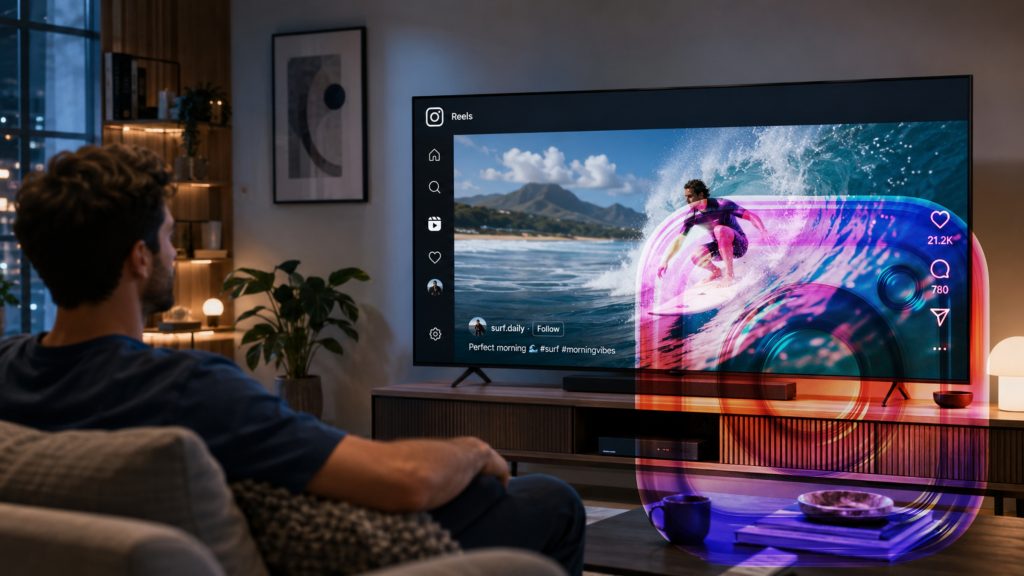
Meta’s Instagram app for TV push is turning short-form scrolling into a living-room habit, as Samsung Smart TVs in the US join Fire TV in carrying Reels, Stories, channels, live content, and a bigger question about attention, control, doomscrolling, and behavior.
The social media and tv move brings the psychology of endless feeds onto the biggest screen at home, where personal scrolling becomes shared viewing and the boundary between relaxing, watching, and compulsively consuming online content becomes harder to notice.
In Meta Eyes, Is TV a Social Media Platform?
According to Meta. Instagram app for TV is expanding to Samsung Smart TVs in the US, after launching first on Amazon Fire TV last year.
Instagram for Apple TV or Instagram for Google are equally detrimental for users, as the interface will basically be the same, with the sole purpose of monetizing off people’s attention, in their living rooms.
Meta’s Instagram Reels on TV app organizes Reels into personalized channels covering comedy, music, sport, travel, and other interests, giving users a TV-style feed built from the same short-form habits that dominate mobile screens.
The company is testing new features, including interest-based channels, casting IG reels on tv and Stories from a phone, live content, and what it calls an “episodic series.”
These are not traditional television shows, but just tv and social media integration. They are closer to creator-led stories designed to keep viewers moving from one clip to the next, with cliffhangers replacing scheduled programming.
For Meta, social media and tv logic are clear. People already cast social videos on television; families already gather around viral clips, and short-form videos have become a daily entertainment format.
Instagram for TV simply turns that behavior into a product and places Meta inside the living room.
But the rollout also changes what television means. The TV was once a place for longer programs, shared viewing, and choice. Instagram for TV app pushes algorithmic entertainment into that space, making the living room feel more like a giant phone screen.
One person saying, “Wait, wait, watch this one,” may now become the whole evening.
This does not make Instagram app for TV a direct Netflix rival. Instead, it places Meta closer to YouTube and TikTok, where attention is won through speed, personalization, and discovery. The result is a softer social media expansion, where the feed follows users from phone to couch.
When Scrolling Becomes Hard to Stop
The second concern regarding social media and tv is purely psychological. Psychologist Raju Raut explains that doomscrolling often grows from cognitive dissonance. The conflict between knowing excessive browsing harms mental health and continuing to do it anyway. People reduce that discomfort by justifying the behavior as necessary to stay informed, prepared, or connected.
That social media and tv idea matter because short-form feeds do not only entertain. They also train users to keep watching in search of relief, certainty, distraction, or novelty. The same “one more scroll” cycle that happens on phones can move to the television, especially when clips are personalized.
Raut also frames doomscrolling as an emotion-focused coping mechanism. People experiencing loneliness may scroll to feel connected, while those facing uncertainty may search for updates to feel more in control. Yet the relief is temporary. Behavior can increase anxiety, stress, exhaustion, poor sleep, and irritability.
Being constantly online becomes harmful when users lose control over their behavior and online activity begins affecting daily life. It is not simply about the number of hours spent online. It is about whether people can stop, return to real responsibilities, and regulate emotions without relying on the feed.
Instagram app for TV may make that harder. A mobile app can be put away. A television feed sits in the middle of the room, inviting passive viewing with fewer physical cues to stop. For families, the shared screen could turn private distraction into group habits.
Breaking that cycle does not require deleting the internet. Raut points to cognitive, behavioral, and emotional regulation, questioning the need to stay constantly updated, setting time limits, choosing moments for online activity, exercising, mindfulness, and spending time with friends or family.
Meta may see the Instagram app for TV as the next stage of social entertainment. But for viewers, the bigger issue is whether the living-room screen becomes a place to watch, or another place where the algorithm keeps asking for one more scroll.
Inside Telecom provides you with an extensive list of content covering all aspects of the tech industry. Keep an eye on our Tech sections to stay informed and up-to-date with our daily articles.
