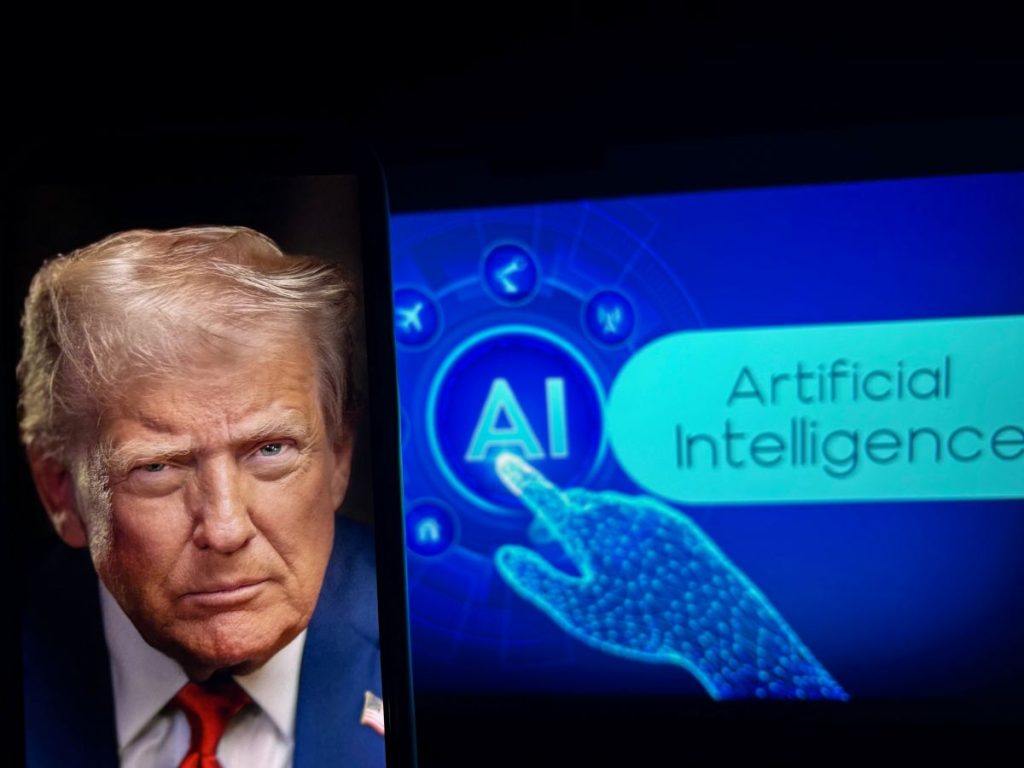
On Sunday, the Innovation Council Action announced a $100 million AI Political Action Committee (PAC) backed by President Donald Trump’s allies, before the upcoming midterms, designed to take advantage of fighting AI in politics through hyper-personalized messaging and deep-fake detection tools ahead of the upcoming midterms, according to The New York Times.
Every election cycle produces its signature technology, from the television spot, the micro-targeted Facebook ads, and the robocall that arrives during dinner. 2026 is no different. The midterms have theirs, and this year, the technology is considerably much harder to switch off.
The AI PAC being assembled by President Trump’s administration and allies is – by the account of how The New York Times is tracking it – something new in degree, if not entirely in kind.
It’s an operation built from the ground up around AI hyper-personalization that can tailor its message to the particular anxieties of an individual voter, at scale, in real time. Unlike others, it’s not just restricted to a demographic or zip code but deeply rooted in the psyche of voters.
Led by longtime Trump adviser Taylor Budowich and backed by senior tech figure David Sacks, the organization is expected to expand into a super PAC capable of backing allies and targeting opponents. At the same time, a US poll conducted last month showed that 60 per cent of voters believe politics AI is advancing too quickly, highlighting a widening gap between political momentum and public sentiment.
That gap is where AI in politics is beginning to exert its most significant political influence. While leaders frame AI as a tool for economic growth and geopolitical competition, its real time application in politics is increasingly tied to how it can shape what voters see, how they interpret information, and ultimately how they behave.
Engineering Perception in the Political Arena
The first AI politician adoption systems are not limited to distributing static messages, unlike traditional political communication tools. The tools generate content in a dynamic manner, adapt narratives to specific audiences, and refine messaging based on behavioral data.
This makes them unique fix to influence not only political opinions but also the pathways through which those opinions are formed.
Innovation Council Action’s planned activities show this shift taking place. The group intends to circulate messaging to AI contextual governance framework and lawmakers, use questionnaires to identify political alignment, and build targeted campaigns around issues such as data centers and AI regulation.
The White House AI bill of rights strategies point to a bigger transformation in political operations one where messaging is continuously optimized to move with different segments of the population.
This gen AI governance framework evolution aligns with the growing rhetoric of an AI “race,” frequently invoked by Donald Trump and echoed by technology leaders. Yet voters, have a purpose and outcome of this race remain unclear.
As OpenAI chief Sam Altman recently said, “Looking at what’s possible, it does feel surprisingly slow,” reflecting frustration among industry figures eager for faster adoption.
At the same time, projections about AI’s future are shaping public expectations in ways that would influence political views.
Anthropic’s Dario Amodei has warned of “unusually painful” labour market disruption at a pace that is “hard for people to adapt to,” while Altman has suggested a future where “intelligence is a utility like electricity or water, and people buy it from us on a meter.”
From Regulation to Behavioral Influence
Parallel to these political efforts, policymakers are attempting to define how AI in politics should be governed, particularly when it comes to vulnerable groups. The recently promoted “AI National Policy Framework” in the US places the protection of minors at the center of future legislative activity, emphasizing platform responsibility, parental empowerment, and age verification mechanisms.
On paper, the AI democratization in politics approach is balanced. AI services are expected to reduce risks such as deepfakes, harmful content, or inducement to self-harm, while parents are given greater control over their children’s digital environments.
The framework also shows a deeper issue; AI systems don’t simply give information they shape cognitive environments in which beliefs are influenced and formed.
For younger users, AI political bias has long-term implications.
Being exposed to AI-generated content, even when not political, influences individuals’ process of information, assesses credibility, and develops trust in institutions. Over time, it will translate into political behavior that will affect voters’ interpretation of campaigns, policies, and public figures.
Regulating this AI in political influence is much more complicated than the bare eye can see. Unlike traditional platforms, AI generates content in real time, making it difficult to define clear technical standards for risk reduction.
Requirements such as age verification further complicate the landscape, and while stronger systems, including biometric verification, might offer better accuracy, they also introduce concerns about surveillance and data protection.
Tensions reflect a broader dilemma. Efforts to limit AI democratization in politics influence should balance the urge to protect users with the risk of overregulation, which could lead to censorship on a personal level by platforms or hinder innovation. The US approach, which leans toward general principles and shared responsibility, contrasts with more structured regulatory models seen.
AI political bias is becoming more integrated in the systems, from campaign financing to content generation and regulatory design. Its role is moving from a subject of debate to an active force in shaping democratic processes. Technology isn’t only influencing what people think about politics, but also how they derive these thoughts.
And as these AI in politics systems become more sophisticated, the thin line between persuasion and manipulation may become harder to define, leaving voters navigate a political landscape where the source of influence is increasingly difficult to see.
Inside Telecom provides you with an extensive list of content covering all aspects of the tech industry. Keep an eye on our Intelligent Tech sections to stay informed and up-to-date with our daily articles.