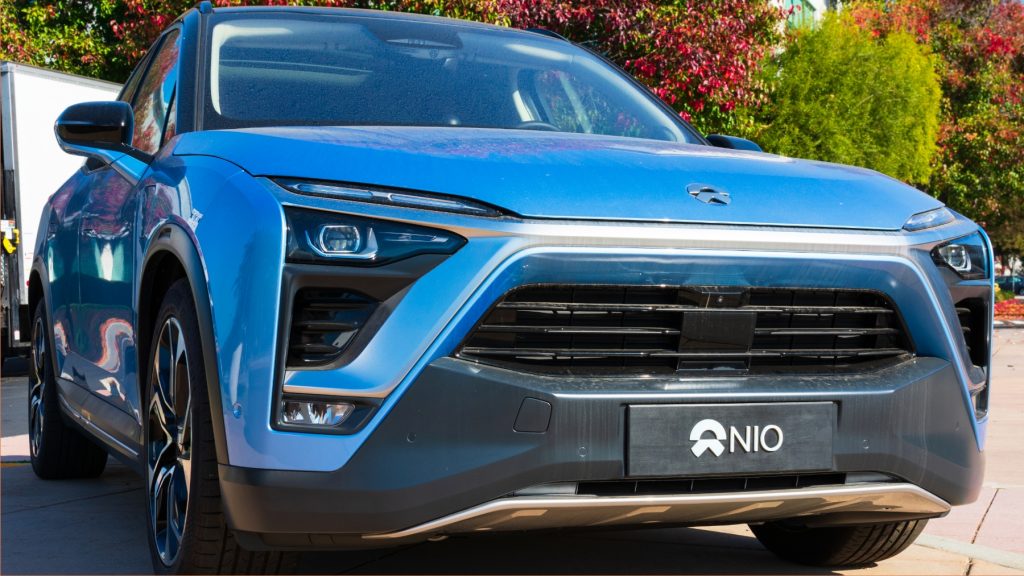
On November 23, Nio, the Chinese EV manufacturer outlined plans to bring up to 30 independent sales agents into its Nio Europe network in Norway, where it also intends to introduce its family-oriented EV brand, Onvo, in 2028.
For a company that built its reputation around selling cars directly to consumers, bringing independent agents into its business says much about the realities of operating outside China. Nio has spent years developing battery-swapping technology, intelligent driving systems, and digital services, yet the expense of maintaining its European retail network has become difficult to sustain.
Cutting distribution costs could give the automaker more room to develop the technology that initially distinguished it from competitors.
Nio Europe Expansion Comes at a Cost
When Nio entered Norway in 2021, the automaker brought much of its domestic business model with it. Customers purchasing Nio cars in Europe would have access to branded showrooms, community spaces, battery subscriptions, and dedicated services, all managed by the company itself. What management had not fully anticipated was how expensive maintaining that experience would become.
Speaking to China News Service during the company’s 5th anniversary in Oslo, Nio co-founder and president, Lihong Qin, acknowledged that management had underestimated the cost of European operations. Improving Nio sales in Norway has become particularly important following losses of $26.1 million in 2025, with accumulated losses exceeding $102.5 million since 2021.
Several prospective agents have signed letters of intent, although formal agreements remain pending, with the first partnership anticipated in 2027. Unlike conventional dealerships, agents typically sell vehicles without purchasing inventory, giving Nio Europe greater geographical coverage while allowing the manufacturer to retain control over pricing.
“Chinese carmakers have great prospects in Europe,” Qin told China News Service, while emphasizing the importance of understanding local markets and maintaining long-term investment.
However, the experience behind Nio Germany sales, offers little reassurance. Germany recorded only 20 vehicle registrations between January and October 2026, down 91.2% from the corresponding period last year, with no registrations recorded in October. According to registration data, reports in April indicated that Nio was seeking subtenants for its flagship showrooms in Berlin, Frankfurt, Düsseldorf, and Hamburg.
Elsewhere, the numbers tell a different story. Portugal registered 179 vehicles during the same period, Belgium recorded 156, and Denmark reached 84.
Compared with Nio sales in Germany, these markets hint at what established distributors can contribute to brand recognition, though from a small base.
The groundwork for a more financially sustainable Nio Europe expansion began in November 2024, when management started experimenting with distributor partnerships. By February 2026, the company had reorganized its European operations into six departments, moving away from country-specific management toward centralized responsibilities covering energy, product development, and network operations.
Competitors including BYD, Xpeng, and Zeekr have also used local partnerships abroad. As Chinese EV exports to Europe increase competition, expensive retail networks leave manufacturers less room to develop products adapted to European drivers.
Where Does Battery-Swapping Technology Fit?
Part of the appeal of Nio cars in Europe comes from offering drivers something that most electric vehicle manufacturers do not: the option to replace a depleted battery rather than wait for it to recharge. The difficulty is that automated swapping stations cost money to build and maintain, regardless of how many drivers use them.
Despite declining Nio Germany sales, the automaker opened another swapping station in Germany in October, its first European addition in more than a year. The regional network now comprises 61 stations, including 22 in Germany and 20 in Norway, compared with 4,126 operating in China as of September.
For Nio Europe, the gap raises questions about how far battery swapping can compete with conventional charging on so thin a network. A proposed station west of Oslo would improve coverage, but further construction depends on vehicle adoption.
“We will not simply replicate what works in China, and we will not pursue expansion for its own sake,” Nio Founder and CEO, William Li, wrote on LinkedIn in September.
Introducing Onvo in 2028 could help recover Nio sales in Norway by reaching families unable or unwilling to purchase premium electric vehicles. Both Onvo and Firefly will offer Battery-as-a-Service (BaaS), separating battery ownership from vehicle ownership and reducing the initial purchase cost.
Firefly, however, cannot use existing European third-generation swapping stations because of their smaller battery dimensions. Supporting multiple brands could consequently require Nio Europe to invest in more adaptable infrastructure.
Looking at Norway Nio sales figures, Firefly accounted for 147 of the group’s 328 registrations during the first ten months of 2026, while premium Nio registrations fell 45.5% to 181.
Affordability became more important for Nio car sales in Norway after the government reduced the EV purchase price eligible for value-added tax exemptions from $50,900 (NOK 500,000) to approximately $30,500 (NOK 300,000) in January.
Beyond affordability, future Nio Europe deliveries will depend on whether local partners can provide the technical support increasingly software-dependent vehicles require. Qin said the company already employs AI to respond to customer needs.
For the Nio Europe market, software localization, remote diagnostics and technical training could matter as much as physical infrastructure.
What makes the latest approach to Nio Europe expansion interesting is the attempt to separate the cost of selling technology from the cost of developing it. For Nio Europe, lower retail spending could make battery swapping and connected services more commercially viable, provided the savings reach engineering rather than simply covering losses.
Ultimately, customers will judge the strategy by how well the technology works after leaving the showroom.
Inside Telecom provides you with an extensive list of content covering all aspects of the tech industry. Keep an eye on our Tech sections to stay informed and up-to-date with our daily articles.
