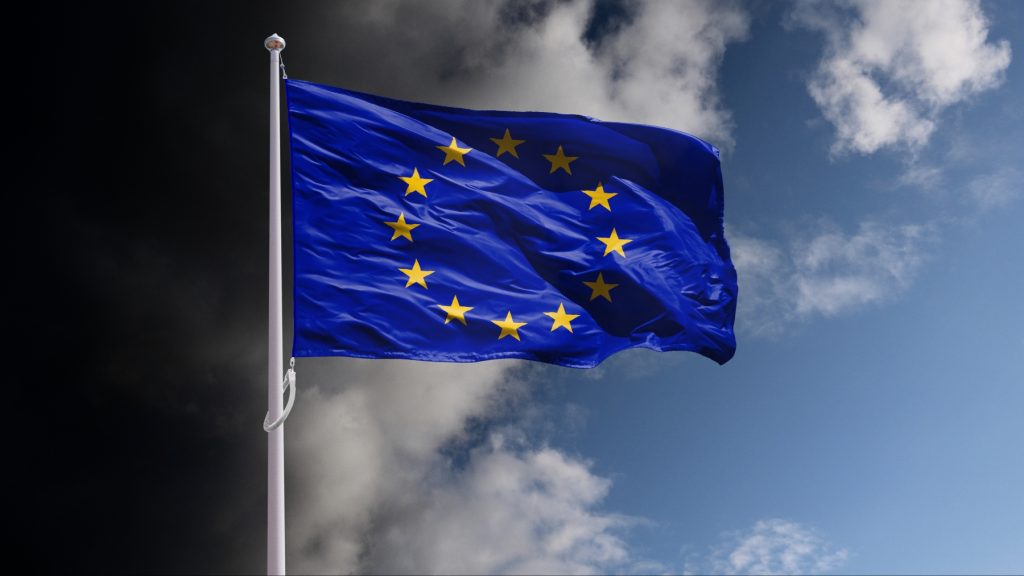
On November 23, eight EU countries joined forces to defend the bloc’s carbon market against further delays, arguing that weakening EU climate change policy could prolong Europe’s dependence on imported fossil fuels and discourage investment in clean technologies.
The climate ministers of Denmark, Finland, Germany, Luxembourg, the Netherlands, Portugal, Spain, and Sweden outlined their concerns in a joint letter addressed to European Commissioner for Climate Action Wopke Hoekstra. What once appeared to be a disagreement over European Union (EU) climate policy has now become a question of how Europe intends to secure its energy supplies without placing additional financial pressure on its population.
Europe’s Energy Dependence Comes at a Price
Much of the disagreement concerns the second Emissions Trading System (ETS2), which would introduce carbon pricing on fuels used in road transport and heating. Already postponed by one year, the system is due to come into effect in January 2028, although Italy, Greece, and the four Visegrad countries continue to push for changes.
The ETS2 European Union framework places the responsibility of purchasing carbon allowances on fuel suppliers. However, consumers are likely to bear part of the expense through higher bills, explaining why some governments are reluctant to proceed under current economic circumstances.
This year’s disruption in the Middle East due to the US-Israel war on Iran has given the debate over European energy security another dimension. According to figures cited by the eight ministers, the EU imported $371 billion (€340 billion) worth of fossil fuels in 2025, while higher prices since the closure of the Strait of Hormuz in early 2026 added another $139 billion (€127 billion) to import costs.
“We need to accelerate the clean transition so the EU can reduce its dependence on expensive and unreliable fossil energy imports,” stressed Samira Nawa, Danish Minister of Climate, Energy, and Utilities.
Behind the economic argument lies a technological one. The ability of EU climate change policy to reduce fossil fuel consumption will partly depend on how quickly European industries can produce affordable electric vehicles (EVs), heat pumps, and energy storage systems.
For policymakers addressing energy security Europe concerns, domestic electricity production solves only part of the problem. Batteries require raw materials, electric vehicles depend on semiconductors, and renewable energy installations need equipment that Europe often sources from abroad.
Without developing its own manufacturing capabilities, the transition could complicate ambitions for European Union strategic autonomy, leaving industries exposed to a different set of foreign suppliers. European manufacturers also need sufficient demand before committing money to new production lines.
Uncertainty surrounding the climate policy EU framework makes such decisions difficult, particularly for companies whose investments may take years to generate returns. A manufacturer expanding heat pump production today must consider whether government incentives and carbon pricing will still exist when those products reach the market.
A broader European initiative for energy security would consequently require investment in electricity distribution, smart grids, and storage technologies. Otherwise, households switching to electric heating and transportation could find themselves relying on networks that were never designed to accommodate such levels of consumption.
EU Climate Change Policy Meets Misinformation
Not every European government believes that introducing carbon pricing in 2028 makes economic sense. Czech Deputy Prime Minister, Karel Havlíček, highlighted the “exceptionally high energy costs” households and businesses already face, questioning the timing of legislation developed under different geopolitical circumstances.
Part of the original agreement was the introduction of the EU social climate fund, intended to ease the financial burden on vulnerable consumers and businesses. The eight ministers fear that changing ETS2 separately from its accompanying financial provisions could disturb that arrangement.
There is, however, another difficulty facing EU climate change policy that cannot be addressed through subsidies or industrial investments alone, and that is the quality of information reaching European citizens. The concern itself predated the current issue.
On January 27, the European Commission endorsed the Declaration on Information Integrity on Climate Change, an initiative launched at COP30 – the United Nation (UN) climate conference that launched the Declaration of Information Integrity on Climate Change – through cooperation between UNESCO, Brazil, and the UN.
Fifteen EU member states had already endorsed the declaration individually, including Poland and Czechia, despite their reservations about the carbon market.
Figures from the 2025 Eurobarometer survey help explain the concern. While 84% of Europeans acknowledge human activity as a cause of climate change, 52% believe traditional media provide unclear information, and 49% struggle to identify reliable material on social media.
“We’re living in a world where the threat of climate change is becoming ever more urgent and, at the same time, where alternative truths, confrontation and disinformation abound,” warned Commissioner Hoekstra.
Such difficulties could complicate public discussions about EU climate policy, especially when legitimate concerns over household expenses become mixed with misleading environmental claims circulating online.
Through its #ClimateFactsMatter campaign, the Commission hopes to improve citizens’ ability to recognize misleading content about the EU climate action plan. Access to reliable information is particularly important when families are expected to make expensive decisions about replacing cars or heating equipment.
Public participation in Europe strategic autonomy ambitions will ultimately depend on whether those alternatives are practical. The credibility of EU climate change policy could suffer if technological solutions remain beyond the financial reach of ordinary households.
While the EU social climate fund offers financial assistance, its effectiveness will also depend on local implementation. Governments debating the climate policy EU agenda must consider differences in infrastructure and purchasing power.
The question of European energy security therefore extends to industrial capacity and consumer affordability. For EU climate change policy, reducing dependence on foreign energy suppliers will mean little economically if Europe cannot develop and deliver the technologies needed to replace them.
Inside Telecom provides you with an extensive list of content covering all aspects of the tech industry. Keep an eye on our Tech sections to stay informed and up-to-date with our daily articles.
