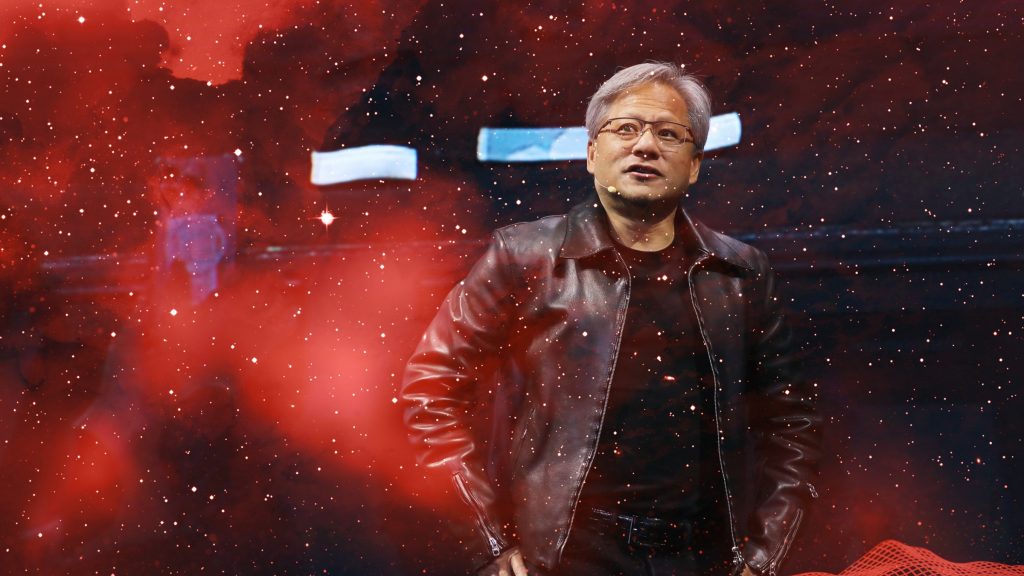
Jensen Huang’s resignation has turned an alleged intelligence scandal into a test of Washington’s technology safeguards, with Congress seeking testimony from Nvidia’s former CEO as China and Nvidia chips become entangled in espionage allegations, and American AI leadership.
On November 12, Huang left Nvidia after reports of relationship with Alice Huang, a former executive at Singapore-based Megaspeed whom US authorities suspect of acting for Chinese intelligence, and of further relationships with company employees. No transfer of Nvidia secrets has been established, but the controversy raises a tougher question: who checks an executive supplying hardware central to the AI boom?
Congress Looks Beyond Huang’s Personal Conduct
Lawmakers want answers about Huang’s dealings with Alice Huang and Nvidia’s security procedures. Three Republican House chairs sought a private briefing, while Senate Banking Committee chairman Tim Scott requested testimony in December. That investigation of China and Nvidia chips extends to Megaspeed, which obtained advanced Nvidia processors and faces allegations of diverting restricted chips to China. Megaspeed denies wrongdoing.
Export restrictions do not stop at the manufacturer’s loading dock. A processor sold overseas can be accessed or redirected through arrangements regulators struggle to follow, making China Nvidia chip concerns a problem of supply-chain visibility as much as executives’ judgment.
The House chairs have said they will subpoena Huang if he does not agree to a date. Their questioning also covers whether Nvidia had adequate protection against foreign intelligence and whether regulators were warned in time.
“The bottom line is we need to understand the magnitude of this with respect to Chinese intelligence, possible chip diversion,” said Moolenaar.
The stakes extend to Washington, where scrutiny could reach the officials behind licensing decisions. Democratic senators, Elizabeth Warren and Chris Coons, asked Commerce Secretary Howard Lutnick, Secretary of State Marco Rubio, and White House chief of staff Stephen Miller to preserve communications concerning Nvidia exports and the suspected intelligence operation.
For years, Huang argued that Nvidia selling chips to China could preserve reliance on American technology. Opponents countered that even permitted sales could support capabilities the US wants to restrict. The dispute over Jensen Huang China AI export control policy existed long before the allegations, although the scandal has made those judgments harder to defend.
Political access cannot substitute for independent compliance checks, and the latest Jensen Huang China AI concerns make that distinction difficult for Nvidia’s board to ignore. The latest Jensen Huang China AI concerns make the distinction difficult for Nvidia’s board to ignore.
China’s Opportunity Bigger Than Leadership Vacancy
Nvidia appointed Chief Financial Officer (CFO), Colette Kress, interim CEO and Harvey Jones board chair while searching for a permanent successor. Kress knows the business, yet succeeding Huang means replacing the engineer and salesman who coordinated chip development, developer software and relationships with major AI builders.
According to Business Insider, Huang is central to America’s AI position and noted the market reaction to the prospect of his exit.
“The primary beneficiary of Jensen’s removal as Nvidia’s CEO would clearly be China; we hope cooler heads prevail,” wrote Stacy Rasgon, senior semiconductor analyst at Bernstein. His assessment reflects the risk of disruption, not evidence that Chinese competitors have already overtaken Nvidia, a distinction that matters in the Nvidia China AI race.
Nvidia’s advantage rests on more than processor performance. Developers build around its software tools, and customers plan purchases years ahead. Leadership uncertainty could make Chinese alternatives more attractive without matching Nvidia chip for chip.
Still, the debate over China and Nvidia chips cannot erase that ecosystem. The Chinese semiconductor race faces obstacles in manufacturing, software compatibility and access to equipment. Domestic producers may gain an opening, but sustained adoption requires reliable supply and competitive performance, not simply a weakened American rival.
CBS coverage emphasized that the consequences reach the global AI contest. For the semiconductor industry in China, even a period of American uncertainty could push buyers to test domestic hardware and developers to reduce reliance on US platforms. China US chip competition increasingly involves software loyalty, procurement and market access.
Renewed China Nvidia chip concerns could produce stricter rules for customers outside China, where China and Nvidia chips are now a policy question more than a sales one. A Commerce Department rule on remote access to overseas data centers targets the gap where Chinese customers might use controlled chips without importing them. The export controls Nvidia China news today debate is moving from physical shipments toward who can remotely use computing power.
That complicates Nvidia selling chips to China, because a legal sale and the processor’s eventual use can be separated by distributors, cloud operators and borders. It also forces Jensen Huang China AI export control advocates to confront whether enforcement can keep pace with new ways of reaching computing infrastructure.
Investigations and hearings will assess more than Huang’s reputation. They may clarify whether security weaknesses were institutional or personal, and whether officials enforced restrictions consistently. Until findings emerge, Jensen Huang China AI concerns should remain questions rather than conclusions.
For Nvidia, the controversy surrounding China and Nvidia chips has exposed a problem extending well beyond Huang’s departure. Washington must protect sensitive American technology without pushing Chinese developers toward domestic alternatives faster than expected, while the company must convince regulators, investors and customers that its advantage does not rest on one executive’s political influence.
As Beijing keeps investing in its semiconductor capabilities, the consequences may emerge not through an immediate shift in AI dominance, but through the gradual decisions of governments and businesses reconsidering whose technology they can depend on.
