With AI pushing data centers toward higher electricity use, a small quantum computer running in Sydney is testing whether quantum intelligence can take on difficult calculations more efficiently, offering a possible way to ease growing future power demand.
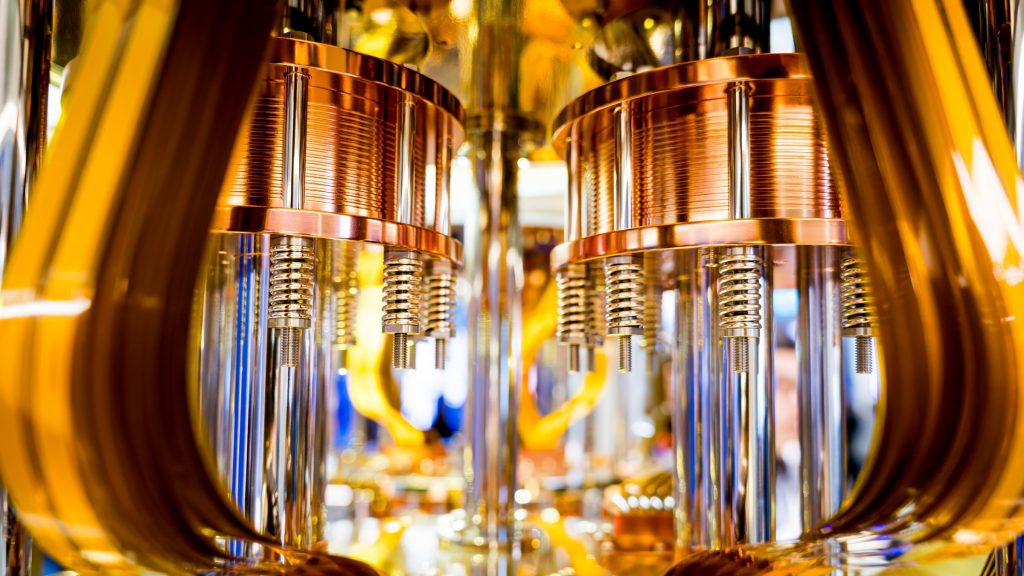
Australian startup Diraq has installed an eight-qubit silicon spin processor at an Equinix data center in what it describes as the first deployment of its kind. The machine sits beside conventional equipment rather than replacing it, occupying 170 square feet and drawing less than 20 kilowatts including its self-contained cooling.
Figures from the International Energy Agency (IEA), cited by OilPrice, show electricity supplied to data centers rising from 460 terawatt hours in 2024 to more than 1,000 by 2030. That growth would put further pressure on electricity grids. For communities near proposed sites, the question is how much extra generation those projects will eventually require.
Quantum Computing Impact on Data Center Demand
AI systems rely heavily on graphics processing units (GPUs), which handle huge volumes of calculations. More complex workloads usually mean more chips, electricity, and cooling. Supporters of quantum intelligence believe some mathematical problems could be handled differently.
Quantum machines use quantum bits, or qubits, to process information in ways ordinary computers cannot. They are not faster at everything but may be better suited to optimization and simulations involving complicated physical systems.
According to Diraq founder and chief executive Andrew Dzurak, some AI problems are “much better suited to quantum calculations” than tasks done by conventional processors. Moving those tasks away from traditional processors could save electricity, although no commercial-scale energy advantage has yet been established.
“Being inside a commercial data center is how we start proving that claim,” said Dzurak.
Harmeen Mehta, Equinix’s executive vice president and chief digital and innovation officer, called the deployment “an important proof point for quantum,” arguing it shows a path for quantum systems to operate alongside existing enterprise infrastructure.
A quantum computing data center would use conventional chips for general processing and quantum hardware for selected tasks. This is the idea behind data center quantum computing, combining two systems, rather than replacing servers across an entire facility.
Diraq is targeting up to 256 qubits in the same system within a year, with a utility-scale machine expected to draw around 300 kilowatts in as little as 50 square feet. That is roughly fifteen times the current draw, and the roadmap does not establish whether such systems would use less electricity than the processors they displace.
The wider quantum computing impact on data center demand depends on which AI tasks can move across. Optimization and difficult simulations are candidates, while everyday calculations stay on conventional chips. Other quantum technology applications include studying molecules used in medicines, batteries, and chemicals, simulations that strain traditional computers and make a useful testing ground for quantum intelligence.
Cooling and Errors Could Offset Energy Savings
There is a difference between a working experiment and a smaller electricity bill. The limitations of quantum computers today include fragile qubits, calculation errors, and cooling needs. The power required by the complete machine matters just as much as the processor itself.
According to Corporate Knights, citing Julian Fletcher, chair of the Quantum Specialist Group at BCS, the Chartered Institute for IT, on the cost of correcting errors. Using Shor’s algorithm to factor a number such as one million, he calculates, would consume 35 times more energy than classical computing once overheads are counted. Fletcher’s article does not state the hardware or error-correction assumptions behind the figure, but it shows why efficiency cannot be assumed.
The challenge for quantum computing integration into data center operations is proving that useful calculations outweigh the energy spent on cooling, controls, and error correction. Faster results alone would not settle it.
The same applies to quantum computing data center infrastructure, where facilities need space and a stable supply. Strong data center power protection holds value if interruptions hit conventional servers and sensitive quantum systems together, and data center power quality would support reliable operations.
For operators managing demanding AI installations, futuristic computing brings a new set of technical requirements, not an automatic reduction in electricity costs.
Public money is nevertheless arriving. According to OilPrice, the US Department of Energy has offered up to $215 million through its Quantum Genesis Q Competition. Funding alone, however, cannot show whether the machines will cut data center demand.
Diraq has reached the final stage of the United States Defense Advanced Research Projects Agency ‘s Quantum Benchmarking Initiative, one of six companies competing for up to $300 million, to test whether quantum machines can solve real problems at worthwhile costs by 2033. The company has also signed a $38 million letter of intent with the Department of Commerce under the CHIPS and Science Act.
“It will only happen if we can build quantum computers that are cost-effective,” said Dzurak.
For quantum intelligence, the comparison must include electricity use, cooling, and useful output. A processor that looks efficient in isolation may prove less economical once its support systems are counted.
McKinsey researchers, cited by Corporate Knights, pointed to molecular simulations “which classical machines struggle to scale efficiently.” That helps explain why quantum technology applications may take hold in narrow scientific tasks before wider use in AI.
The quantum computing data center model will need to show real savings on those workloads, and data center quantum computing will beat efficient conventional hardware, rather than older systems alone.
The promise of quantum intelligence remains significant, but the results are still early. For now, data centers will continue relying on conventional chips, while experiments in Sydney and elsewhere test whether quantum processors can reduce electricity use without adding greater costs elsewhere.
Inside Telecom provides you with an extensive list of content covering all aspects of the tech industry. Keep an eye on our Tech sections to stay informed and up-to-date with our daily articles.
