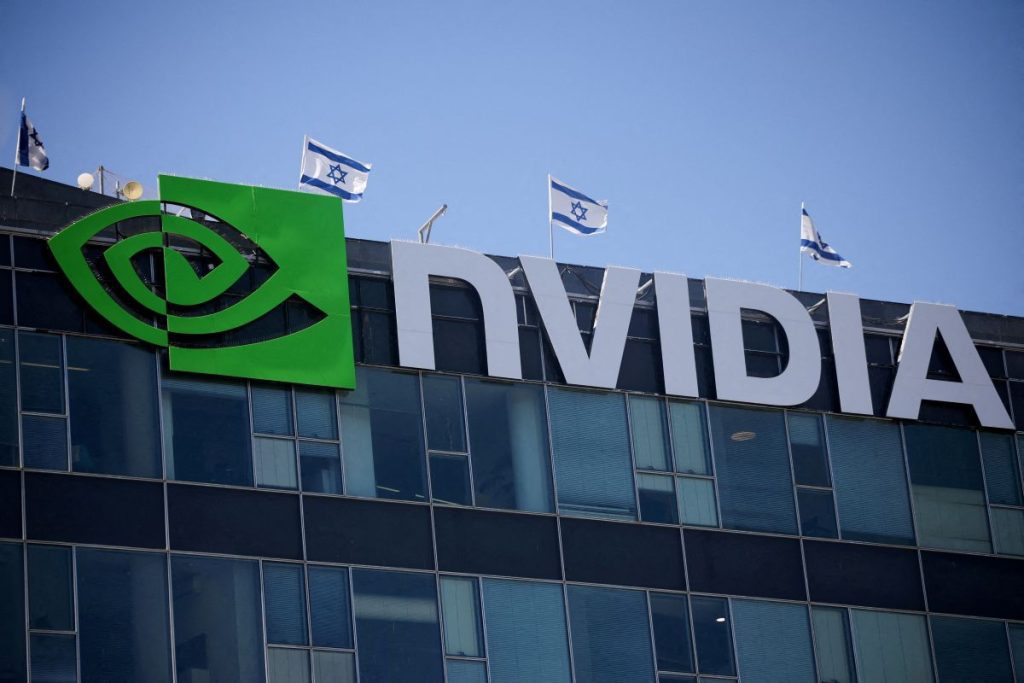
 Credit: Reuters
 BEIJING/SHANGHAI, Jan 8 (Reuters) – Nvidia is requiring full upfront payment from Chinese customers seeking its H200 artificial intelligence chips, hedging it against ongoing uncertainty over Beijing’s approval of the shipments, said two people briefed on the matter.
The U.S. chipmaker has imposed unusually stringent terms requiring full payment for orders with no options to cancel, ask for refunds or change configurations after placement, the people said.
In special circumstances, clients may provide commercial insurance or asset collateral as an alternative to cash payment, one of the people added.
Nvidia’s standard terms for Chinese clients have previously included advance payment requirements, but they were sometimes allowed to place a deposit rather than make a full payment upfront, the person said. But for the H200, the company has been particularly strict in enforcing conditions given the lack of clarity on whether Chinese regulators would greenlight the shipments, the person added.
Both people spoke on condition of anonymity because the information is not public. The stepped-up policy enforcement has not been reported previously. Nvidia and China’s industry ministry had yet to respond to requests for comment at the time of publication.
Chinese technology companies have placed orders for more than 2 million H200 chips that are priced at around $27,000 each, Reuters reported last month, exceeding its inventory of 700,000 of the chips.
While Chinese chipmakers like Huawei have developed AI processors including the Ascend 910C, their performance still lags behind Nvidia’s H200 for large-scale training of advanced AI models.
Beijing in recent days asked some Chinese tech companies to temporarily pause their H200 chip orders as regulators are still deciding how many domestically produced chips each customer will need to buy alongside each H200 order, the second person said.
The Information first reported the pause on Wednesday.
Nvidia CEO Jensen Huang said on Tuesday that customer demand for H200 chips was “quite high” and that the company has “fired up our supply chain” to ramp up production.
Huang said he did not expect China’s government to make a formal declaration on approval, but “if the purchase orders come, it’s because they’re able to place purchase orders.”
BALANCING ACT
The strict payment requirements underscore the delicate balancing act Nvidia faces as it attempts to capitalise on surging Chinese demand while navigating regulatory uncertainty in both countries.
The Biden administration had banned advanced AI chip exports to China, but President Donald Trump reversed that policy last month, allowing H200 sales with a 25% fee to be paid to the U.S. government.
Nvidia has been burned in the past. Last year, it wrote down $5.5 billion in inventory after the Trump administration abruptly banned it from selling the H20 chip to China, previously the most powerful product it was able to offer there.
While the U.S. has reversed that decision, China has since banned H20 shipments.
But the payment structure for the H200 effectively transfers financial risk from Nvidia to its customers, who must commit capital without certainty that Beijing will approve the chip imports or that they will be able to deploy the technology as planned.
Chinese internet giants including ByteDance and others view the H200 as a significant upgrade over currently available chips. The H200, currently Nvidia’s second-most powerful chip, delivers roughly six times the performance of the now-blocked H20 chip that Nvidia had designed specifically for the Chinese market.
Nvidia plans to fulfill initial orders from existing stock, with the first batch of H200 chips expected to arrive before the Lunar New Year holiday in mid-February, Reuters reported last month.
The company has approached contract chipmaker Taiwan Semiconductor Manufacturing Co about ramping up H200 production to meet the Chinese demand, with additional manufacturing expected to begin in the second quarter of 2026, Reuters reported last week.
For Nvidia, adding new capacity is also challenging at a time when it is not only transitioning from its current most-powerful chip Blackwell to the even more advanced Rubin, but also competing with companies including Alphabet’s Google for limited advanced chipmaking production capacity from TSMC.
Inside Telecom provides you with an extensive list of content covering all aspects of the Tech industry. Keep an eye on our News section to stay informed and updated with our daily articles.